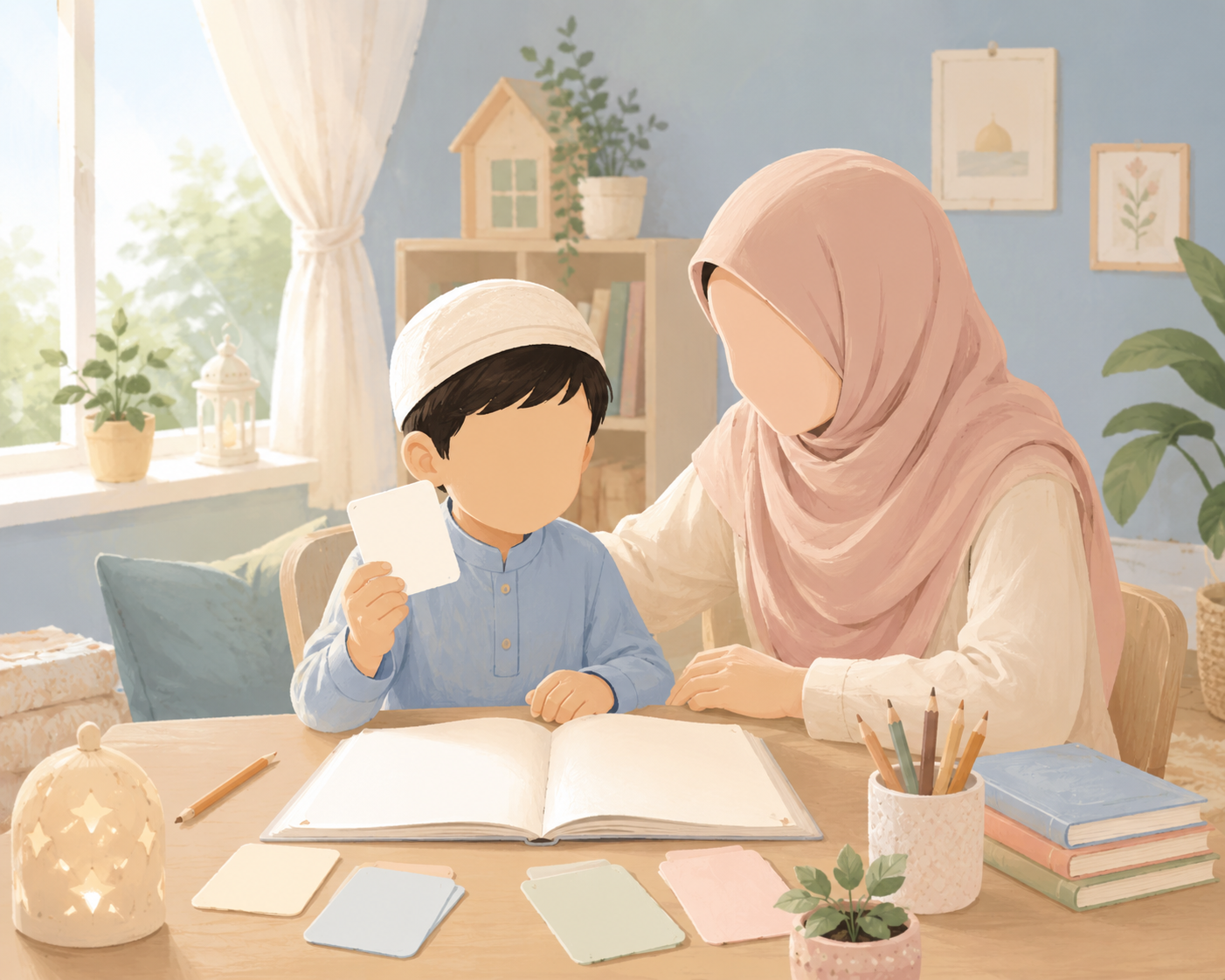
Teach Arabic Letters to Kids: 7 Easy Steps
Many Muslim parents in the UK want their children to learn Arabic, but they are not always sure how to begin. Should the child memorize the alphabet first? Should they learn letter sounds? Should they write the letters? Should they start with Quran reading? These questions are very common.
The good news is that you can Teach Arabic Letters to Kids without turning Arabic into pressure. Children do not need long lessons at the beginning. They need a clear order, warm encouragement, and small wins that make them feel, “I can learn Arabic.”
This guide explains how to Teach Arabic Letters to Kids step by step at home. It is especially useful for Muslim children in English-speaking countries, children who do not use Arabic daily, and parents who want Arabic learning to support Quran reading later.
By the end, you will know how to introduce Arabic letters, how to practise sounds, how to use flashcards and games, and when your child may be ready to move from letters to words.
Quick answer: to Teach Arabic Letters to Kids, begin with a few letters at a time, teach the sound of each letter, use short daily practice, add visual activities, and avoid rushing into words before the child is ready.
| Parent Question | Simple Answer |
|---|---|
| Should my child learn all letters at once? | No. Teach a few Arabic letters at a time. |
| Should I teach letter names or sounds? | Both are useful, but sounds are very important for reading. |
| How long should practice be? | Short sessions of 5–10 minutes are often enough for beginners. |
| When should my child start reading words? | When they can recognize letters and connect them with short vowel sounds. |
Table of Contents
- Why Arabic Letters Matter for Children
- Teach Arabic Letters to Kids: 7 Easy Steps
- Which Arabic Letters Should Kids Learn First?
- Fun Practice Ideas for Arabic Letters
- How to Teach Arabic Letter Sounds
- Should Kids Write Arabic Letters?
- Common Mistakes Parents Should Avoid
- How Sibghah Academy Supports Arabic Letter Learning
- FAQ
Why Arabic Letters Matter for Children
Arabic letters are the foundation of Arabic reading. Before a child can read Arabic words, Quran words, short sentences, or stories, they need to recognize letters and understand their sounds.
When parents Teach Arabic Letters to Kids in the right way, children become less afraid of Arabic. The letters stop looking like strange shapes and start becoming familiar signs that carry sounds and meaning.
This matters even more for Muslim children in the UK and other English-speaking environments. A child may hear English most of the day, read English at school, and use English in games and media. Arabic may feel unfamiliar unless the child receives regular, gentle exposure.
Arabic letters also prepare children for Quran reading. A child who can recognize letters, sounds, and vowel marks will find it easier to move into Noor Al-Bayan, Quran reading, and basic Arabic vocabulary.
That is why the goal is not only to finish the alphabet quickly. The goal is to build a strong foundation. If you Teach Arabic Letters to Kids with patience, you are helping them take the first step toward Arabic reading and Quran confidence.
If your child is already past the letter stage and ready for reading practice, you may find this guide helpful: Arabic Reading Practice for Kids.
Not sure if your child should start with Arabic letters?
Sibghah Academy can help you understand whether your child needs letter recognition, short vowels, word reading, or full Arabic reading practice.
Teach Arabic Letters to Kids: 7 Easy Steps
If you want to Teach Arabic Letters to Kids successfully, follow a simple order. Children learn better when each step feels small, clear, and achievable.
1. Start with a Few Letters Only
Do not introduce all Arabic letters in one session. This can overwhelm children, especially if Arabic is not used every day at home.
Start with three or four letters. Let your child see them, hear them, repeat them, and recognize them in different simple activities.
For example, you can start with letters that are visually simple, such as:
- ا
- ب
- ت
- م
The aim is not to finish quickly. The aim is for the child to feel comfortable. When parents Teach Arabic Letters to Kids slowly, children usually build stronger confidence.
2. Teach the Letter Sound, Not Only the Name
Some children can sing the Arabic alphabet but still cannot read. This happens when they know letter names but do not understand letter sounds.
For reading, sounds are essential. The child needs to know that ب can make the sound “ba” with Fatha, “bi” with Kasra, and “bu” with Damma.
When you Teach Arabic Letters to Kids, say the letter name, but spend more time on the sound. Sounds help the child move into reading later.
3. Use Visual Cards and Simple Objects
Children often remember better when they can see and touch learning materials. Flashcards, magnetic letters, letter puzzles, and simple worksheets can make learning feel more active.
You can show one letter card, say the sound, ask the child to repeat it, then ask them to find the same letter among two or three cards.
Keep the activity simple. Too many cards on the table can confuse the child.
4. Repeat Letters in Short Daily Practice
Repetition is one of the most important parts of learning Arabic letters. Children need to see the same letters many times before they recognize them quickly.
Short daily practice is usually better than one long weekly session. Five focused minutes every day can be more useful than one difficult hour.
If you want to Teach Arabic Letters to Kids at home, create a tiny routine that your child can keep. For example, practise three letters after breakfast or before bedtime.
5. Connect Letters to Short Vowels
After your child recognizes some letters, introduce short vowels slowly. The three main short vowels are Fatha, Kasra, and Damma.
This step is important because Arabic reading depends on letter sounds with vowel marks. A child who knows letters but not vowel sounds may struggle to read words.
For example:
| Letter with Vowel | Sound |
|---|---|
| بَ | ba |
| بِ | bi |
| بُ | bu |
Do not introduce too many combinations at once. Let the child practise slowly.
6. Play Letter Recognition Games
Games can make Arabic letters feel enjoyable. You do not need expensive materials. You can use cards, paper, stickers, or a whiteboard.
Try simple games such as:
- Find the letter.
- Match the letter.
- Point to the sound.
- Circle the letter.
- Sort letters into groups.
- Say the sound and choose the card.
Games help parents Teach Arabic Letters to Kids without making every session feel like a formal lesson.
7. Move to Simple Blending When Ready
When your child recognizes letters and short vowel sounds, they can begin blending. This means joining sounds to read small parts and simple words.
For example:
| Arabic | How to Blend |
|---|---|
| وَ + هـَ + بَ | wa + ha + ba |
| نَ + بَ + تَ | na + ba + ta |
| كَ + تَ + بَ | ka + ta + ba |
Blending should come after letter recognition and sound practice. If your child struggles, return to the letters and sounds first.
Sibghah Teacher Note: if a child cannot blend Arabic sounds, it does not always mean they are not trying. They may simply need more letter and vowel practice before reading words.
Which Arabic Letters Should Kids Learn First?
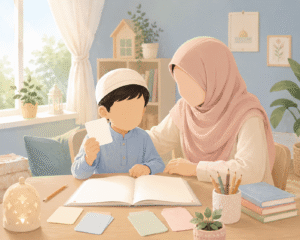
There is more than one way to Teach Arabic Letters to Kids. Some teachers follow the alphabet order. Others group letters by shape or sound. Both can work if the child is learning calmly.
For beginners, it can be helpful to start with letters that are easy to see and compare. Then gradually introduce letters that look similar.
| Letter Group | Examples | Why It Helps |
|---|---|---|
| Simple shapes | ا، ل، م | They are easier for early recognition. |
| Similar shapes | ب، ت، ث | Children learn how dots change the letter. |
| Rounded letters | ج، ح، خ | Children practise shape differences. |
| Letters with strong sounds | ق، ك، ص، ض | They need careful listening and repetition. |
One important point: children should not only see isolated letters. Arabic letters can change shape depending on their position in a word. This is why a child may recognize ب alone but not recognize it inside a word.
When you Teach Arabic Letters to Kids, show the child that letters may appear at the beginning, middle, or end of a word later. Do not make this too heavy at first, but introduce the idea gradually.
Example: the letter ب
| Position | Shape Example |
|---|---|
| Isolated | ب |
| Beginning | بـ |
| Middle | ـبـ |
| End | ـب |
This helps the child understand that Arabic is connected writing. But at the beginning, keep it simple and focus on recognition.
Want a structured Arabic letter path for your child?
If your child is starting Arabic from the beginning, Sibghah Academy can help them learn letters, sounds, short vowels, and early reading step by step.
Fun Practice Ideas for Arabic Letters
Children learn Arabic letters better when practice feels active. If you want to Teach Arabic Letters to Kids at home, try mixing short reading practice with games and movement.
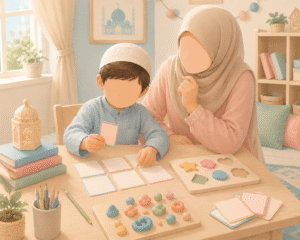
1. Letter Hunt
Choose one Arabic letter and place two or three cards on the table. Ask your child to find the correct letter. Keep it easy at first so the child feels successful.
2. Sound and Point
Say a letter sound and ask your child to point to the matching letter. This trains listening and recognition together.
3. Match the Same Letter
Make two cards for each letter. Ask your child to match them. Start with only two or three letters, then add more gradually.
4. Letter Sorting
Sort letters into groups. For example, letters with one dot, two dots, three dots, or no dots. This helps children notice details.
5. Build the Letter with Clay
Let your child build a letter using clay or playdough. This gives the child a physical memory of the letter shape.
6. Air Writing
Ask your child to draw the letter in the air with their finger. This can be useful before writing on paper.
7. Letter Sound Echo
You say the letter sound, and your child repeats it like an echo. Then switch roles and let your child lead.
8. Letter of the Day
Choose one letter for the day. Show it in the morning, practise it for two minutes later, and review it before bedtime.
These activities make it easier to Teach Arabic Letters to Kids without forcing the child to sit for a long formal lesson.
How to Teach Arabic Letter Sounds
Sounds are a key part of Arabic reading. A child who only memorizes letter names may still struggle when reading words. That is why parents should include sound practice from the beginning.
To Teach Arabic Letters to Kids effectively, say the letter clearly, then show how the sound changes with short vowels.
| Letter | With Fatha | With Kasra | With Damma |
|---|---|---|---|
| ب | بَ ba | بِ bi | بُ bu |
| ت | تَ ta | تِ ti | تُ tu |
| م | مَ ma | مِ mi | مُ mu |
| ن | نَ na | نِ ni | نُ nu |
Do not rush through this table. For a beginner child, one letter with three short vowels may be enough for one session.
How audio can help
If you can add audio practice, it can be very helpful. Children can listen to a letter sound, repeat it, and compare their voice with the model.
You can use a simple pattern:
- Play the sound once.
- Ask your child to listen only.
- Play it again.
- Ask your child to repeat.
- Show the written letter.
- Ask your child to match the sound to the letter.
Audio is especially useful when parents want to Teach Arabic Letters to Kids but are unsure whether their own pronunciation is clear enough. A teacher can also correct sounds in live lessons.
Should Kids Write Arabic Letters?
Writing can help children remember letter shapes, but it should not become the only way to learn Arabic letters. Some children can recognize letters before they can write them neatly.
If you want to Teach Arabic Letters to Kids, start with recognition and sound. Then add tracing and writing slowly.
A useful order is:
- See the letter.
- Hear the sound.
- Say the sound.
- Point to the letter.
- Trace the letter.
- Write the letter.
- Recognize the letter in a simple word.
This order keeps writing in its right place. Writing supports reading, but it should not delay sound recognition.
What if my child hates writing?
If your child dislikes writing, do not turn Arabic into a fight. Use large letters, tracing with fingers, writing in sand, air writing, or building letters with clay.
Some children need time before pencil writing feels comfortable. The goal is to make letters familiar, not to produce perfect handwriting from the first week.
Sibghah Teacher Note: neat handwriting is not the first sign of Arabic reading success. A child may recognize and read letters before writing them beautifully.
Simple Weekly Plan to Teach Arabic Letters to Kids
A weekly routine can make Arabic easier for both parent and child. If you want to Teach Arabic Letters to Kids without stress, keep the plan short and repeatable.
| Day | Practice Task | Parent Focus |
|---|---|---|
| Monday | Introduce 2–3 letters. | Letter recognition only. |
| Tuesday | Review the same letters. | Say the sounds clearly. |
| Wednesday | Play a matching game. | Build confidence. |
| Thursday | Add short vowels to one letter. | Practise sound changes. |
| Friday | Review all letters from the week. | Celebrate effort. |
| Weekend | Light game or teacher lesson. | Keep Arabic positive. |
This plan can be repeated every week with new letters. The key is consistency. If the child forgets, simply review again. Forgetting is part of learning.
When parents Teach Arabic Letters to Kids with a weekly plan, Arabic becomes part of family rhythm rather than a random task.
Common Mistakes Parents Should Avoid
Parents usually make these mistakes because they care. But avoiding them can make it easier to Teach Arabic Letters to Kids with confidence and warmth.
1. Teaching too many letters at once
Too many letters can make children confused. Start small and build slowly.
2. Focusing only on letter names
Letter names are useful, but sounds are essential for reading. Children need both.
3. Rushing into Quran reading too early
Quran reading is a beautiful goal, but children need Arabic letter and sound foundations first.
4. Expecting perfect writing too soon
Writing takes time. At the beginning, recognition and sound practice are more important.
5. Comparing siblings
Every child learns at a different pace. Comparing can reduce motivation.
6. Making every session too serious
Children learn better when there is warmth, play, and encouragement.
7. Skipping review
If a child learns a letter once, that does not mean they will remember it forever. Review is necessary.
8. Moving to words before the child is ready
If your child cannot recognize letters or sounds yet, word reading may feel frustrating. Return to letter practice first.
Need help starting Arabic from zero?
If your child is starting Arabic from the beginning, Sibghah Academy can help with Arabic letters, sounds, short vowels, and early reading through live online lessons.
How Sibghah Academy Supports Arabic Letter Learning
Sibghah Academy offers live online Arabic, Quran, and Islamic Studies lessons for Muslim children aged 5–15.
For beginner Arabic learners, Sibghah Academy helps children learn Arabic letters, sounds, short vowels, blending, word reading, and early sentence reading in a structured way.
If parents want to Teach Arabic Letters to Kids but feel unsure about the right order, teacher support can make the journey clearer. A teacher can check the child’s level, correct pronunciation, choose suitable practice, and help the child move at the right pace.
Some children may start with the Noor Al-Bayan Course, especially if they need a clear foundation for Arabic reading and Quran readiness. Children who already recognize letters and read simple words may later move into the Takallam Series for reading, vocabulary, speaking, and confidence.
For Muslim families in the UK, one-to-one online Arabic lessons can be especially helpful because many children need personal attention and a gentle pace around school and home life.
The goal is not only to finish the alphabet. The goal is to help children feel safe with Arabic, recognize letters confidently, and prepare for Arabic reading, Quran reading, and meaningful language learning.
Quick Parent Checklist
Use this checklist when you Teach Arabic Letters to Kids at home:
- Am I starting with only a few letters?
- Does my child know the sound, not only the letter name?
- Am I keeping practice short?
- Am I using repetition across the week?
- Am I using visual cards or games?
- Can my child recognize letters in different positions?
- Have I introduced short vowels slowly?
- Am I avoiding pressure and comparison?
- Does my child need teacher support?
FAQ: Teach Arabic Letters to Kids
1. What is the best way to Teach Arabic Letters to Kids?
The best way to Teach Arabic Letters to Kids is to start with a few letters, teach the sound of each letter, use short practice sessions, repeat often, and add simple games.
2. Should children learn Arabic letter names or sounds first?
Children can learn both, but sounds are very important because they help children move from letter recognition to Arabic reading.
3. How many Arabic letters should I teach at once?
For beginners, start with two to four letters at a time. Add more only when the child can recognize the first group comfortably.
4. How long should Arabic letter practice be?
Short sessions are usually best. Five to ten minutes of focused practice can be enough for many young children.
5. Can I Teach Arabic Letters to Kids at home?
Yes. Parents can Teach Arabic Letters to Kids at home using flashcards, sounds, games, repetition, and simple daily routines.
6. When should my child start writing Arabic letters?
Writing can begin after the child has seen and heard the letter several times. Recognition and sound practice should come first.
7. Why does my child forget Arabic letters?
Forgetting is normal. Children need repeated exposure across days and weeks before letters become familiar.
8. Should I use English to teach Arabic letters?
English can help explain instructions, especially for children in the UK, but the child should still hear and practise the Arabic sound clearly.
9. How do Arabic letters help with Quran reading?
Arabic letters and short vowels prepare children for reading Arabic words and Quran words more accurately later.
10. What if my child finds Arabic letters difficult?
Make the practice shorter, reduce the number of letters, use games, and repeat more gently. Difficulty usually means the child needs smaller steps.
11. Is Noor Al-Bayan useful for Arabic letters?
Yes. Noor Al-Bayan can help children build a foundation in Arabic letters, sounds, short vowels, and early reading skills.
12. How can Sibghah Academy help my child learn Arabic letters?
Sibghah Academy can help children learn Arabic letters through live online lessons, gentle correction, structured practice, and a clear path toward reading.
13. Can audio help children learn Arabic letters?
Yes. Audio can help children listen to the correct sound, repeat it, and connect the sound with the written Arabic letter.
14. How do I know my child is ready for Arabic words?
Your child may be ready for simple words when they can recognize several letters, say their sounds, and understand basic short vowels.
15. Why should parents Teach Arabic Letters to Kids slowly?
Parents should Teach Arabic Letters to Kids slowly because children need time to recognize shapes, hear sounds, and build confidence before reading words.
16. What comes after Arabic letters?
After Arabic letters, children usually move to short vowels, blending sounds, reading short words, and then simple Arabic sentences.
Book your child’s free Arabic trial on WhatsApp
If you want to Teach Arabic Letters to Kids with a clear path, Sibghah Academy can help your child start from letters and move step by step toward reading confidence.
Send Sibghah Academy a WhatsApp message with your child’s age, Arabic level, and main goal, and we will help you choose the right next step.