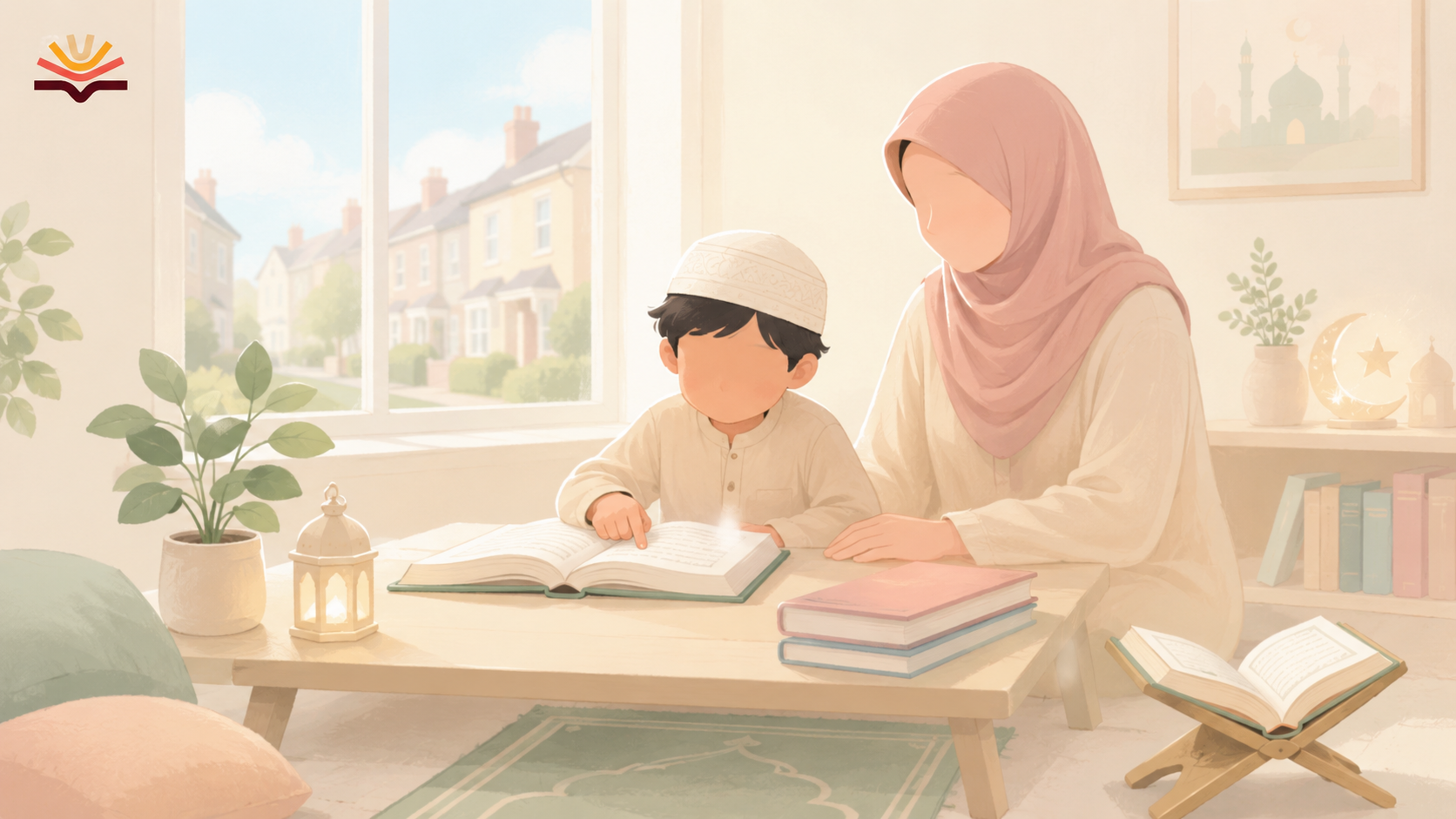
This is why Islamic Studies for Kids in the UK is not just another subject. It is a foundation for faith, manners, confidence, identity, and daily life. Children need Islamic knowledge in a way that is age-appropriate, gentle, structured, and connected to real situations they face.
Good Islamic Studies for Kids in the UK should not feel like random information. It should follow a clear path: knowing Allah, understanding Iman and Islam, learning worship, building manners, knowing the Prophet ﷺ, learning from Islamic stories, and applying Islam in daily life.
This guide explains the essential topics children should study, how parents can choose the right starting point, and how Islamic learning can support Muslim children growing up in the UK.
Quick answer: Islamic Studies for Kids in the UK should include Aqeedah, Iman and Islam, worship, Quran connection, Islamic manners, Prophets’ stories, the Prophet ﷺ, and practical identity-building lessons.
| Parent Question | Simple Answer |
|---|---|
| What should my child learn first? | Start with knowing Allah, basic Iman, and simple worship habits. |
| Is Islamic Studies only memorizing facts? | No. It should connect faith, worship, manners, and daily choices. |
| Why is this important in the UK? | Children need confidence in their Muslim identity while living in a wider non-Muslim environment. |
| How should lessons be taught? | Through clear explanations, stories, examples, reflection, and gentle teacher guidance. |
Table of Contents
- Why Islamic Studies Matters for Muslim Children in the UK
- Islamic Studies for Kids in the UK: 7 Essential Topics
- What Should Children Learn at Each Age?
- How Islamic Studies Builds Muslim Identity
- How Parents Can Support Islamic Studies at Home
- Common Mistakes Parents Should Avoid
- How Sibghah Academy Supports Islamic Studies
- FAQ
Why Islamic Studies Matters for Muslim Children in the UK
Islamic Studies for Kids in the UK matters because Muslim children are growing up with many different messages around them. At school, online, and among friends, they may hear ideas that confuse them about faith, identity, values, worship, and what it means to be Muslim.
Children do not only need rules. They need understanding. They need to know that Islam is not just a list of things they are allowed or not allowed to do. Islam is guidance from Allah, a way of life, and a source of peace, purpose, and good character.
When Islamic Studies for Kids in the UK is taught well, children can begin to understand why they pray, why Muslims fast, why honesty matters, why kindness matters, why the Quran is special, and why their Muslim identity is something to value.
Islamic Studies also gives children language for their faith. A child may know they are Muslim, but they may not know how to explain basic beliefs, answer simple questions, or understand Islamic practices in a confident way.
Parents can use trusted sources such as Quran.com when reading Quranic verses with children. For older children learning the foundations of Islam, Iman, and Ihsan, parents may also refer to the Hadith of Jibril on Sunnah.com.
Not sure where your child should start?
Sibghah Academy can help you understand whether your child needs foundations of faith, worship, Islamic manners, Prophets’ stories, or a structured Islamic Studies path.
Islamic Studies for Kids in the UK: 7 Essential Topics
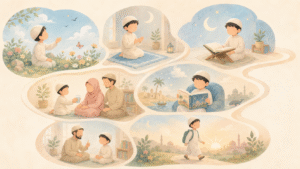
A strong program for Islamic Studies for Kids in the UK should cover more than isolated facts. It should help children build faith, practise Islam, understand values, and connect learning to daily life.
1. Knowing Allah in a Loving and Clear Way
The first foundation of Islamic learning is helping children know Allah. Children should learn that Allah is the Creator, the Most Merciful, the Provider, the One who hears them, sees them, and cares for them.
This topic should be taught gently. Young children do not need abstract explanations that are too difficult for their age. They need simple meanings connected to life: Allah gives us food, family, safety, the sun, the moon, the Quran, and the ability to learn.
When Islamic Studies for Kids in the UK begins with knowing Allah, children are more likely to see Islam as love, guidance, and connection rather than only rules.
The Names of Allah Course for Kids can help children understand Allah’s Names in a simple and meaningful way.
2. The Basics of Iman and Islam
Children should learn the basic pillars of Iman and Islam gradually. They need to know what Muslims believe and what Muslims practise.
This includes belief in Allah, His angels, His books, His messengers, the Last Day, and Qadar. It also includes the five pillars of Islam: Shahadah, Salah, Zakat, fasting Ramadan, and Hajj for those able to do it.
A child does not need all details at once. The aim is to build a simple foundation first, then add more depth as the child grows.
You may also link this topic with the guide: Pillars of Iman and Islam for Kids.
3. Worship and Daily Practice
Good Islamic Studies for Kids in the UK should help children understand worship in a practical way. Children should learn about Salah, wudu, fasting, dua, dhikr, Quran respect, and simple daily Islamic habits.
Worship should not be taught as heavy pressure. It should be taught as a relationship with Allah. Children need to understand that Salah is not only a duty, but a way to remember Allah and ask Him for help.
For younger children, worship lessons should include modelling, simple steps, repetition, and encouragement. For older children, lessons can include more explanation of meanings and responsibilities.
The Minhaj Al-Muslim Course for Kids is useful for structured lessons in Aqeedah, worship, manners, and Islamic basics.
4. Islamic Manners and Character
Islamic Studies should shape how children speak, behave, and treat others. Manners are not a side topic. They are central to Muslim character.
Children should learn honesty, kindness, respect for parents, respect for teachers, care for siblings, keeping promises, avoiding bad words, and being fair with others.
Islamic Studies for Kids in the UK should connect manners to real life. For example, how should a child respond if someone is rude at school? What should they do if a friend asks them to lie? How can they be kind without following everything others do?
When Islamic manners are taught through examples, children understand that Islam is not only something they study. It is something they live.
5. Stories of the Prophets
Children love stories, and stories are one of the most powerful ways to teach faith. The stories of the Prophets help children learn patience, trust in Allah, courage, honesty, repentance, gratitude, and resilience.
The story of Prophet Nuh teaches patience. The story of Prophet Ibrahim teaches trust in Allah. The story of Prophet Yusuf teaches forgiveness and strength. The story of Prophet Musa teaches courage. The life of Prophet Muhammad ﷺ teaches mercy, leadership, and beautiful character.
Stories should not be presented only as entertainment. In Islamic Studies for Kids in the UK, stories should lead to reflection: what can my child learn from this story today?
You can connect this topic with Stories of the Prophets for Kids and the related guide Stories of the Prophets for Kids.
6. Love for the Prophet ﷺ and Islamic Role Models
Children need role models. If they only see celebrities, influencers, or fictional characters as examples, their values may be shaped by people who do not reflect Islamic character.
Islamic Studies should introduce children to the Prophet ﷺ, his mercy, honesty, patience, courage, and love for his Ummah. Children should also learn about the Sahabah and righteous examples from Islamic history.
Learning about role models helps children ask: what kind of person do I want to become?
The Lives of the Companions for Kids can help children learn values through real Islamic role models.
7. Muslim Identity in Daily Life
One of the most important goals of Islamic Studies for Kids in the UK is helping children live as confident Muslims in daily life.
This includes knowing how to answer simple questions about Islam, feeling comfortable with Muslim practices, understanding halal and haram in a child-friendly way, and making choices when they face peer pressure.
Muslim identity lessons should be practical. Children need to discuss real examples: school lunches, friendships, celebrations, online content, modesty, honesty, prayer times, and being different without feeling ashamed.
When children understand their identity, they are less likely to see Islam as something separate from life. They begin to understand that being Muslim can guide their choices with confidence and mercy.
Want a structured Islamic Studies path for your child?
Sibghah Academy can help your child learn faith, worship, manners, Prophets’ stories, and Islamic identity through live online lessons.
What Should Children Learn at Each Age?
Islamic Studies for Kids in the UK should be age-appropriate. A 5-year-old does not need the same level of detail as a 14-year-old. The topics can be similar, but the depth, examples, and expectations should change.
| Age Group | What to Focus On | How to Teach It |
|---|---|---|
| Ages 5–7 | Knowing Allah, simple duas, basic manners, short stories, love for Quran. | Stories, repetition, pictures, simple examples, gentle routines. |
| Ages 8–10 | Basic Iman and Islam, Salah steps, wudu, Prophets’ stories, honesty, kindness. | Short explanations, practical examples, guided discussion, simple review. |
| Ages 11–12 | Deeper worship meanings, Islamic identity, peer pressure, responsibility, role models. | Questions, scenarios, reflection, teacher-led conversations. |
| Ages 13–15 | Faith confidence, moral choices, Islamic worldview, worship consistency, identity in society. | Discussion, real-life case studies, structured lessons, respectful Q&A. |
The goal is not to rush children through advanced topics. The goal is to build strong foundations, then revisit them with more depth as the child grows.
For example, a young child may learn that Allah is Ar-Razzaq, the Provider. An older child can discuss how belief in Allah’s provision affects gratitude, patience, and trust during difficulty.
How Islamic Studies Builds Muslim Identity
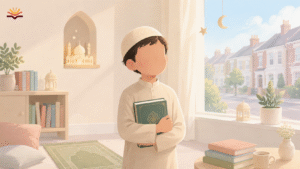
One reason parents search for Islamic Studies for Kids in the UK is that they want their children to stay connected to Islam while living in a society where Islam is not always the main culture around them.
Muslim identity is not built through fear. It is built through knowledge, love, practice, belonging, and confidence. Children need to know what they believe, why it matters, and how to live it in daily situations.
Islamic identity becomes stronger when children can say:
- I know who Allah is.
- I understand why Muslims pray.
- I know the Quran is guidance from Allah.
- I can learn from the Prophet ﷺ.
- I can be kind and confident at the same time.
- I can make good choices even when others do something different.
- I am not ashamed of being Muslim.
Islamic Studies for Kids in the UK should help children build this kind of confidence slowly and naturally. It should not make children feel isolated from others, but it should help them understand who they are.
Sibghah Teacher Note: children need more than Islamic information. They need Islamic meaning, examples, and safe space to ask questions.
How Parents Can Support Islamic Studies at Home
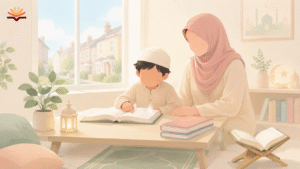
Parents do not need to turn the home into a formal classroom. Small habits can support Islamic Studies for Kids in the UK in a natural way.
Use everyday moments
If your child asks about food, school, friendship, honesty, or fear, use the moment gently. Islamic learning becomes powerful when it connects to real life.
Ask simple reflection questions
After a story, ask: what did we learn? What did this Prophet teach us? How can we use this lesson at school or at home?
Keep Islamic reminders positive
Children should hear about Allah’s mercy, love, forgiveness, and guidance. Warnings have a place, but fear should not be the only tone.
Make worship visible and normal
Let children see salah, dua, Quran reading, charity, kindness, and dhikr as normal parts of family life.
Encourage questions
If your child asks a difficult question, do not panic. A question can be a sign that the child is thinking. Answer gently, and if needed, say you will ask a teacher.
When families combine home support with structured lessons, Islamic Studies for Kids in the UK becomes more practical and easier for children to absorb.
Common Mistakes Parents Should Avoid
Parents usually make these mistakes because they care. But avoiding them can make Islamic Studies for Kids in the UK more effective and more loving.
1. Teaching Islam only as rules
Rules matter, but children also need love, meaning, and wisdom. Teach what Islam says, but also explain why it matters in a child-friendly way.
2. Giving answers that are too advanced
Some answers are correct but too complex for a child. Keep explanations suitable for the child’s age and emotional maturity.
3. Using fear too often
Children need to learn accountability, but if every Islamic lesson is built on fear, they may become anxious or disconnected.
4. Ignoring real-life challenges
Children in the UK may face questions about identity, celebrations, food, prayer, modesty, or fitting in. Islamic Studies should help them handle real situations.
5. Expecting the child to understand everything at once
Faith grows. Understanding grows. Children need repetition, examples, and time.
6. Separating Islamic Studies from Quran and Arabic
Islamic Studies, Quran, and Arabic support one another. The child who learns Islamic meanings often feels more connected to Quran and Arabic learning.
7. Not giving space for questions
If children feel they cannot ask questions, confusion may grow silently. A gentle teacher and supportive parent can help children ask safely.
Need help choosing the right Islamic Studies course?
Send us your child’s age and current level, and Sibghah Academy will help you choose the right Islamic learning path.
How Sibghah Academy Supports Islamic Studies
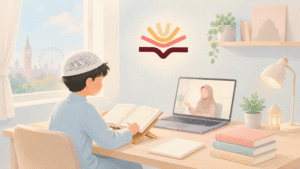
Sibghah Academy offers live online Quran, Arabic, and Islamic Studies lessons for Muslim children aged 5–15.
For Islamic Studies for Kids in the UK, Sibghah Academy helps children learn faith, worship, manners, Prophets’ stories, Names of Allah, lives of the Companions, and practical Islamic identity.
Some children may begin with the foundations of Aqeedah and worship through Minhaj Al-Muslim Course for Kids. Others may need faith-building lessons through the Names of Allah Course for Kids, storytelling through Stories of the Prophets for Kids, or role models through Lives of the Companions for Kids.
A structured path for Islamic Studies for Kids in the UK can help parents avoid random lessons and give children a clearer journey from basic knowledge to daily practice.
The aim is to help your child understand Islam with love, confidence, and clarity, while staying connected to Quran, Arabic, and Islamic values.
Quick Parent Checklist
Use this checklist when choosing Islamic Studies for Kids in the UK:
- Does my child understand who Allah is?
- Does my child know the basics of Iman and Islam?
- Does my child understand why Muslims pray?
- Does my child know basic Islamic manners?
- Does my child learn from the stories of the Prophets?
- Does my child know the Prophet ﷺ as a role model?
- Does my child feel confident being Muslim in the UK?
- Does my child have space to ask questions?
- Is the course age-appropriate?
- Does the learning connect to daily life?
FAQ: Islamic Studies for Kids in the UK
1. What is Islamic Studies for Kids in the UK?
Islamic Studies for Kids in the UK is structured Islamic learning that helps Muslim children understand faith, worship, manners, Quran connection, Islamic stories, and Muslim identity while growing up in Britain.
2. What should children learn in Islamic Studies?
Children should learn about Allah, Iman and Islam, worship, Islamic manners, Prophets’ stories, the Prophet ﷺ, the Sahabah, and practical Muslim identity.
3. Why is Islamic Studies important for Muslim children in Britain?
It helps children understand Islam clearly, build confidence in their Muslim identity, and make better choices in school, friendships, and daily life.
4. At what age should children start Islamic Studies?
Many children can start simple Islamic learning from around age 5, using stories, simple meanings, duas, manners, and basic knowledge of Allah.
5. Is Islamic Studies only about rules?
No. Islamic Studies should include rules, but also faith, love of Allah, worship meanings, manners, stories, values, and daily-life examples.
6. How can Islamic Studies help with identity?
Islamic Studies helps children understand who they are, what they believe, why Islam matters, and how to live as confident Muslims in the UK.
7. Should Islamic Studies include stories?
Yes. Stories of the Prophets, the Prophet ﷺ, and the Companions help children learn faith, patience, courage, mercy, and good character.
8. How do I choose Islamic Studies for Kids in the UK?
Choose Islamic Studies for Kids in the UK that is age-appropriate, structured, gentle, connected to real life, and suitable for Muslim children growing up in Britain.
9. Can Islamic Studies be taught online?
Yes. Online Islamic Studies can work well when lessons are live, interactive, structured, and taught by a teacher who understands children.
10. Does my child need Arabic before Islamic Studies?
No. Arabic is helpful, but children can begin Islamic Studies in English while gradually building Arabic and Quran connection.
11. Does Sibghah Academy teach Islamic Studies for children?
Yes. Sibghah Academy teaches Islamic Studies through courses such as Minhaj Al-Muslim, Names of Allah, Stories of the Prophets, and Lives of the Companions.
12. Can my child try an Islamic Studies lesson first?
Yes. A free trial session can help parents understand the child’s level and choose the most suitable Islamic Studies path.
13. What is the best starting point for Islamic Studies for Kids in the UK?
The best starting point for Islamic Studies for Kids in the UK depends on your child’s age and current level. Many children begin with knowing Allah, basic Iman, worship, manners, and Prophets’ stories.
14. How often should children study Islamic Studies?
A weekly structured lesson with small home reminders can work well for many children. Consistency matters more than long or heavy sessions.
15. Can Islamic Studies help my child ask better questions?
Yes. Good Islamic Studies gives children safe space to ask questions, think, reflect, and understand Islam with clarity and confidence.
Book your child’s free Islamic Studies trial on WhatsApp
Islamic Studies for Kids in the UK can help your child build faith, worship habits, Islamic manners, and Muslim identity in a clear and age-appropriate way.
Send Sibghah Academy a WhatsApp message with your child’s age, current level, and main goal, and we will help you choose the right next step.