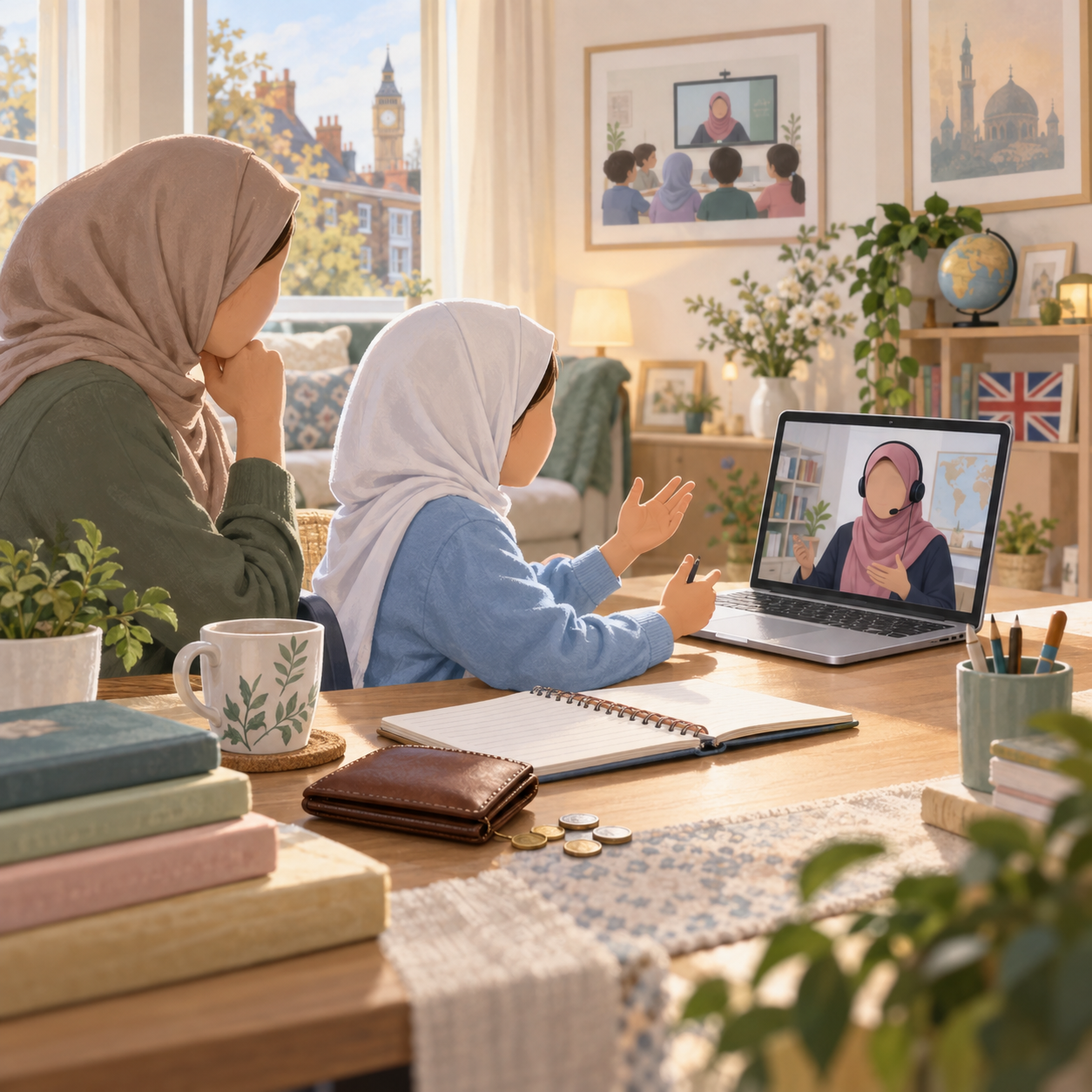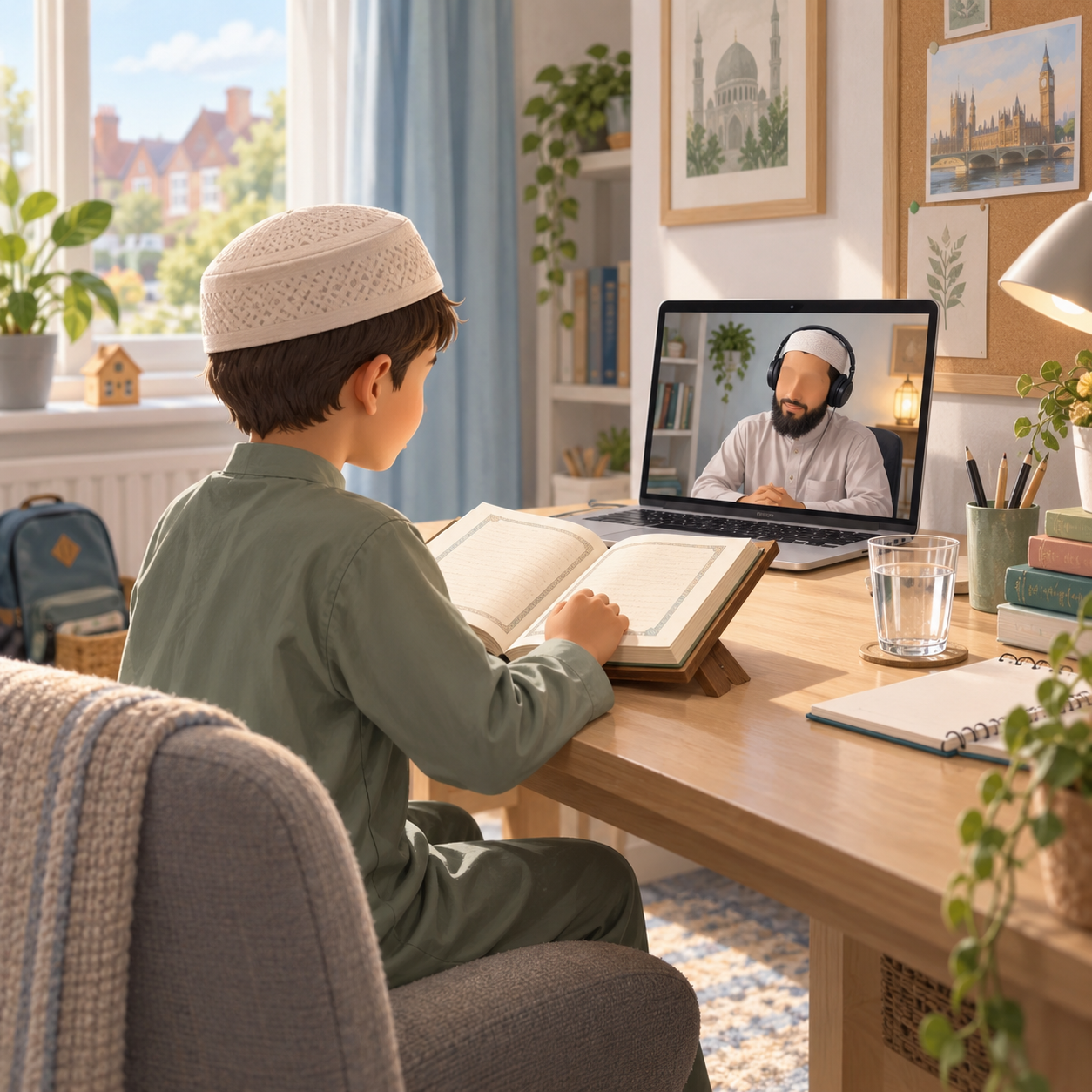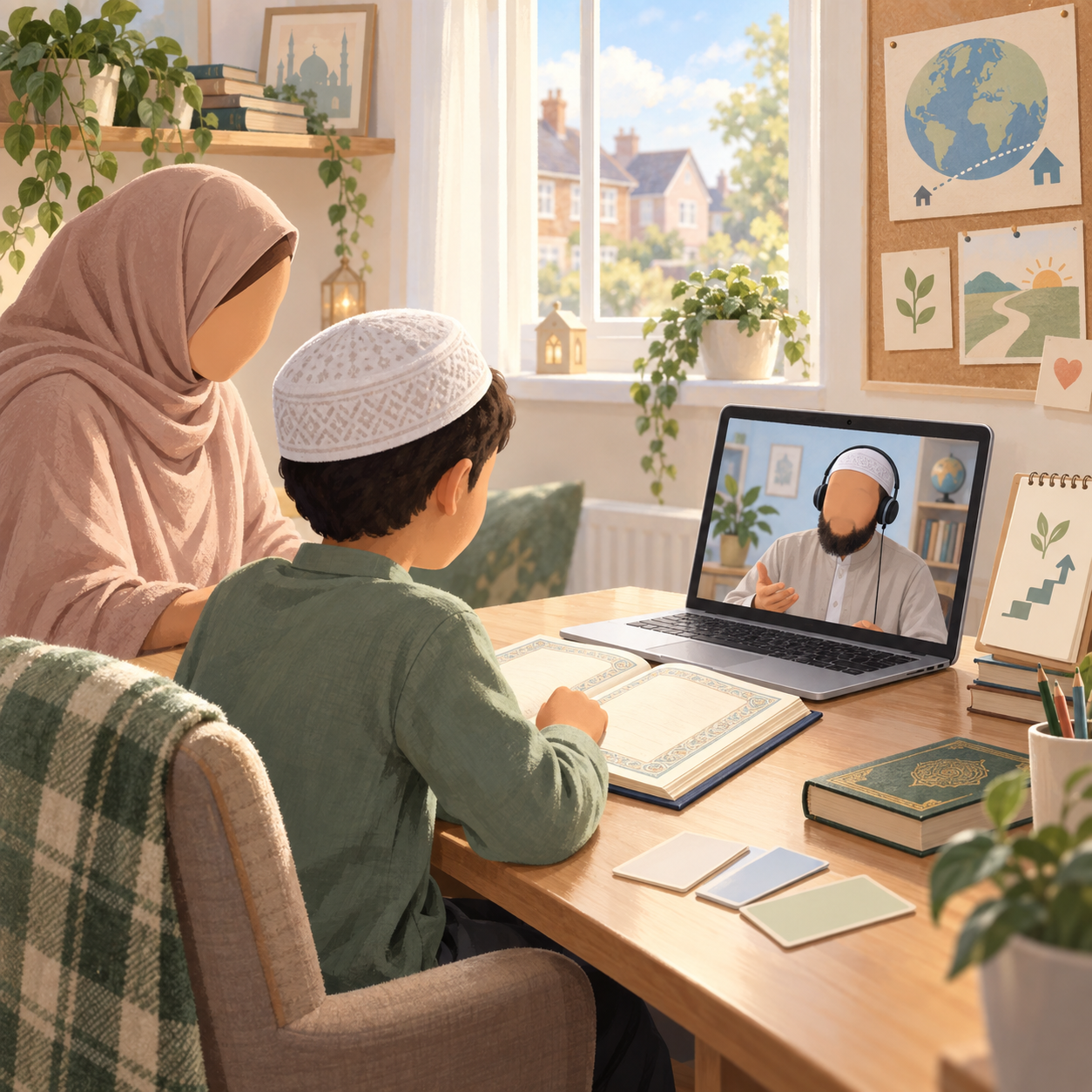
At Sibghah Academy, it is important to understand this clearly: Islamic Studies is not one single all-in-one course. Islamic Studies is a main learning branch taught in English. Under this branch, parents choose the specific Islamic Studies program that best matches their child’s goal.
This means a child may study Minhaj Al-Muslim, Names of Allah, Stories of the Prophets, or Lives of the Companions depending on what the parent wants the child to focus on. These are separate Islamic Studies programs, not one combined course that automatically includes everything together.
This guide explains what a good islamic studies curriculum for kids should include, how parents can understand the main topics, and how to choose the right Islamic Studies program for their child.
Quick answer: A helpful islamic studies curriculum for kids should include faith, worship, manners, duas, stories of the Prophets, Names of Allah, Islamic role models, and Muslim identity. At Sibghah Academy, Islamic Studies is taught in English as a branch with separate course options, not as one all-in-one combined course.
| Curriculum Area | What It Helps Children Build |
|---|---|
| Faith and Aqeedah | Knowing Allah, tawheed, trust, gratitude, and purpose. |
| Worship | Salah, wudu, duas, Ramadan awareness, and daily Islamic habits. |
| Islamic manners | Honesty, kindness, respect, mercy, responsibility, and good speech. |
| Names of Allah | Love of Allah, trust in Allah, dua awareness, and meaningful faith. |
| Stories of the Prophets | Patience, courage, hope, obedience, and trust in Allah. |
| Lives of the Companions | Role models, sacrifice, courage, truthfulness, and Islamic identity. |
| Muslim identity | Confidence as a Muslim child at home, school, and in society. |
| Practical daily Islam | Connecting Islamic knowledge to behaviour, choices, and habits. |
Table of Contents
- What Is an Islamic Studies Curriculum for Kids?
- Is Islamic Studies One Course at Sibghah Academy?
- Islamic Studies Curriculum for Kids vs School Religious Education
- Islamic Studies Curriculum for Kids: 8 Helpful Topics
- How to Choose the Right Islamic Studies Program
- Why One-to-One Islamic Studies Lessons Help
- Common Curriculum Mistakes Parents Should Avoid
- How Sibghah Academy Supports Islamic Studies Learning
- FAQ
What Is an Islamic Studies Curriculum for Kids?
An islamic studies curriculum for kids is a structured learning path that helps children understand Islam in an age-appropriate way. It should not be only facts to memorise. It should help children build belief, worship, manners, love of Allah, and confidence as Muslims.
A curriculum gives order. Instead of teaching a random Islamic story one week, a dua the next week, and a worship rule after that, a curriculum helps parents and teachers know what the child is learning and why.
Islamic learning is valuable and meaningful. The Prophet ﷺ said:
Hadith — Sahih Muslim 2699a
وَمَنْ سَلَكَ طَرِيقًا يَلْتَمِسُ فِيهِ عِلْمًا، سَهَّلَ اللَّهُ لَهُ بِهِ طَرِيقًا إِلَى الْجَنَّةِ
English meaning: “Whoever follows a path in pursuit of knowledge, Allah will make easy for him a path to Paradise.”
This hadith reminds parents that seeking knowledge is not only an academic activity. Helping a child learn Islam is part of guiding them toward beneficial knowledge, worship, and good character.
A strong islamic studies curriculum for kids usually answers these questions:
- What should my child know about Allah?
- What should my child learn about worship?
- Which manners should my child practise?
- Which stories can build faith and values?
- Which role models should my child know?
- How can my child apply Islam at home and school?
- How can Islamic learning build identity and confidence?
The best islamic studies curriculum for kids is not the one with the most topics. It is the one that matches the child’s age, level, needs, and ability to understand.
Is Islamic Studies One Course at Sibghah Academy?
No. At Sibghah Academy, Islamic Studies is not one single all-in-one course that automatically includes every Islamic topic together.
At Sibghah Academy, Islamic Studies is a main learning branch taught in English. Under this branch, parents choose the specific Islamic Studies program that matches their child’s goal.
This is an important distinction because some parents may think “Islamic Studies” means one combined subject that includes Minhaj Al-Muslim, Names of Allah, Stories of the Prophets, and Lives of the Companions all at the same time. That is not how Sibghah structures it.
Instead, Sibghah gives parents separate Islamic Studies program options:
| Sibghah Islamic Studies Program | Best For |
|---|---|
| Minhaj Al-Muslim Course | Children who need Islamic foundations, worship, manners, and daily Islamic understanding. |
| Names of Allah Course | Children who need to know Allah in a loving, meaningful, and age-appropriate way. |
| Stories of the Prophets Course | Children who learn faith and values best through stories and examples. |
| Lives of the Companions Course | Children who need Islamic role models, character lessons, and identity-building. |
This makes the islamic studies curriculum for kids more flexible. A child who needs worship and manners may start with Minhaj Al-Muslim. A child who asks questions about Allah may benefit from Names of Allah. A child who loves stories may start with Stories of the Prophets. A child who needs role models may study Lives of the Companions.
So, when parents ask about an islamic studies curriculum for kids at Sibghah Academy, the answer is not “one course includes everything”. The answer is: Islamic Studies is a branch, taught in English, with separate programs that parents choose from based on the child’s need.
Important clarification: Islamic Studies at Sibghah Academy is taught in English. It is separate from Arabic language learning. It does not require the child to study Arabic first, and it is not connected to Arabic courses such as reading or speaking programs.
Islamic Studies Curriculum for Kids vs School Religious Education
Many Muslim children in the UK study Religious Education at school. GOV.UK states that Religious Education is compulsory in schools in England up to age 18. School RE can help children learn about different religions and beliefs.
However, school Religious Education is not the same as a personal islamic studies curriculum for kids. School RE may teach about Islam from a general or comparative angle. Islamic Studies for Muslim children teaches Islam as their own faith, worship, manners, and way of life.
| School Religious Education | Islamic Studies Curriculum for Kids |
|---|---|
| May teach about many religions and worldviews. | Helps Muslim children learn Islam as their own faith and practice. |
| May follow a school or local syllabus. | Can focus on Islamic belief, worship, manners, stories, and identity. |
| May be general or comparative. | Can be personal, practical, and faith-building. |
| May not answer a Muslim child’s personal questions deeply. | Can give space for questions about Allah, worship, values, and Muslim identity. |
| May not be designed around your child’s Islamic growth. | Can be chosen according to your child’s age, level, and learning goal. |
This is why many parents look for an islamic studies curriculum for kids beyond school. They want their child to understand Islam clearly and practise it with confidence.
Helpful external references:
Islamic Studies Curriculum for Kids: 8 Helpful Topics
A balanced islamic studies curriculum for kids should include topics that build the heart, mind, and behaviour. The following 8 topics can help parents understand what children need at different stages.
1. Knowing Allah and Building Faith
The first part of an islamic studies curriculum for kids should be knowing Allah. Children need to learn about Allah in a loving, clear, and age-appropriate way.
They should understand that Allah is the Creator, Provider, Most Merciful, All-Hearing, All-Knowing, and the One we worship. This builds faith before rules.
The Quran gives a beautiful example of a parent teaching faith. Luqman advised his son:
Quran — Surah Luqman 31:13
وَإِذْ قَالَ لُقْمَانُ لِابْنِهِ وَهُوَ يَعِظُهُ يَا بُنَيَّ لَا تُشْرِكْ بِاللَّهِ ۖ إِنَّ الشِّرْكَ لَظُلْمٌ عَظِيمٌ
English meaning: “And ˹remember˺ when Luqmân said to his son, while advising him, ‘O my dear son! Never associate ˹anything˺ with Allah ˹in worship˺, for associating ˹others with Him˺ is truly the worst of all wrongs.’”
This verse shows that Islamic teaching begins with belief and tawheed. A strong islamic studies curriculum for kids should help children know Allah before asking them to memorise many rules.
At Sibghah Academy, the Names of Allah Course can help children connect with Allah’s Names in a meaningful way. This course is suitable for parents who want their child to build love of Allah, trust in Allah, gratitude, and dua awareness.
2. Worship and Daily Islamic Practice
The second part of an islamic studies curriculum for kids is worship. Children need to learn prayer, wudu, duas, Ramadan, and daily Islamic habits gradually.
Luqman’s advice to his son also included prayer and good action:
Quran — Surah Luqman 31:17
يَا بُنَيَّ أَقِمِ الصَّلَاةَ وَأْمُرْ بِالْمَعْرُوفِ وَانْهَ عَنِ الْمُنكَرِ وَاصْبِرْ عَلَىٰ مَا أَصَابَكَ ۖ إِنَّ ذَٰلِكَ مِنْ عَزْمِ الْأُمُورِ
English meaning: “O my dear son! Establish prayer, encourage what is good and forbid what is evil, and endure patiently whatever befalls you. Surely this is a resolve to aspire to.”
This verse shows that worship, good action, and patience belong together. A helpful islamic studies curriculum for kids should teach worship in a way children can understand and practise.
Children may learn:
- Why Muslims pray.
- How to make wudu.
- Basic prayer awareness.
- Short daily duas.
- Ramadan and fasting awareness.
- Gratitude after food and before sleep.
- Respect for worship and Islamic routines.
At Sibghah Academy, the Minhaj Al-Muslim Course is suitable for children who need Islamic foundations, worship basics, manners, and daily Islamic understanding.
3. Islamic Manners and Character
The third part of an islamic studies curriculum for kids is Islamic manners. Children should not only know Islamic facts. They should learn how Islam shapes speech, behaviour, choices, and relationships.
The Prophet ﷺ taught the importance of good character:
Hadith — Sahih al-Bukhari 6035
إِنَّ مِنْ خِيَارِكُمْ أَحْسَنَكُمْ أَخْلَاقًا
English meaning: “The best among you are those who have the best manners and character.”
This hadith is very suitable for children because it connects Islamic learning to behaviour. A strong islamic studies curriculum for kids should teach honesty, kindness, respect, patience, mercy, responsibility, and good speech.
Children need practical examples:
- How to apologise after a mistake.
- How to tell the truth even when it is hard.
- How to treat siblings kindly.
- How to speak respectfully to parents.
- How to be patient when upset.
- How to show gratitude.
- How to avoid mocking or hurting others.
A useful islamic studies curriculum for kids should help manners become daily habits, not only lesson titles.
Helpful guide: Islamic Manners for Kids.
4. Duas and Daily Remembrance
The fourth part of an islamic studies curriculum for kids is duas and daily remembrance. Children should learn that they can speak to Allah, ask Allah for help, thank Allah, and remember Him in daily moments.
Duas help children connect Islamic Studies to real life. A child can learn a dua before sleeping, before eating, after eating, when leaving home, or when feeling worried.
At a young age, it is better to teach fewer duas with meaning than many duas without understanding. A child should know when to say the dua and what it means generally.
This part of an islamic studies curriculum for kids can include:
- Simple morning and evening remembrance.
- Dua before sleep.
- Dua before and after food.
- Dua for parents.
- Dua when feeling worried.
- Thanking Allah for blessings.
Teaching duas gently helps children feel that Islam is part of daily life, not only a class once a week.
5. Stories of the Prophets
The fifth part of an islamic studies curriculum for kids is Stories of the Prophets. Stories help children learn faith and values through examples.
Children remember stories. A well-taught story can help them understand patience, courage, hope, repentance, trust, and obedience to Allah.
For example:
- Prophet Nuh عليه السلام teaches patience.
- Prophet Ibrahim عليه السلام teaches tawheed and trust.
- Prophet Musa عليه السلام teaches courage and reliance on Allah.
- Prophet Yunus عليه السلام teaches dua and repentance.
- Prophet Muhammad ﷺ teaches mercy, honesty, and beautiful character.
A strong islamic studies curriculum for kids should not treat Prophet stories as entertainment only. Each story should lead to a clear lesson.
Useful questions include:
- What did this Prophet teach us?
- What can we learn about Allah?
- Which good character appears in the story?
- How can we use this lesson at home or school?
At Sibghah Academy, the Stories of the Prophets Course is suitable for children who learn well through stories, examples, and reflection.
6. Lives of the Companions and Islamic Role Models
The sixth part of an islamic studies curriculum for kids is Islamic role models. Children need to know people who lived with faith, courage, truthfulness, patience, and love for the Prophet ﷺ.
In a world full of online influencers and popular characters, Muslim children also need Islamic role models. The Companions رضي الله عنهم show children what faith looked like in real life.
Children can learn:
- Truthfulness from Abu Bakr رضي الله عنه.
- Courage and justice from Umar رضي الله عنه.
- Generosity from Uthman رضي الله عنه.
- Knowledge and bravery from Ali رضي الله عنه.
- Patience and sacrifice from the early Muslims.
- Love for the Prophet ﷺ.
- Strong Muslim identity.
A helpful islamic studies curriculum for kids should give children role models who inspire behaviour, not only historical facts.
At Sibghah Academy, the Lives of the Companions Course is suitable for children who need Islamic role models, identity-building, and values-based learning.
7. Muslim Identity and Confidence
The seventh part of an islamic studies curriculum for kids is Muslim identity. This is especially important for children growing up in the UK or in English-speaking environments.
Muslim children may need help understanding how to feel confident about Islam at school, with friends, or in wider society. They may hear questions about prayer, fasting, halal food, modesty, or why Muslims believe certain things.
A strong islamic studies curriculum for kids should help children feel calm and confident, not confused or embarrassed.
Identity lessons may include:
- What it means to be Muslim.
- How to answer simple questions about Islam.
- How to feel confident during Ramadan.
- How to explain halal choices politely.
- How to be kind to others while staying true to Islam.
- How to handle differences respectfully.
- How to ask parents or teachers for help when confused.
Helpful guide: Islamic Identity for Muslim Children in the UK.
8. Practical Daily Islam
The eighth part of an islamic studies curriculum for kids is practical daily Islam. This means helping children connect lessons to everyday life.
A child should not only learn that honesty is good. They should practise honesty when they make a mistake. A child should not only learn that Allah hears dua. They should make dua when they feel worried. A child should not only learn that Muslims pray. They should understand prayer as a connection with Allah.
Practical daily Islam can include:
- Choosing one manner to practise each week.
- Discussing one story lesson at home.
- Using one dua during the week.
- Connecting worship to gratitude and love of Allah.
- Reflecting on one good deed each day.
- Helping children notice Islamic values in real situations.
This is what turns an islamic studies curriculum for kids from information into character and daily practice.
Sibghah Teacher Note: A good Islamic Studies curriculum does not mean teaching every topic at once. It means choosing the right Islamic Studies program for your child’s current need and helping them apply what they learn in daily life.
How to Choose the Right Islamic Studies Program
Because Sibghah Academy does not treat Islamic Studies as one combined all-in-one course, parents should choose the program that fits their child’s goal.
Use this table to choose the most suitable path:
| Your Child’s Need | Recommended Sibghah Islamic Studies Program | Why This Helps |
|---|---|---|
| Your child needs basic Islamic foundations, worship, manners, and daily Islamic understanding. | Minhaj Al-Muslim Course | It gives a structured foundation in Islamic knowledge and practice. |
| Your child needs to know Allah in a loving and meaningful way. | Names of Allah Course | It helps children build love, trust, gratitude, and connection to Allah. |
| Your child learns best through stories and examples. | Stories of the Prophets Course | It teaches faith and values through Prophet stories and reflection. |
| Your child needs Islamic role models, character lessons, and identity-building. | Lives of the Companions Course | It introduces inspiring role models from the lives of the Companions. |
This table helps parents understand that an islamic studies curriculum for kids can be personalised. Your child does not need to take every Islamic Studies program at the same time.
Start with the need that matters most right now. Later, your child can move to another Islamic Studies program as their level and goals develop.
Why One-to-One Islamic Studies Lessons Help
One-to-one lessons can make an islamic studies curriculum for kids more effective because every child has a different level and personality.
Some children ask many questions. Some are shy. Some need stories. Some need worship basics. Some need help with manners. Some need confidence as Muslim children in the UK.
In a one-to-one Islamic Studies lesson, the teacher can understand your child’s needs and choose the right pace.
| One-to-One Benefit | How It Helps Islamic Studies Learning |
|---|---|
| Personal level check | The teacher understands what the child already knows and what they need next. |
| Safe space for questions | The child can ask about faith, worship, values, and identity without group pressure. |
| Flexible pace | The class can slow down or move forward according to the child. |
| Better program choice | Parents can see whether the child needs Minhaj, Names of Allah, Stories, or Companions. |
| Parent feedback | Parents know what was covered and how to support learning at home. |
This is why one-to-one lessons are helpful for implementing an islamic studies curriculum for kids. The goal is not to push every child into the same subject. The goal is to choose the right Islamic Studies path for that child.
Need help choosing the right Islamic Studies program?
Sibghah Academy teaches Islamic Studies in English through separate one-to-one programs. Send us your child’s age and goal, and we will help you choose between Minhaj Al-Muslim, Names of Allah, Stories of the Prophets, and Lives of the Companions.
Common Curriculum Mistakes Parents Should Avoid
When choosing an islamic studies curriculum for kids, parents should avoid these common mistakes.
Thinking Islamic Studies is always one combined subject
At Sibghah Academy, Islamic Studies is a branch with separate programs. It is not one all-in-one course that automatically includes every topic.
Choosing too many topics at once
A child may not need Minhaj, Names of Allah, Stories, and Companions all at the same time. Start with the most suitable program.
Ignoring the child’s current need
Some children need faith-building. Others need worship basics. Others need role models. Choose based on your child, not only the course title.
Expecting Islamic Studies to depend on Arabic
At Sibghah Academy, Islamic Studies is taught in English. It is separate from Arabic language learning.
Choosing a curriculum with no practical application
Islamic Studies should connect to daily life, manners, worship, and choices.
Focusing only on information
The goal is not only to know Islamic facts. A strong islamic studies curriculum for kids should help children build faith, behaviour, and identity.
Not asking for a recommendation
A trial or level check can help parents choose the right Islamic Studies program instead of guessing.
How Sibghah Academy Supports Islamic Studies Learning
Sibghah Academy offers live one-to-one Quran, Arabic, and Islamic Studies lessons for Muslim children aged 5–15. For Islamic Studies specifically, the learning branch is taught in English and includes separate program options.
For parents looking for an islamic studies curriculum for kids, Sibghah Academy can help by recommending the most suitable Islamic Studies program based on the child’s age, level, and learning goal.
Sibghah’s Islamic Studies branch includes:
- Minhaj Al-Muslim Course
- Names of Allah Course
- Stories of the Prophets Course
- Lives of the Companions Course
Because lessons are one-to-one, the teacher can adapt to the child. If your child needs worship and manners, Minhaj Al-Muslim may be suitable. If your child needs love and knowledge of Allah, Names of Allah may be better. If your child enjoys stories, Stories of the Prophets may work well. If your child needs role models, Lives of the Companions may be the right choice.
This helps parents avoid confusion. Islamic Studies is not one fixed course for every child. It is a branch with different learning paths.
Quick Parent Checklist
Use this checklist when choosing an islamic studies curriculum for kids:
- Do I understand that Islamic Studies is a branch, not one combined course?
- Do I know that Islamic Studies at Sibghah is taught in English?
- Does my child need basic Islamic foundations?
- Does my child need to know Allah in a deeper and more loving way?
- Does my child learn better through Prophet stories?
- Does my child need Islamic role models?
- Does the curriculum build manners and daily practice?
- Does the class give space for questions?
- Is the class one-to-one and suitable for my child’s level?
- Do I know which Islamic Studies program to choose first?
FAQ: Islamic Studies Curriculum for Kids
1. What is an islamic studies curriculum for kids?
An islamic studies curriculum for kids is a structured learning path that helps children learn faith, worship, manners, stories, Islamic values, and Muslim identity in an age-appropriate way.
2. Is Islamic Studies one course at Sibghah Academy?
No. At Sibghah Academy, Islamic Studies is a branch taught in English. Under this branch, parents choose separate programs such as Minhaj Al-Muslim, Names of Allah, Stories of the Prophets, or Lives of the Companions.
3. Does Islamic Studies at Sibghah include all programs together?
No. Islamic Studies at Sibghah Academy is not one all-in-one combined course. Parents choose the specific Islamic Studies program that matches their child’s goal.
4. Is Islamic Studies taught in Arabic or English at Sibghah?
Islamic Studies at Sibghah Academy is taught in English, so children can understand faith, worship, manners, stories, and Islamic identity clearly.
5. What should an islamic studies curriculum for kids include?
A helpful islamic studies curriculum for kids may include faith, worship, duas, manners, Names of Allah, Stories of the Prophets, Lives of the Companions, and Muslim identity.
6. Which Islamic Studies program should my child start with?
If your child needs foundations, Minhaj Al-Muslim may be suitable. If your child needs faith-building, choose Names of Allah. If your child loves stories, choose Stories of the Prophets. If your child needs role models, choose Lives of the Companions.
7. Is school Religious Education enough for Muslim children?
School Religious Education can help children learn about religions, but Muslim children often need Islamic Studies that builds their own faith, worship, manners, and identity.
8. Can one child take more than one Islamic Studies program?
Yes, but not necessarily at the same time. A child may start with one program and move to another later based on their needs and progress.
9. Are one-to-one Islamic Studies lessons helpful?
Yes. One-to-one lessons help the teacher understand the child’s level, answer questions, adjust the pace, and recommend the right Islamic Studies program.
10. Does Islamic Studies need to be linked to Arabic?
No. At Sibghah Academy, Islamic Studies is taught in English and is separate from Arabic language learning.
11. What is the best next step for parents?
The best next step is to choose the child’s main Islamic Studies goal, then book a trial or ask for help choosing between Minhaj Al-Muslim, Names of Allah, Stories of the Prophets, and Lives of the Companions.
Choose the right Islamic Studies program for your child
If you are looking for an islamic studies curriculum for kids, Sibghah Academy can help you choose the right English-taught Islamic Studies program for your child.
Send us your child’s age, current level, and main goal, and we will recommend the most suitable program.