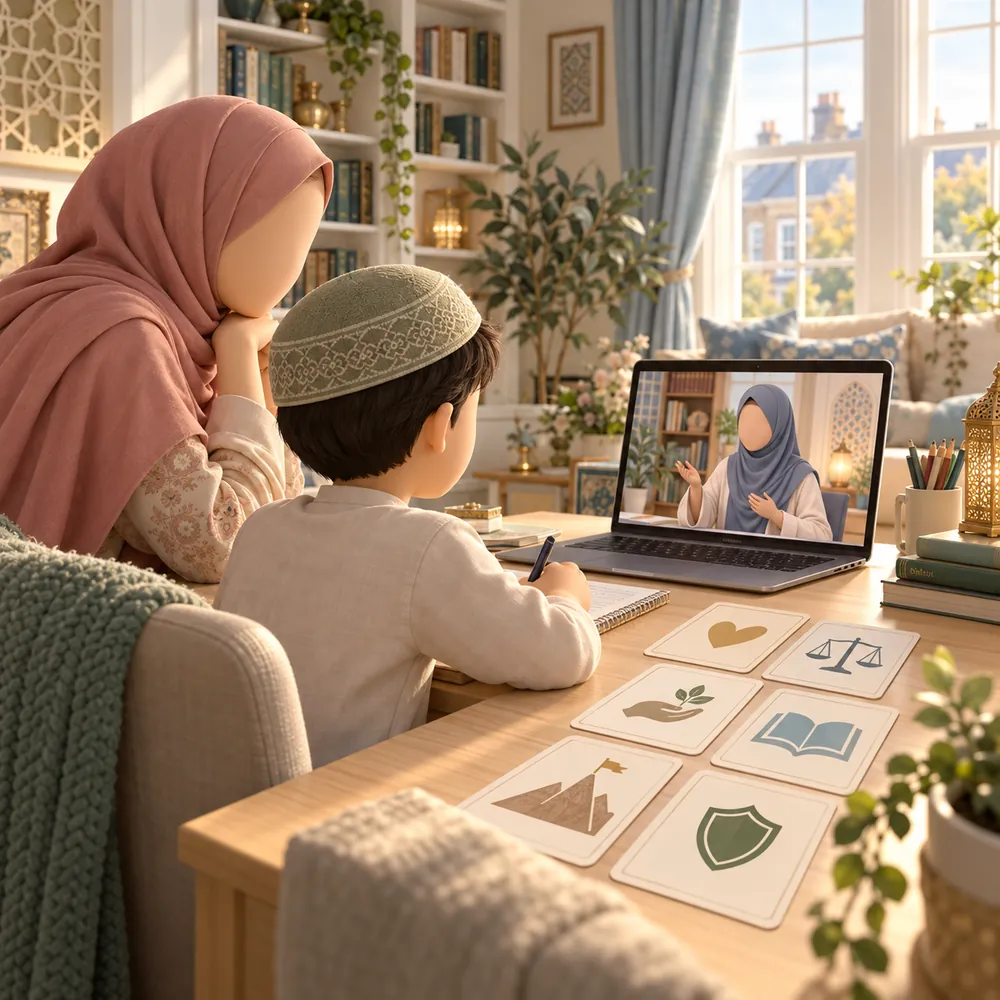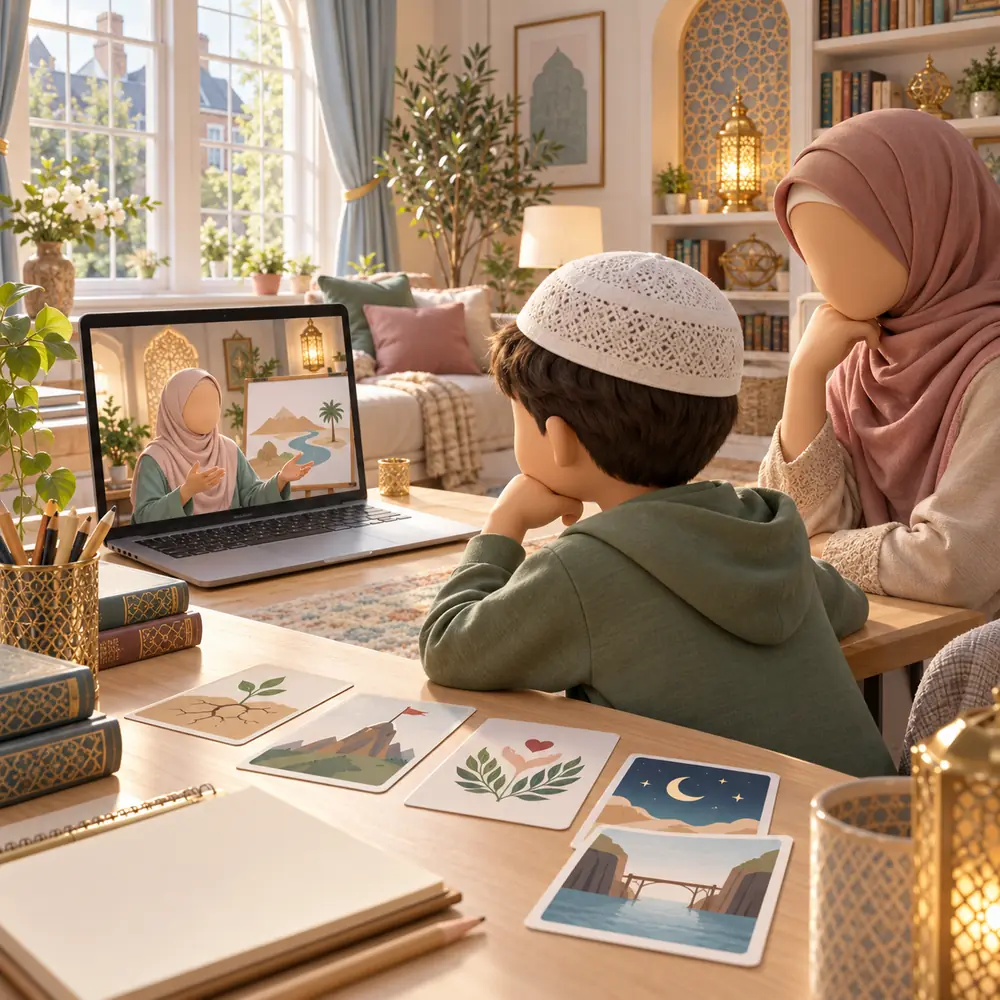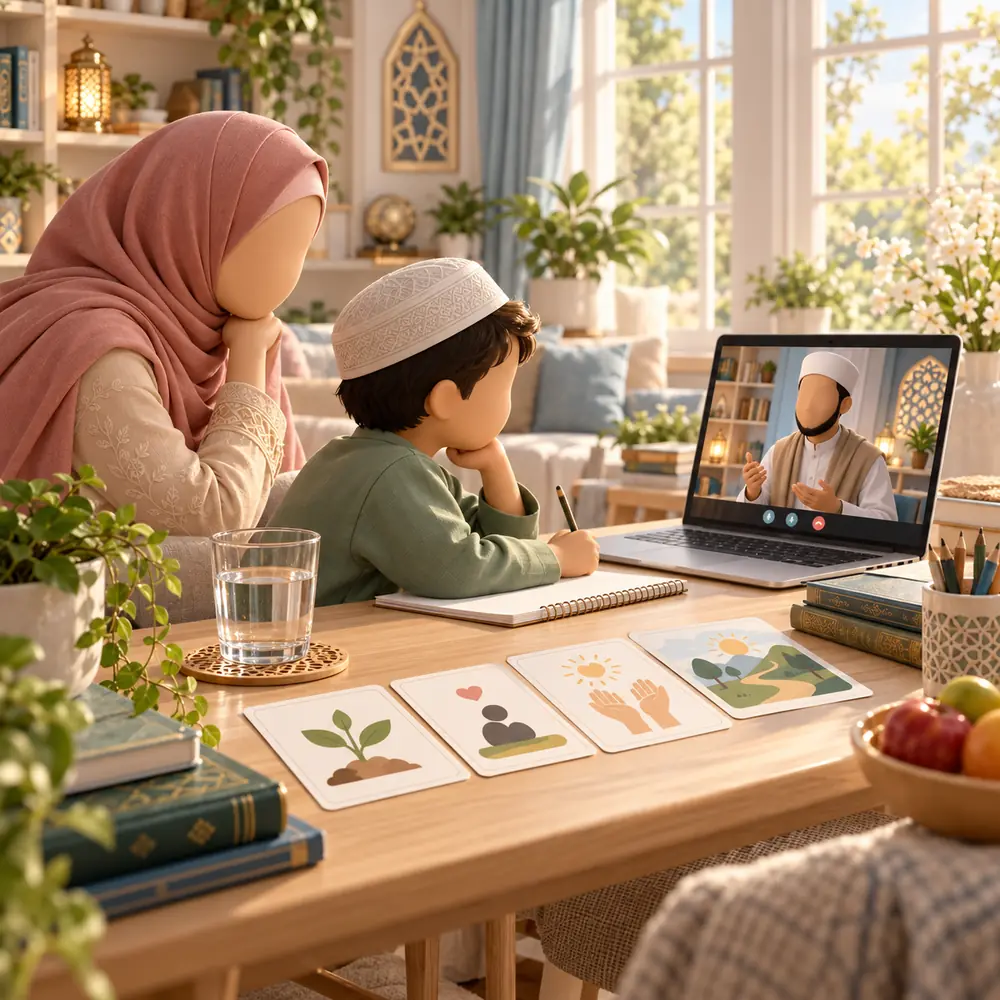
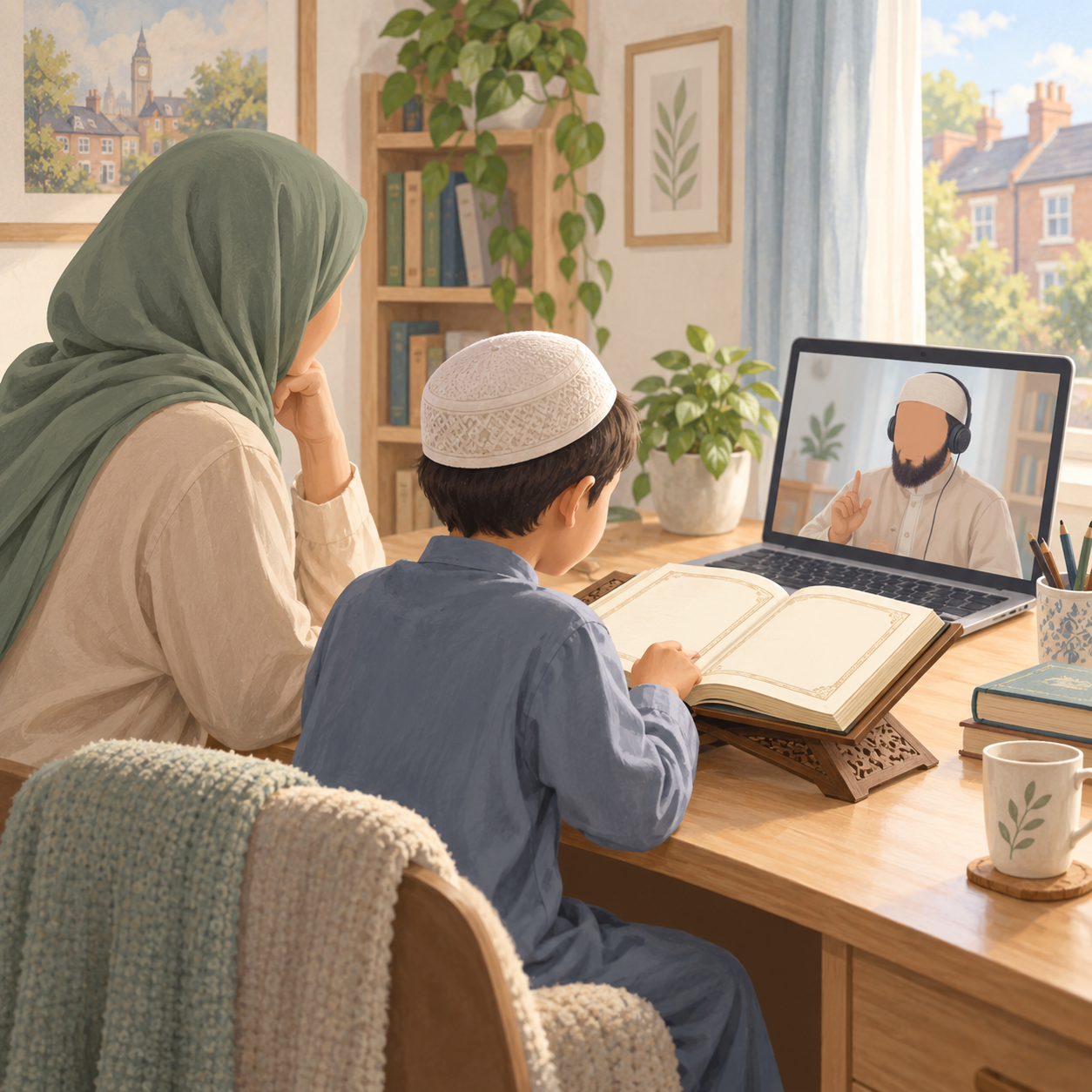
Best Online Quran Classes UK is a search many Muslim parents make when they are no longer simply looking for a Quran class. They are trying to decide which type of Quran learning will actually suit their child.
One child may be learning Arabic letters for the first time. Another may already read Quran but make repeated pronunciation mistakes. Another may be ready for Tajweed, while another wants to begin Hifz through listening and repetition. Some children need more confidence. Others need stronger revision or more personal teacher attention.
This is why there is no single programme that can automatically be called the best for every child. When parents search for the Best Online Quran Classes UK, the more useful question is: Which Quran class is the best fit for my child’s current level, goal, personality, and learning needs?
Good Quran learning should help children build a positive relationship with the Quran while gradually improving the skills they actually need. That may include reading, recitation, pronunciation, Tajweed, memorisation, revision, or a combination of these areas.
Quick answer: Parents comparing the Best Online Quran Classes UK should look for nine things: a proper starting-level check, a clear Quran learning path, a child-friendly teacher, enough individual recitation time, gentle correction, suitable support for reading, Tajweed or Hifz, regular parent feedback, realistic progress tracking, and clear safeguarding and online-learning practices.
Book a free one-to-one Quran trial session on WhatsApp
Table of Contents
- What Does “Best” Mean for Your Child?
- Best Online Quran Classes UK: 9 Smart Checks
- Reading, Tajweed or Hifz: Which Path Does Your Child Need?
- Why One-to-One Quran Learning Can Help
- What Makes a Good Online Quran Teacher for Children?
- What Should Happen in a Quran Trial Lesson?
- How Should Quran Progress Be Measured?
- Online Safety and Safeguarding Questions for Parents
- Red Flags When Comparing Quran Classes
- How Sibghah Approaches Online Quran Learning
- Parent Comparison Checklist
- FAQ
What Does “Best” Mean When Comparing Online Quran Classes?
When parents search for the Best Online Quran Classes UK, it is easy to focus on websites, prices, lesson lengths, or promises.
But children do not all start from the same place.
Consider four children of the same age:
- One recognises Arabic letters but cannot join them confidently.
- One reads independently but needs pronunciation correction.
- One has memorised several short surahs but forgets them without revision.
- One cannot yet read independently but learns Quran well through listening and repetition.
These children should not all receive exactly the same Quran lesson.
The Best Online Quran Classes UK for your family should therefore be classes that identify your child’s current ability and then build the right learning path around it.
For some children, the first priority is reading foundations. For others, it is recitation. Some need Tajweed introduced gradually through real Quran reading. Others may be ready for Hifz with a stronger revision system.
“Best” should mean appropriate, personal, structured, safe, and sustainable for the individual child.
Best Online Quran Classes UK: 9 Smart Checks for Parents
Use these nine checks when comparing the Best Online Quran Classes UK. They help parents evaluate what actually happens inside the lesson rather than relying only on marketing claims.
1. Does the programme check your child’s Quran level first?
A good Quran learning path should begin by understanding the child.
The teacher may need to check:
- Whether the child recognises Arabic letters
- Whether they understand basic vowel sounds
- Whether they can join letters into words
- How confidently they read Quran
- Whether pronunciation mistakes repeat
- Whether basic Tajweed support is needed
- What the child has already memorised
- How well memorised portions are retained
- How comfortable the child feels reading aloud
This does not need to feel like an intimidating exam. A skilled teacher can assess many of these areas naturally during a trial lesson.
When comparing the Best Online Quran Classes UK, be cautious about a system that assigns every child the same starting point without first listening to them.
2. Is the Quran learning path clear?
Parents should understand what the child is working towards.
A class should not feel like the child simply opens the Quran, reads something, receives corrections, and repeats the process indefinitely without a clear direction.
A structured path may look different according to the child’s needs.
| Child’s Current Need | Possible Quran Learning Focus |
|---|---|
| Weak Arabic reading foundation | Letters, sounds, vowels, joining and reading basics |
| Can read but hesitates | Reading fluency and confidence |
| Repeated pronunciation mistakes | Listening, pronunciation correction and recitation practice |
| Ready for Tajweed | Practical Tajweed through actual recitation |
| Beginning Hifz | Listening, repetition, teacher-led memorisation and revision |
| Already memorising | New memorisation balanced with strong revision |
The Best Online Quran Classes UK should make the child’s next step understandable to both teacher and parent.
3. Does your child get enough time to actually recite?
Quran learning requires active practice.
A teacher can explain pronunciation or Tajweed, but the teacher also needs to hear the child.
The child should regularly:
- Read aloud
- Listen to correct recitation
- Repeat after the teacher
- Try difficult words again
- Receive correction
- Recite independently when ready
This is particularly important when comparing group and one-to-one learning.
In a group class, recitation time must usually be shared. In a one-to-one class, the teacher can spend the lesson listening directly to one child.
That does not automatically make every one-to-one class excellent, but sufficient recitation time is an important quality check when searching for the Best Online Quran Classes UK.
4. How does the teacher correct mistakes?

Children need correction. Without correction, repeated pronunciation or reading mistakes can become habits.
But the way correction happens matters.
A teacher might:
- Listen to the child’s attempt.
- Identify the specific mistake.
- Model the correct sound or recitation.
- Ask the child to listen carefully.
- Give the child another attempt.
- Repeat patiently if needed.
Children should not feel embarrassed for making normal learning mistakes.
The Best Online Quran Classes UK should combine accuracy with patience. Quran learning deserves care and seriousness, but seriousness does not require harshness.
Parents can read more about this in our Quran Reading Classes for Kids guide.
5. Is Tajweed taught through real recitation rather than theory alone?
Tajweed is important, but younger children do not always need long theoretical explanations before they can improve their recitation.
Children can begin developing Tajweed through:
- Listening to correct recitation
- Repeating sounds
- Practising real Quran words
- Receiving immediate correction
- Noticing where sounds change
- Learning rules gradually when they are useful
A child should not feel that Tajweed is a separate collection of difficult terminology that stands between them and the Quran.
When comparing the Best Online Quran Classes UK, look for practical Tajweed teaching that improves actual recitation.
Our Tajweed Classes for Kids guide explains this approach in more detail.
6. Does Hifz include revision, not only new memorisation?
A child can memorise quickly and still struggle with long-term retention.
That is why a strong Hifz programme should include revision.
Parents should ask:
- How much old memorisation is reviewed?
- How is new memorisation introduced?
- What happens when the child forgets?
- Does the teacher reduce the new portion when revision becomes weak?
- Does the teacher help parents understand what should be reviewed at home?
Another important point is that Hifz does not always need to wait until a child can read independently.
Some children begin memorisation through listening, repetition, and teacher-led recitation. Reading can support Hifz as the child develops, but it is not necessarily a condition for beginning every child’s memorisation journey.
The Best Online Quran Classes UK should recognise that children memorise differently and should balance new learning with revision.
For more detail, see our Hifz Classes for Kids guide.
7. Does the programme fit the child rather than forcing the child into one pace?
Children have different learning speeds.
One child may master a reading pattern quickly but need repeated pronunciation work. Another may memorise well but require more revision. Another may understand corrections but need more time to become confident reading aloud.
The Best Online Quran Classes UK should allow enough flexibility for these differences.
This is particularly important for:
- Young beginners
- Shy children
- Children with weak reading foundations
- Children who need repeated listening
- Children who memorise at a different pace
- Children who have previously lost confidence in Quran learning
A clear curriculum can provide structure, but structure should not mean ignoring the child’s actual needs.
8. Do parents receive useful feedback?
Parents should not have to guess whether the child is improving.
Useful Quran feedback can be simple.
For example:
- Your child is reading more fluently but still needs work on two sounds.
- Your child is ready to begin basic Tajweed awareness.
- Your child remembers new Hifz well but needs more old revision.
- Your child currently needs stronger Arabic reading foundations.
- Your child reads accurately but rushes and needs slower recitation.
This is more useful than simply saying the child “did well.”
Parents comparing the Best Online Quran Classes UK should look for a programme that makes progress and next steps understandable.
9. Are safeguarding and online learning procedures clear?
Online learning should feel organised and safe for the family.
Parents should know:
- How lessons are scheduled
- Which platform is used
- How teacher-parent communication happens
- Who parents contact if they have a concern
- What safeguarding practices the organisation follows
- How teacher suitability and relevant checks are handled
Parents in the UK can review official GOV.UK guidance on regulated activity with children and DBS eligibility. The exact check that applies depends on the role and activity, so parents should ask providers directly how safeguarding and teacher checks are managed.
Families can also review NSPCC online safety guidance for parents and carers.
The Best Online Quran Classes UK should make families feel informed about how online lessons operate rather than leaving important procedures unclear.
Quran Reading, Tajweed or Hifz: Which Path Does Your Child Need?
Parents sometimes search for the Best Online Quran Classes UK without first knowing which Quran skill their child actually needs.
These areas are connected, but they are not identical.
Quran Reading
Reading support focuses on helping a child decode and read Quran more accurately and confidently.
This may include:
- Arabic letters and sounds
- Vowels
- Joining letters
- Reading words
- Reading fluency
- Pronunciation
Tajweed
Tajweed focuses more specifically on improving the correctness and quality of Quran recitation.
For children, this is often most useful when it grows from actual recitation rather than advanced theory alone.
Hifz
Hifz focuses on memorisation and retention.
A good Hifz path may include:
- Listening
- Repetition
- Teacher-led recitation
- Memorising short suitable portions
- Revision
- Gentle correction
- Simple age-appropriate understanding of the verses
Some children need more than one of these areas at the same time.
For example, a child may memorise through listening while continuing to develop reading separately. Another may already read well and begin focusing more on Tajweed.
The strongest Best Online Quran Classes UK evaluation therefore begins with the child’s actual level rather than the name of the programme.
Why One-to-One Quran Learning Can Help
One-to-one learning is an important factor for many parents searching for the Best Online Quran Classes UK.
In a one-to-one lesson, the teacher can hear the child continuously rather than waiting for their turn in a group.
This can give the child:
- More recitation time
- More immediate correction
- A pace matched to their level
- More opportunities to repeat difficult sounds
- A Hifz portion suited to their ability
- More time to ask questions
- A quieter setting if they feel shy
| Area | One-to-One Quran Lesson | Group Quran Lesson |
|---|---|---|
| Teacher attention | Focused on one child | Shared between learners |
| Recitation time | Can be substantial | Usually shared |
| Pace | Can follow the child | Often follows the group |
| Correction | Immediate and personal | Depends on available time |
| Peer interaction | Limited | Greater |
Group classes can still work well for some children. The purpose of comparing formats is not to say one format is universally right for everyone.
At Sibghah Academy, Quran lessons are one-to-one because the model is built around personal listening, correction, pacing, and feedback.
Parents can learn more in our One-to-One Quran Tutor UK guide.
What Makes a Good Online Quran Teacher for Children?
A teacher is one of the most important parts of the Best Online Quran Classes UK decision.
Good Quran knowledge matters, but children also need someone who knows how to teach children.
Parents should observe whether the teacher:
- Listens carefully
- Explains simply
- Corrects accurately
- Shows patience with repetition
- Adjusts to the child’s pace
- Encourages effort
- Does not embarrass the child
- Can recognise whether the main issue is reading, Tajweed, Hifz, revision, or confidence
The Prophet ﷺ said:
خَيْرُكُمْ مَنْ تَعَلَّمَ الْقُرْآنَ وَعَلَّمَهُ
“The best among you are those who learn the Qur’an and teach it.”
Quran teaching is valuable, and that makes the quality of the child’s learning experience important. A teacher should help the child improve while protecting respect and love for Quran learning.
What Should Happen in a Quran Trial Lesson?
A trial lesson can be one of the most useful tools when comparing the Best Online Quran Classes UK.
The purpose should not simply be to impress the parent for one session.
A useful Quran trial can help answer:
- What is the child’s current reading level?
- Are there pronunciation difficulties?
- Does the child need basic reading foundations?
- Is Tajweed appropriate at this stage?
- What has the child already memorised?
- How strong is revision?
- Does the child learn well through listening and repetition?
- How confident is the child reading aloud?
The teacher should also do some real teaching during the session.
Parents can observe:
| What to Watch | Positive Sign |
|---|---|
| Assessment | The teacher first listens and observes |
| Correction | Mistakes are corrected clearly and calmly |
| Pacing | The teacher adjusts when the child struggles |
| Participation | The child gets substantial recitation time |
| Confidence | The child is willing to try again after mistakes |
| Recommendation | The parent receives a clear next step |
A useful trial should leave the parent with more clarity about the child’s Quran needs.
Book a free Quran trial session
How Should Progress Be Measured in the Best Online Quran Classes UK?
The Best Online Quran Classes UK should help parents see progress through real Quran skills rather than only the number of completed pages.
| Area | Possible Sign of Progress |
|---|---|
| Reading | Less hesitation and fewer guesses |
| Pronunciation | Repeated sound mistakes become less frequent |
| Recitation | The child reads more calmly and accurately |
| Tajweed | The child applies more rules naturally while reading |
| Hifz | Memorised portions become stronger and more stable |
| Revision | Older memorisation is retained more consistently |
| Confidence | The child is more willing to recite and try again |
Progress will not always be perfectly linear.
A child may have a week where reading improves quickly and another where a difficult pattern requires more repetition. A Hifz learner may need to pause new memorisation temporarily to strengthen revision.
That does not necessarily mean the programme is failing. A good Quran teacher should know when to move forward and when to strengthen an existing skill first.
Should Parents Choose Quran Classes Based on Price?
Price matters to families, but it should not be the only factor when comparing the Best Online Quran Classes UK.
Parents should understand what they are actually receiving.
For example, ask:
- Is the lesson one-to-one or group?
- How much direct recitation time does my child receive?
- Does the teacher provide individual correction?
- Is there a level assessment?
- Is parent feedback included?
- Can the learning path change according to the child?
- Is Hifz revision monitored?
- Are lessons live or mainly recorded?
A lower session price does not automatically mean better value, and a higher price does not automatically guarantee better teaching.
The useful question is:
“What learning experience and teacher attention does my child receive for this cost?”
Online Safety and Safeguarding Questions Parents Should Ask
Safeguarding should be part of the Best Online Quran Classes UK comparison, especially when a child is learning one-to-one online.
Parents can ask providers:
- How are teachers recruited?
- What relevant checks are used for teaching roles?
- How are lessons and teacher communication managed?
- Is parent communication kept separate from direct child communication where appropriate?
- How can a parent report a concern?
- Who supervises safeguarding procedures?
UK guidance on DBS checks depends on the nature of the role and activity. Parents can use the official GOV.UK regulated activity with children guidance for current information.
Parents and carers can also use the NSPCC Online Safety Hub for wider advice about children’s digital safety.
A trustworthy provider should be willing to answer reasonable safeguarding questions clearly.
Red Flags When Comparing Online Quran Classes
When parents search for the Best Online Quran Classes UK, some warning signs deserve further questions.
- No attempt to understand the child’s current level
- Exactly the same learning path for every child
- Very little time for the child to recite
- Harsh correction or embarrassment
- Pressure to memorise more without adequate revision
- Tajweed taught only as difficult theory with little recitation
- No clear parent feedback
- Unrealistic promises of rapid fluency or memorisation
- No clear safeguarding or communication process
- The child repeatedly becomes anxious about attending
One difficult lesson does not automatically mean a teacher or programme is unsuitable. Children can be tired, distracted, or nervous.
Parents should look for repeated patterns.
How Sibghah Approaches Online Quran Learning
Sibghah Academy provides live one-to-one Quran lessons for Muslim children aged 5–15.
For families searching for the Best Online Quran Classes UK, Sibghah’s approach is based on identifying what the child needs and then using one-to-one teaching to support that learning path.
Depending on the child, lessons may support:
- Quran reading foundations
- Reading fluency
- Recitation
- Pronunciation correction
- Practical Tajweed
- Hifz
- Revision
- Confidence while reciting
Children who need Arabic reading foundations may begin with Noor Al-Bayan before or alongside later Quran reading development, depending on their level.
Children who are memorising can begin through listening, repetition, and teacher-led recitation when appropriate. Independent Quran reading is helpful, but it is not treated as a universal requirement before every child can begin Hifz.
The one-to-one format means the teacher can listen directly to the child, correct mistakes, repeat difficult sounds, adjust the Hifz portion, strengthen revision, and give parents clearer feedback.
Sibghah does not need to be presented as a universal “best” choice for every family. The purpose of a trial session is to help parents understand whether the teaching approach and learning path are suitable for their own child.
Sibghah Teacher Note
A child’s Quran difficulty is often more specific than it first appears. “My child struggles with Quran” may mean weak Arabic reading foundations, one repeated pronunciation problem, rushed recitation, poor Hifz revision, or simply low confidence. The teacher’s first job is to identify the real difficulty. Once that is clear, the next step can become much smaller and more achievable.
Parent Checklist for the Best Online Quran Classes UK
Use this checklist when comparing the Best Online Quran Classes UK for your child:
- My child’s Quran level is checked before the learning path is decided.
- The teacher has experience teaching children.
- My child receives enough direct recitation time.
- Corrections are accurate but gentle.
- The lesson pace can adjust to my child.
- The programme distinguishes reading, Tajweed, and Hifz needs.
- Hifz includes revision, not only new memorisation.
- Tajweed is connected to real Quran recitation.
- My child can ask questions and try again without embarrassment.
- I receive understandable parent feedback.
- Progress is measured through real Quran skills.
- The provider can explain safeguarding and communication procedures.
- The timetable is realistic for our family.
- The class helps protect my child’s positive relationship with the Quran.
If most of these points are present, the programme may deserve serious consideration for your child.
FAQ About Best Online Quran Classes UK
What are the Best Online Quran Classes UK for children?
The Best Online Quran Classes UK for a child are the classes that match that child’s actual level and Quran goal. Parents should look for suitable teacher attention, enough recitation time, gentle correction, structured reading or Hifz support, clear feedback, and safe online-learning practices.
Are one-to-one Quran classes better than group classes?
One-to-one Quran classes can be especially useful for children who need more recitation time, personal correction, a flexible pace, Tajweed support, Hifz revision, or confidence-building. Some children can still benefit from group learning, so the choice should reflect the individual child.
How do I know my child’s Quran level?
A Quran trial or assessment can help identify whether your child needs Arabic reading foundations, Quran fluency, pronunciation correction, Tajweed, Hifz, revision, or a combination of these areas.
Should the Best Online Quran Classes UK include Tajweed?
Tajweed support can be valuable when it is appropriate for the child’s level. For children, Tajweed is often most effective when introduced gradually through listening, recitation, repetition, and gentle correction rather than theory alone.
Can a child start Hifz before reading Quran independently?
Yes, some children can begin Hifz through listening, repetition, and teacher-led recitation before they become independent readers. The right approach depends on the child’s age, level, memory, attention, and learning needs.
How important is Hifz revision?
Revision is essential for keeping memorised portions strong. A good Hifz programme should balance new memorisation with review rather than continually adding new portions while older ones become weak.
How often should parents receive feedback?
The exact frequency can vary, but parents should receive enough information to understand what the child is working on, what is improving, where support is still needed, and what can be reviewed at home.
Should I ask about DBS checks for online Quran teachers?
Parents can ask any provider how teacher suitability checks and safeguarding are handled. DBS eligibility and the appropriate level of check depend on the specific role and activity, so current GOV.UK guidance is the appropriate reference for UK requirements.
How can I tell whether a Quran class is working?
Look for practical changes: more confident reading, fewer repeated pronunciation errors, calmer recitation, stronger Tajweed application, better Hifz retention, improved revision, and greater willingness to recite.
Does Sibghah offer one-to-one Quran lessons?
Yes. Sibghah Academy provides live one-to-one Quran lessons for Muslim children aged 5–15, supporting reading, recitation, pronunciation, Tajweed, Hifz, revision, and confidence according to the child’s level.
Does Sibghah provide the Best Online Quran Classes UK?
“Best” depends on the individual child and family. Sibghah provides live one-to-one Quran learning with personalised attention, level-based support, gentle correction, and parent feedback. A trial lesson can help your family decide whether this approach is suitable for your child’s needs.
Final Thoughts on the Best Online Quran Classes UK
Finding the Best Online Quran Classes UK becomes easier when parents stop searching for one universal winner and start asking better questions about their own child.
What does my child need now?
Do they need stronger Arabic reading foundations? More recitation time? Pronunciation correction? Practical Tajweed? Hifz through listening and repetition? Stronger revision? More confidence?
Once the real need is clear, parents can evaluate teachers and programmes much more effectively.
The Best Online Quran Classes UK for your child should provide a clear learning path, enough active Quran practice, gentle correction, suitable teacher attention, useful feedback, and a learning environment where the child can improve without losing their positive connection with the Quran.
At Sibghah Academy, Quran lessons are live and one-to-one. The teacher can listen carefully, adjust the pace, support Quran reading, introduce Tajweed gradually, guide Hifz and revision, and help parents understand the child’s next step.
A free trial lesson can help identify your child’s current Quran level and whether Sibghah’s one-to-one approach is a suitable fit for your family.
Message Sibghah Academy on WhatsApp to book a free one-to-one Quran trial session