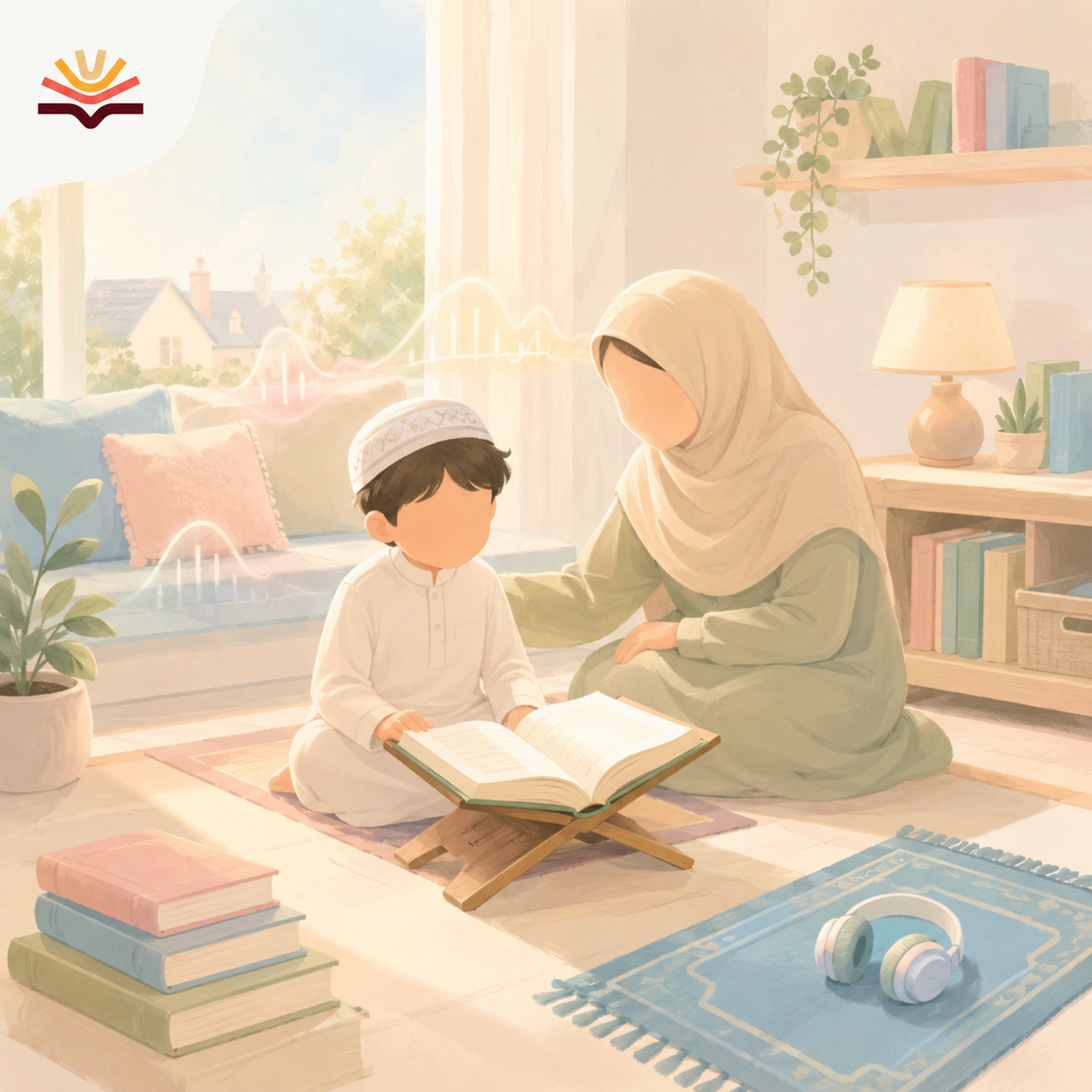
Many Muslim parents want their children to learn Quran, but they are not always sure where to start. Should the child begin with Noor Al-Bayan? Quran reading? Memorization? Tajweed? Revision? Arabic vocabulary? Or simply listening and loving the Quran first?
The answer depends on your child’s age, Arabic level, attention span, confidence, and current relationship with Quran. Some children need Arabic reading foundations first. Some are ready to recite. Some can memorize but need revision. Some read Quran but need Tajweed correction. Others need a gentler start because Quran learning has begun to feel stressful.
This parent guide explains Quran for Kids in a practical way. It gives you 10 helpful tips to start Quran learning, choose the right path, avoid pressure, and support your child with reading, memorization, Tajweed, revision, and love for Quran.
For Muslim children in the UK and other English-speaking environments, Quran for Kids may need extra structure because Arabic is not always used daily at school or with friends. A calm plan can help your child continue learning without feeling overwhelmed.

Quick answer: Quran for Kids should begin with the child’s real level. Some children need Arabic reading first, some need Quran recitation, some need memorization, and some need Tajweed or revision. The best Quran path is gentle, consistent, teacher-guided, and connected to love for Allah and the Quran.
| Parent Question | Simple Answer |
|---|---|
| When should kids start Quran? | Children can begin listening and loving the Quran early, but reading and memorization should match their Arabic level and attention span. |
| Should children start with memorization or reading? | It depends. Some children memorize by listening first, while others need Arabic reading foundations before regular recitation. |
| Does my child need Tajweed? | Yes, but Tajweed should be introduced gradually through listening, correction, Madd, pronunciation, and simple rules. |
| How can I make Quran learning consistent? | Use short daily practice, a teacher-guided plan, regular revision, and gentle encouragement. |
Table of Contents
Why Quran Matters for Children

Quran for Kids matters because the Quran is not just a text to read. It is guidance from Allah, a source of faith, a connection to worship, and a foundation for Islamic identity.
Children who grow with Quran in a calm and loving way can begin to see the Quran as something close to their life, not only something they are tested on. They can learn that Quran is recited in salah, heard at home, memorized with care, understood gradually, and respected as the words of Allah.
The Quran describes its guidance clearly:
Arabic: إِنَّ هَٰذَا الْقُرْآنَ يَهْدِي لِلَّتِي هِيَ أَقْوَمُ وَيُبَشِّرُ الْمُؤْمِنِينَ الَّذِينَ يَعْمَلُونَ الصَّالِحَاتِ أَنَّ لَهُمْ أَجْرًا كَبِيرًا
English: “Surely this Quran guides to what is most upright, and gives good news to the believers—who do good—that they will have a mighty reward.”
Source: Quran.com — Surah Al-Isra 17:9
This meaning is important when teaching Quran for Kids. Children should not only hear, “You must finish your lesson.” They should also hear, “The Quran guides us. The Quran helps us know what Allah loves.”
There is also a beautiful hadith about the virtue of learning and teaching the Quran:
Arabic: خَيْرُكُمْ مَنْ تَعَلَّمَ الْقُرْآنَ وَعَلَّمَهُ
English: “The best among you are those who learn the Qur’an and teach it.”
For parents, this hadith is a reminder that helping children learn Quran is a noble effort. But children still need patience, suitable steps, and consistent support.
Not sure where your child should start with Quran?
Sibghah Academy can help you understand whether your child needs Quran reading, memorization, Tajweed, revision, or Arabic reading foundations first.
Quran for Kids: 10 Helpful Tips for Parents
These tips will help you make Quran for Kids more structured, gentle, and effective at home.
1. Start with Your Child’s Real Level
The first step in Quran for Kids is to know where your child actually is. Do not choose the path based only on age or what another child is doing.
Ask these questions:
- Can my child recognize Arabic letters?
- Can my child read letters with Fatha, Kasra, and Damma?
- Can my child read short Arabic words?
- Can my child read Quran words without guessing?
- Can my child recite short surahs by memory?
- Does my child need Tajweed correction?
- Does my child forget memorized surahs quickly?
- Does my child enjoy Quran time or resist it?
If your child cannot read Arabic letters yet, it may be better to begin with Arabic reading foundations such as Noor Al-Bayan. If your child can read but makes recitation mistakes, Quran reading and Tajweed may be the next step. If your child memorizes but forgets, revision should become a priority.
A good Quran for Kids plan begins with assessment, not guessing.
2. Build Love Before Pressure
Children need to feel that the Quran is beautiful, meaningful, and close to them. If Quran time always feels like pressure, children may resist it, even if they are capable.
To build love, parents can:
- Play beautiful Quran recitation at home.
- Explain one simple meaning from a short surah.
- Praise effort instead of only perfect recitation.
- Keep practice short when the child is tired.
- Connect Quran to Allah’s guidance and mercy.
- Make dua with the child before learning.
Quran for Kids should not be reduced to marks, speed, or comparison. A child who loves Quran is more likely to return to it, even when learning becomes challenging.
If this is a concern in your home, read: Help Your Child Love Quran.
3. Use Listening as a Foundation
Listening is one of the most important tools in Quran for Kids. Children need to hear correct recitation before they can repeat it well.
Listening helps with:
- Pronunciation.
- Rhythm of recitation.
- Madd sounds.
- Memorization.
- Confidence before reading aloud.
- Reducing repeated mistakes.
Before asking your child to memorize an ayah, let them hear it several times. Before asking them to read a new passage, let them listen to it with the teacher or a suitable recitation.
You can use trusted Quran resources such as Quran.com for Quran text and recitation support.
For young children, listening may be the first step even before reading. For older children, listening helps correct recitation and support memorization.
4. Make Quran Reading Slow and Careful
Some children try to read Quran quickly because they want to finish. But Quran reading should be calm and careful.
The Quran itself mentions measured recitation:
Arabic: أَوْ زِدْ عَلَيْهِ وَرَتِّلِ الْقُرْآنَ تَرْتِيلًا
English: “or a little more—and recite the Quran ˹properly˺ in a measured way.”
This is a key lesson in Quran for Kids. Parents should praise careful reading, not only fast reading.
If your child reads slowly but accurately, that may be a good sign. It means they are paying attention. Speed can improve later, but careless reading can create repeated mistakes.
Teach your child to:
- Read one line at a time.
- Pause when unsure.
- Repeat after correction.
- Notice vowel marks.
- Give Madd its time.
- Not rush to finish the page.
5. Introduce Tajweed Gradually
Tajweed is important, but it should be introduced gradually. Children do not need to memorize many advanced terms at the beginning.
Early Tajweed in Quran for Kids can include:
- Correct Arabic letter sounds.
- Short vowels.
- Sukoon and Shaddah.
- Madd basics.
- Qalqalah in simple examples.
- Stopping and pausing.
- Slow recitation.
The teacher should correct gently. The child should not feel that every recitation attempt is full of criticism.
Parents can support Tajweed by listening carefully, repeating teacher notes, and keeping practice short and consistent. For a detailed guide, read: Tajweed for Kids.
6. Create a Small Memorization Plan
Memorization is often a major goal in Quran for Kids, but it should be realistic. A plan that is too heavy can make the child feel defeated.
Start with small portions. Depending on the child’s age and level, this may be:
- One short ayah.
- Half an ayah.
- One line.
- A few repeated words.
- A short surah over several days.
A good memorization routine includes listening, repeating, teacher correction, review, and a calm pace.
Do not move quickly only because the child memorized once. The real test is whether the child remembers later with correct recitation.
If memorization is your child’s goal, read: Quran Memorization Schedule for Kids.
7. Do Not Skip Revision
Revision is one of the most important parts of Quran for Kids. Children may memorize a surah, but without review, they can forget it quickly.
Revision should be part of the weekly routine, not something added only when the child forgets.
A simple revision plan may include:
- New memorization on selected days.
- Old surah revision every week.
- Short daily review before new learning.
- Teacher listening sessions.
- Parent listening at home.
For many children, revision is less exciting than new memorization. Parents can help by making it short, calm, and consistent.
A child who reviews regularly is more likely to keep what they have learned. You can use this guide: Quran Revision Plan for Kids.
8. Connect Quran to Meaning
Children may not understand the full meanings of Quran at a young age, but they can still learn simple meanings from short surahs and selected ayat.
Quran for Kids becomes more meaningful when children know that the Quran teaches us about Allah, worship, gratitude, patience, honesty, mercy, and guidance.
You can explain one simple meaning at a time:
- Allah is One.
- Allah is the Most Merciful.
- We ask Allah for guidance.
- We thank Allah for blessings.
- We speak the truth.
- We are patient when things are hard.
Do not turn every Quran session into a long explanation. A short meaning can be enough.
When children understand even a little, Quran learning can feel closer to their heart.
9. Choose a Teacher Who Understands Children
A good teacher can make a big difference in Quran for Kids. Children need someone who can correct recitation, explain gently, notice mistakes, and encourage them without making them afraid.
Look for a teacher who:
- Listens carefully to the child’s recitation.
- Corrects mistakes with patience.
- Uses age-appropriate methods.
- Gives clear homework.
- Balances reading, memorization, Tajweed, and revision.
- Communicates progress to parents.
- Understands when the child needs a gentler pace.
Some children become nervous when corrected. A child-friendly Quran teacher knows how to correct without embarrassing the child.
If you are choosing a teacher, read: Online Quran Teacher in the UK.
10. Make Quran a Long-Term Journey
Quran for Kids should not be treated as a short project. It is a long-term journey that may include stages: listening, Arabic reading, recitation, Tajweed, memorization, revision, meaning, and love for Quran.
Your child may move faster in one stage and slower in another. They may memorize easily but struggle with revision. They may read well but need Tajweed correction. They may love listening but resist reading. This is normal.
Parents should think in stages:
- Stage 1: Love and listening.
- Stage 2: Arabic reading foundations.
- Stage 3: Quran reading fluency.
- Stage 4: Tajweed basics.
- Stage 5: Memorization.
- Stage 6: Revision.
- Stage 7: Understanding simple meanings.
- Stage 8: Consistent Quran connection.
This long-term view helps parents avoid panic. The goal is not to rush. The goal is to keep the child connected to Quran with consistency, respect, and love.
Sibghah Teacher Note: the strongest Quran plan for children is not always the fastest plan. It is the plan the child can continue with confidence, correction, revision, and love for Quran.
Which Quran Path Does Your Child Need?
Different children need different paths in Quran for Kids. Use the table below to identify your child’s likely next step.
| Your Child’s Current Level | What They May Need | Best Next Step |
|---|---|---|
| Cannot recognize Arabic letters yet | Arabic reading foundations | Noor Al-Bayan or Arabic letter practice. |
| Knows letters but struggles with vowels | Short vowel practice | Letters, Fatha, Kasra, Damma, and simple words. |
| Can read Arabic words but slowly | Reading fluency | Short Quran words and repeated reading. |
| Can read Quran but makes mistakes | Tajweed correction | Teacher-guided Quran recitation. |
| Memorizes quickly but forgets | Revision plan | Weekly revision and listening checks. |
| Feels stressed during Quran time | Gentler routine | Shorter sessions and more encouragement. |
A strong Quran for Kids plan should match the child’s actual level, not just the parent’s goal.
Want a Quran plan matched to your child’s level?
Sibghah Academy can help your child start with the right Quran path: reading, Tajweed, memorization, revision, or Arabic foundations.
Simple Quran Routine for Kids

A routine makes Quran for Kids easier because children know what to expect. The routine does not need to be long.
Here is a simple 15-minute Quran routine:
| Time | Activity | Goal |
|---|---|---|
| 3 minutes | Listen to assigned recitation. | Prepare the ear and pronunciation. |
| 4 minutes | Read or repeat the new section. | Practise recitation or memorization. |
| 3 minutes | Correct one main mistake. | Improve without overwhelming the child. |
| 3 minutes | Revise an old surah or ayah. | Protect previous learning. |
| 2 minutes | End with praise and dua. | Keep Quran time positive. |
If your child is younger, make the routine shorter. If your child is older and motivated, you can extend it gradually.
Short daily consistency is often better than one long stressful session. A child who practises a little every day may progress more steadily than a child who studies heavily once a week.
How to Teach Quran by Age
Quran for Kids should be taught differently depending on age, maturity, and reading ability.
Ages 4–6
At this age, focus on love, listening, short surahs, Arabic sounds, and simple routines. Do not overload the child with rules.
Useful activities include listening to short recitation, repeating small phrases, learning basic Arabic letters, and hearing simple meanings.
Ages 7–9
Children at this age can often begin more structured Quran reading if their Arabic foundations are ready. They can practise short passages, basic Tajweed, and small memorization goals.
Keep lessons clear and short. Use repetition and encouragement.
Ages 10–12
Children may be ready for stronger memorization plans, Tajweed correction, and regular revision. They can understand why Quran should be read carefully and why revision matters.
This is a good age to build responsibility without making Quran feel like pressure only.
Ages 13–15
Teenagers may need a more personal approach. Some want clear goals and progress. Others may feel embarrassed if they started late.
For teenagers, Quran for Kids should include respect, explanation, teacher support, and a realistic plan. Avoid comparison with younger children or siblings.
How Quran Supports Islamic Identity
Quran for Kids is closely connected to Islamic identity. When children learn Quran, they are not only learning recitation. They are connecting to Allah’s words and to the heart of Islam.
Quran can help children understand:
- Who Allah is.
- Why we worship Allah.
- Why we pray.
- Why good manners matter.
- Why honesty, patience, and gratitude are important.
- Why Muslims need guidance.
For Muslim children in the UK, Quran learning can help them feel that Islam is not only a family background, but a living connection with Allah.
You may also find this helpful: Islamic Identity for Muslim Children in the UK.
Common Mistakes Parents Should Avoid
Parents usually want the best for their children, but some mistakes can make Quran for Kids harder than it needs to be.
Starting with a plan that is too heavy
A heavy plan may work for a few days, then collapse. Start small and build gradually.
Comparing children
Each child has a different pace. Comparing siblings or cousins can make Quran learning feel stressful.
Focusing only on memorization
Memorization is beautiful, but children also need reading, Tajweed, revision, meaning, and love for Quran.
Skipping revision
Without revision, children may forget what they memorized. Revision should be part of the plan from the beginning.
Correcting harshly
Correction is needed, but harsh correction can make children fear recitation. Correct one mistake at a time.
Making Quran time too long
Long sessions can exhaust children. Short consistent practice is often more effective.
Ignoring the child’s Arabic level
If a child cannot read Arabic letters yet, they may need foundations before Quran reading becomes smooth.
Making Quran only a task
Quran learning should include meaning, love, dua, and connection with Allah, not only homework.
How Sibghah Academy Supports Quran for Kids
Sibghah Academy offers live online Quran, Arabic, and Islamic Studies lessons for Muslim children aged 5–15.
For Quran for Kids, Sibghah Academy helps parents choose the right path based on the child’s age, Arabic level, and goals.
Some children need Arabic reading foundations through the Noor Al-Bayan Course. Some are ready for Quran reading and recitation. Some need Tajweed correction. Others need a memorization schedule or a revision plan.
The Quran Memorization Program for Kids can support children with reading, memorization, Tajweed, and revision through live one-to-one lessons.
One-to-one Quran lessons are especially helpful because the teacher can listen carefully, correct mistakes gently, and adapt the lesson to the child’s level. This matters because every child has a different starting point.
At Sibghah Academy, Quran for Kids is not treated as one fixed path. It can include reading, memorization, Tajweed, revision, Quran love, and parent follow-up.
Quick Parent Checklist
Use this checklist when planning Quran for Kids at home:
- Does my child know Arabic letters?
- Can my child read short vowelled words?
- Does my child need Noor Al-Bayan first?
- Can my child read Quran slowly and carefully?
- Does my child need Tajweed correction?
- Does my child have a memorization goal?
- Do we have a revision plan?
- Do we listen before reading or memorizing?
- Is Quran time calm and consistent?
- Does my child need a teacher-guided plan?
FAQ: Quran for Kids
1. What is the best way to start Quran for Kids?
The best way to start Quran for Kids is to check the child’s Arabic level first, then choose a suitable path such as listening, Arabic reading, Quran recitation, memorization, Tajweed, or revision.
2. What age should children start learning Quran?
Children can start listening to Quran early, but structured reading and memorization should match their age, attention span, and Arabic ability.
3. Should my child learn Arabic before Quran?
Basic Arabic reading helps Quran reading. Some children memorize short surahs by listening, but reading Quran independently usually needs Arabic letter and vowel foundations.
4. Should Quran for Kids begin with memorization?
It depends on the child. Some children begin with short memorization by listening, while others need reading foundations first.
5. How much Quran should my child memorize daily?
Start small. Depending on the child’s age, this may be one ayah, part of an ayah, or a few repeated words.
6. Does my child need Tajweed?
Yes, but Tajweed should be introduced gradually through listening, teacher correction, Madd, pronunciation, and simple rules.
7. How can I help my child love Quran?
Keep Quran time calm, explain simple meanings, praise effort, avoid harsh comparison, and connect Quran to Allah’s guidance and mercy.
8. How often should children revise Quran?
Revision should happen every week. A strong Quran for Kids plan includes regular review, not only new memorization.
9. What if my child forgets memorized surahs?
This is common. Use a weekly revision plan, listen regularly, and revise old surahs before adding too much new memorization.
10. Can online Quran lessons work for kids?
Yes, live one-to-one online Quran lessons can work well when the teacher listens carefully, corrects gently, and gives a clear plan.
11. How long should Quran practice be?
For many children, 10–20 minutes can be enough. Short consistent sessions are often better than long stressful ones.
12. What if my child resists Quran learning?
Reduce pressure, shorten sessions, add listening, praise effort, and check whether the level is too hard.
13. What should come first: Quran reading or Tajweed?
They can grow together. Children need reading practice with gentle Tajweed correction from the beginning, but advanced rules can come later.
14. How does Quran support Islamic identity?
Quran helps children connect to Allah’s words, understand guidance, build faith, and feel that Islam is part of daily life.
15. Can Sibghah Academy help with Quran for Kids?
Yes. Sibghah Academy supports Quran for Kids through live online Quran reading, memorization, Tajweed, revision, and parent follow-up.
16. What is the first step for parents?
The first step is to understand your child’s current Quran and Arabic level, then choose a gentle and realistic plan.
Book your child’s free Quran trial on WhatsApp
Quran for Kids should be gentle, structured, and matched to your child’s level. Sibghah Academy can help your child begin or continue Quran learning with reading, Tajweed, memorization, and revision.
Send Sibghah Academy a WhatsApp message with your child’s age, Quran level, and goal, and we will help you choose the right Quran path.