
Online Quran Lessons for Kids: 9 Easy Checks for Parents
Online Quran Lessons can help Muslim children learn Quran reading, recitation, memorization, Tajweed, and revision from home with live teacher support.
But before choosing a Quran course, many parents ask the same question: where should my child start? Should they begin with Arabic letters? Quran reading? Tajweed correction? Memorization? Or revision?
The right answer depends on your child’s current level. Some children still need Arabic reading foundations. Some can read Quran but make pronunciation mistakes. Some are ready to memorize, while others need a calm revision plan before moving forward.
This guide explains Online Quran Lessons for kids in a simple, parent-friendly way, so you can understand the right starting point for your child without guessing.
For Muslim families in the UK, online Quran learning can also make Quran education more consistent because children can learn from home, follow a clear plan, and receive regular correction without needing to travel to a physical centre.

Table of Contents
- What Are Online Quran Lessons for Kids?
- Before Starting: What Does Your Child Need?
- Online Quran Lessons: 9 Easy Checks for Parents
- What Children Learn in Online Quran Lessons
- Quran Reading vs Memorization vs Tajweed
- How Parents Can Support Quran Learning at Home
- Common Mistakes Parents Should Avoid
- How Sibghah Academy Supports Quran Learning
- FAQ
What Are Online Quran Lessons for Kids?
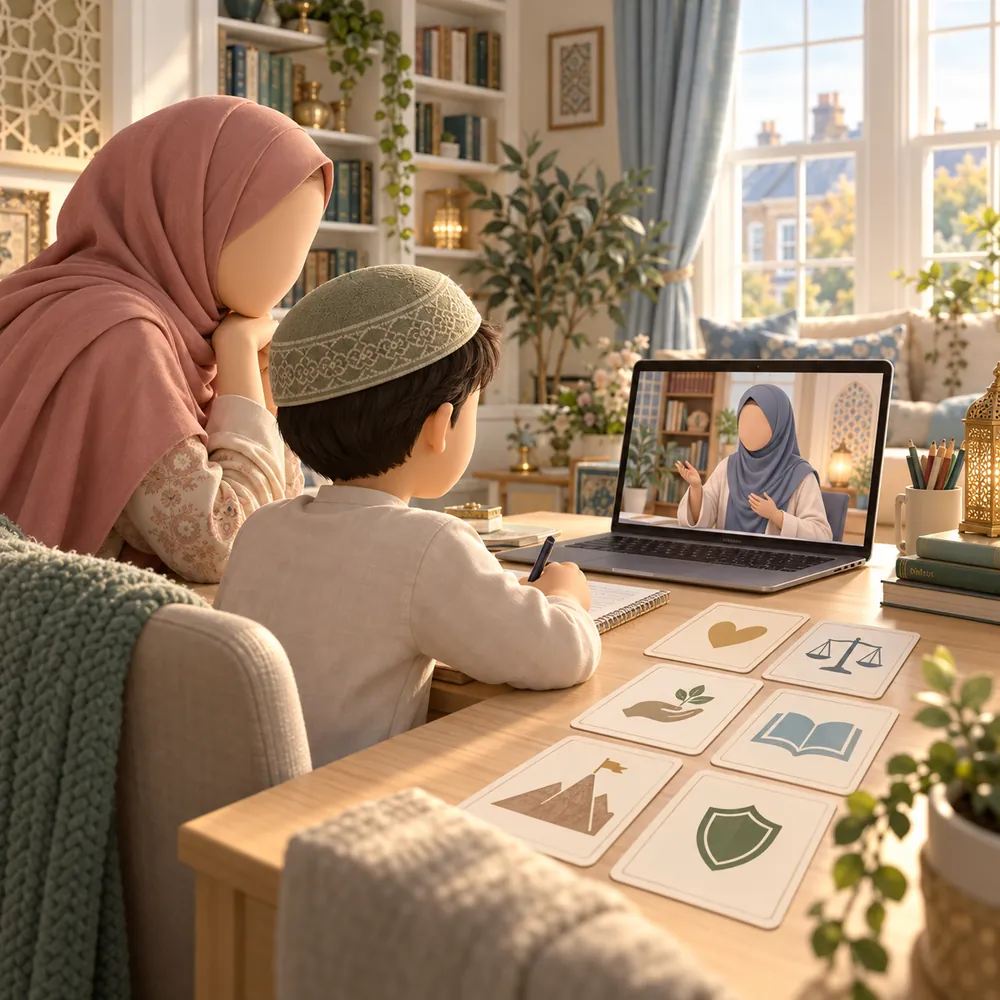
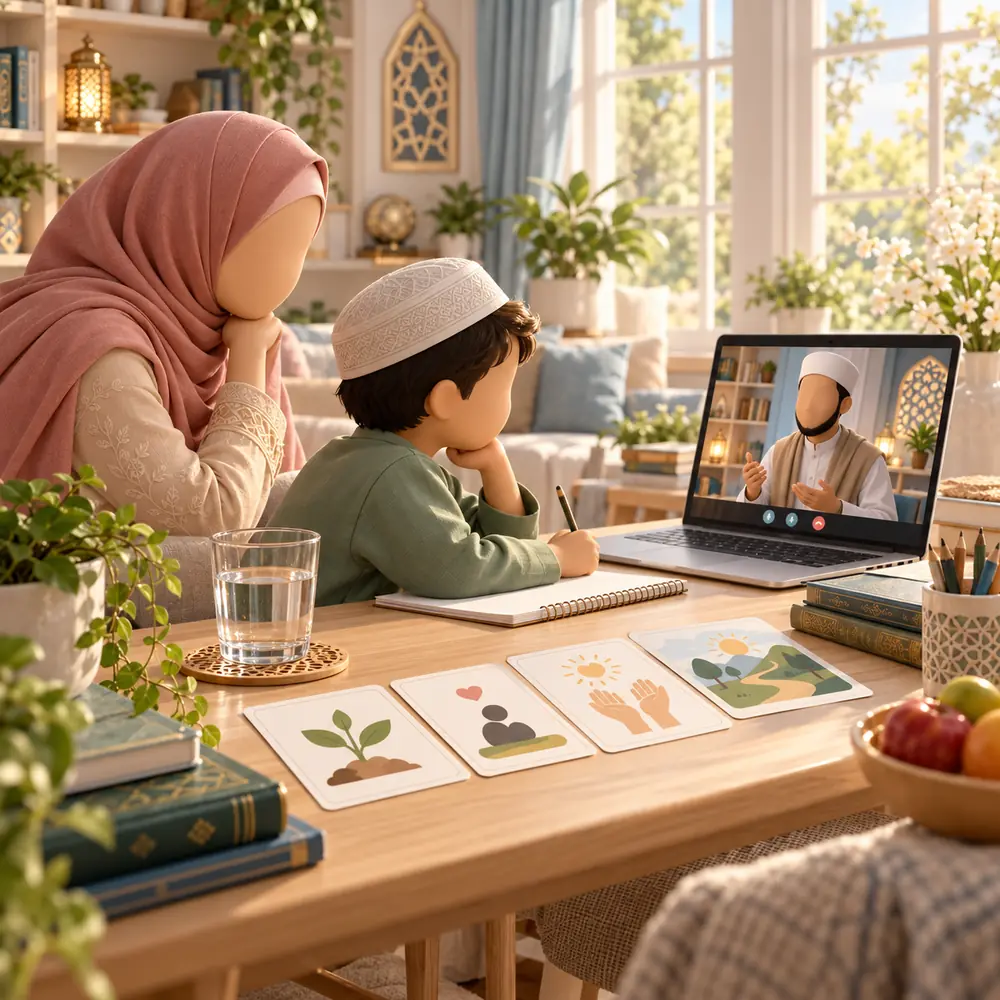
Online Quran Lessons are live Quran classes where a child learns with a teacher through an online session. Depending on the child’s level, the lesson may focus on Quran reading, recitation correction, memorization, Tajweed, revision, or basic understanding of meanings.
For children, a good Quran lesson should not feel like pressure. It should be clear, calm, structured, and suitable for the child’s age and current ability.
Online Quran lessons may include:
- Arabic letter and sound support.
- Quran reading practice.
- Recitation correction.
- Makharij and pronunciation support.
- Simple Tajweed practice.
- Memorization of short surahs or selected portions.
- Revision of previously memorized surahs.
- Parent-friendly progress follow-up.
The most important point is that the child should not be placed in the wrong level. A child who cannot read Arabic letters needs a different path from a child who can already read Quran but needs Tajweed correction.
Simple parent rule: choose Quran lessons based on your child’s actual level, not only their age.
Parents can also use trusted tools such as Quran.com for reading and listening practice, while keeping live teacher correction as the main support for recitation accuracy.
Not sure where your child should start?
If your child needs Quran reading, recitation correction, memorization, or Tajweed support, Sibghah Academy can help you identify the right starting point.
Before Starting: What Does Your Child Need?
Before enrolling your child in Quran lessons, it helps to understand the difference between the possible starting points.
| Child’s Current Level | Best Starting Point | Why It Helps |
|---|---|---|
| Cannot recognize Arabic letters | Noor Al-Bayan | Builds Arabic letter and sound foundations before Quran reading. |
| Knows letters but struggles with vowels | Arabic reading foundations | Helps the child read words more accurately. |
| Can read slowly | Quran reading practice | Builds fluency and confidence. |
| Can read but makes mistakes | Recitation correction and Tajweed | Improves pronunciation, Makharij, and reading quality. |
| Reads confidently | Quran memorization and revision | Supports steady memorization with review. |
If your child still needs Arabic reading foundations, the Noor Al-Bayan Course for Kids may be a better first step before full Quran reading or memorization.
If your child can already read and is ready for recitation or memorization, the Online Quran Memorization Program for Kids can help with recitation, memorization, Tajweed, and revision.

Online Quran Lessons: 9 Easy Checks for Parents
Before choosing Online Quran Lessons, use these nine checks to understand what your child needs most.
1. Can Your Child Recognize Arabic Letters?
If your child cannot recognize Arabic letters, they may struggle in Quran lessons. The first step should be building a strong Arabic reading foundation.
Letter recognition is not only about naming letters. Children also need to know how letters sound and how they change with vowels.
2. Can Your Child Read Short Vowels?
Fatha, Kasra, and Damma are essential for Quran reading. If a child cannot read short vowels, Quran words may feel confusing.
Online Quran learning becomes smoother when the child has enough vowel awareness before reading longer verses.
3. Does Your Child Understand Long Sounds?
Long sounds are important in Quran recitation. Many children rush or shorten sounds that should be stretched.
If your child struggles with stretched sounds, you may find this guide helpful: Simple Explanation of Madds in Tajweed.
4. Can Your Child Read Quran Slowly?
A child does not need to read perfectly before starting Quran lessons. But if they can read slowly, a teacher can help them build fluency, confidence, and accuracy.
The goal at this stage is not speed. The goal is careful, correct reading.
5. Does Your Child Need Pronunciation Correction?
Some children can read Arabic words but pronounce letters incorrectly. This is common, especially for non-native Arabic-speaking children.
A live Quran teacher can listen carefully, model the correct sound, and correct the child gently during recitation.
6. Is Your Child Ready for Tajweed?
Tajweed should be introduced gradually. Children do not need advanced rules at the beginning, but they can learn simple rules through practice.
Good Online Quran Lessons teach Tajweed in a child-friendly way, connected to actual recitation rather than theory only.
7. Is the Goal Reading or Memorization?
Parents sometimes want memorization before the child is ready to read comfortably. Memorization is beautiful, but the plan should match the child’s level.
If your child is still weak in reading, start with recitation and reading support. If your child reads well, memorization and revision can become the main focus.
8. Does Your Child Need Revision?
Many children memorize short surahs but forget them because there is no revision routine.
A Quran plan should include review, not only new memorization. Revision helps memorized surahs stay strong and accurate.
9. Can You Track Progress Clearly?
Parents need to know what their child is learning, what improved, what still needs practice, and what the next goal is.
Clear follow-up makes Online Quran Lessons more useful because parents can support the child at home without guessing.
Want a free Quran learning recommendation?
A short level check can help you know whether your child needs Noor Al-Bayan, Quran reading, Tajweed, memorization, or revision support.
What Children Learn in Online Quran Lessons
Good Online Quran Lessons should match the child’s level and learning goal. They should not push every child through the same plan.
Your child may learn:
- How to read Quran slowly and clearly.
- How to pronounce letters more accurately.
- How to correct common recitation mistakes.
- How to apply simple Tajweed rules during reading.
- How to memorize small portions step by step.
- How to revise old memorization regularly.
- How to listen carefully and repeat correctly.
- How to build love and respect for the Quran.
The aim is not only to complete pages. The aim is to help your child build a steady, careful, and loving relationship with the Book of Allah.
The Prophet ﷺ praised those who learn and teach the Quran. Parents who want to read the hadith reference can check Sahih al-Bukhari on Sunnah.com.
Quran Reading vs Memorization vs Tajweed
Parents often use the word “Quran lessons” for different goals. It helps to separate the goals clearly.
| Goal | What It Means | Best For |
|---|---|---|
| Quran Reading | The child learns to read Quranic words and verses correctly. | Children who are still building reading fluency. |
| Recitation Correction | The teacher listens and corrects pronunciation mistakes. | Children who read but need accuracy. |
| Tajweed | The child learns rules that improve recitation quality. | Children ready for careful recitation improvement. |
| Memorization | The child memorizes new surahs or portions of Quran. | Children who can repeat and review consistently. |
| Revision | The child reviews what they already memorized. | Children who need stronger retention and accuracy. |
Most children need a mix of these areas over time. The exact balance should depend on the child’s level and pace.

How Parents Can Support Quran Learning at Home
Parents do not need to be Quran teachers to support their children. Small habits can make a big difference.
Keep Practice Short and Consistent
Five to ten minutes of focused review is often better than a long session that makes the child tired or resistant.
Listen Before Asking the Child to Recite
Listening helps children hear correct recitation before they repeat. Choose a short section and repeat it calmly.
Do Not Rush Memorization
A child who memorizes too quickly without revision may forget quickly. A slower plan with strong review is usually better.
Encourage Effort, Not Only Accuracy
Children need correction, but they also need encouragement. Praise effort, then correct one or two important mistakes gently.
Ask for Teacher Feedback
After Online Quran Lessons, parents should know what to revise at home and what the child should practise before the next session.
Common Mistakes Parents Should Avoid
When parents care deeply about Quran learning, they may push too hard without meaning to. Here are common mistakes to avoid.
| Mistake | Why It Can Hurt Progress | Better Approach |
|---|---|---|
| Starting memorization before reading readiness | The child may memorize sounds without reading confidence. | Build reading foundations first if needed. |
| Correcting every mistake harshly | The child may become afraid to recite. | Correct gently and focus on steady improvement. |
| No revision plan | Memorized surahs become weak over time. | Review old portions regularly. |
| Expecting fast progress | The child feels pressure and loses motivation. | Choose a realistic pace based on age and level. |
| Choosing lessons without a level check | The child may start too high or too low. | Begin with a level assessment or trial session. |
The best Quran plan is not the fastest one. It is the one your child can follow consistently with understanding, correction, and love.
How Sibghah Academy Supports Online Quran Lessons
Sibghah Academy offers live online Quran, Arabic, and Islamic Studies lessons for Muslim children aged 5–15.
For children who still need Arabic reading foundations, the Noor Al-Bayan Course for Kids helps build letters, sounds, vowels, long vowels, Sukoon, Shaddah, and early reading fluency.
For children ready for Quran reading, recitation, memorization, Tajweed, and revision, the Online Quran Memorization Program for Kids provides a structured learning path based on the child’s level.
If your child needs help understanding Quranic words and simple meanings, you may also explore Quranic Arabic Classes for Kids.
If your child struggles with Arabic reading methods, this guide may help: Difference Between Nour Al-Bayan and Al-Qaida Al-Noorania.
Through live teacher support, children can practise recitation, receive correction, follow a realistic memorization plan, and review consistently.
This makes Online Quran Lessons more effective for families who want Quran learning to be structured, personal, and manageable from home.
Book a free Quran trial session for your child
Sibghah Academy can help your child start from the right Quran level, whether they need reading foundations, recitation correction, memorization, Tajweed, or revision.
Parent Checklist Before Choosing Online Quran Lessons
Before choosing Quran lessons for your child, ask:
- Can my child recognize Arabic letters?
- Can my child read short vowels?
- Can my child read simple Arabic words?
- Can my child read Quran slowly?
- Does my child need pronunciation correction?
- Does my child need Tajweed support?
- Is my goal reading, memorization, or revision?
- Does my child have a weekly review routine?
- Do I receive clear feedback after lessons?
- Would one-to-one teacher support help my child?
If you answered “not sure” to several questions, your child may benefit from a free Quran trial session before choosing a full course.
Need help choosing the right Quran path?
Send Sibghah Academy a WhatsApp message with your child’s age, Quran level, and main goal. We will help you choose the most suitable starting point.
FAQ: Online Quran Lessons for Kids
1. What are Online Quran Lessons for kids?
Online Quran Lessons are live Quran classes where children learn Quran reading, recitation, memorization, Tajweed, and revision from home with teacher support.
2. What age can children start online Quran lessons?
Many children can begin Quran learning from around age 5, depending on their attention span, Arabic reading readiness, and ability to follow teacher instructions.
3. Does my child need to know Arabic before Quran lessons?
Your child does not need to speak Arabic fluently, but they may need Arabic reading foundations if they cannot recognize letters, vowels, or simple words.
4. Should my child start with Noor Al-Bayan or Quran lessons?
If your child cannot read Arabic letters and vowels, Noor Al-Bayan may be the better first step. If they can read, Quran lessons may focus on recitation, Tajweed, or memorization.
5. Can children memorize Quran online?
Yes. Children can memorize Quran online when lessons include teacher listening, repetition, correction, and a consistent revision plan.
6. Are online Quran lessons effective for Tajweed?
Yes, when lessons are live and the teacher listens carefully, corrects pronunciation, and applies Tajweed rules during recitation.
7. How often should my child take Quran lessons?
This depends on the child’s goal. A child focused on memorization may need more frequent lessons than a child who is only building reading fluency.
8. What if my child forgets what they memorized?
Your child may need a stronger revision plan. Memorization should always include regular review of older portions, not only new memorization.
9. Can online Quran lessons work for non-Arabic-speaking children?
Yes. Non-Arabic-speaking children can learn Quran online when the teacher starts from their level and explains reading, pronunciation, and Tajweed gradually.
10. Does Sibghah Academy offer Online Quran Lessons?
Yes. Sibghah Academy supports children with Quran reading, memorization, recitation correction, Tajweed, and revision according to the child’s level.
11. Can my child try a Quran lesson before enrolling?
Yes. A free trial session can help parents understand the child’s Quran level and choose the most suitable learning path.
12. What is the best starting point for Online Quran Lessons?
The best starting point for Online Quran Lessons depends on your child’s level. Some children need Noor Al-Bayan first, while others are ready for Quran reading, Tajweed, memorization, or revision.
Book your child’s free Quran trial on WhatsApp
Online Quran Lessons can help your child read, recite, memorize, and review Quran with a clear plan and live teacher support.
If you are not sure where your child should start, send Sibghah Academy a WhatsApp message with your child’s age, Quran level, and main goal.