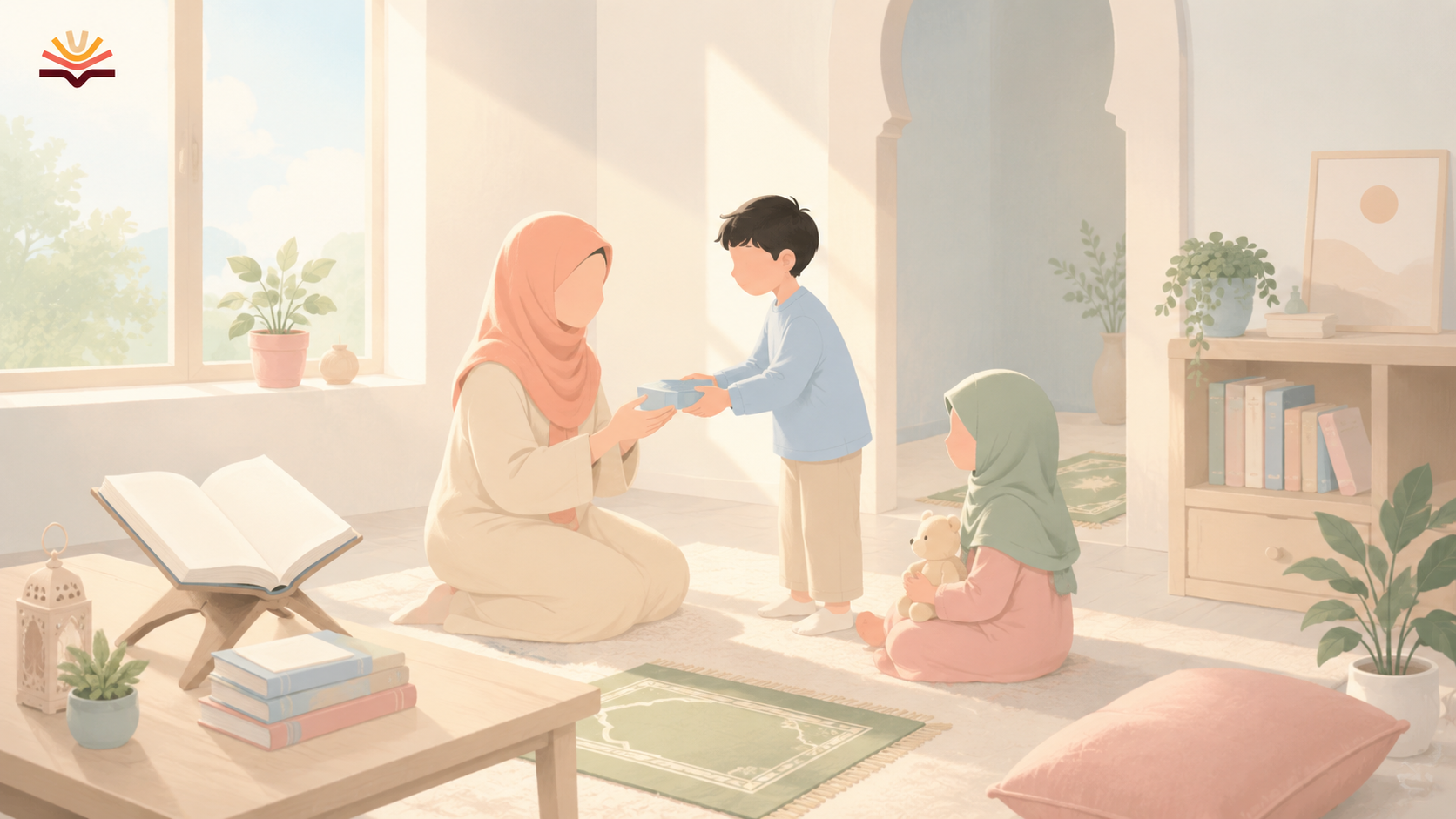
Many Muslim parents want their children to learn Islamic manners, but they are not always sure how to teach them. Should they start with respect for parents? Kind speech? Table manners? Salah manners? Honesty? Sharing? Apologizing? There are many beautiful manners in Islam, and children need them in a simple, practical way.
For Muslim children living in the UK and other English-speaking environments, Islamic Manners for Kids can also help them stay connected to their identity. Children need to know how Islam guides behavior at home, at school, online, with friends, with family, and during worship.
The goal is not to give children long lectures. The goal is to make manners visible, repeated, and connected to real situations. Children learn Islamic manners through examples, stories, reminders, practice, and the way adults behave around them.
This guide explains Islamic Manners for Kids through 11 practical lessons parents can use at home. Each lesson includes a simple meaning, daily examples, and parent-friendly ways to help children apply the manners step by step.
Quick answer: Islamic Manners for Kids should be taught through daily examples such as honesty, kindness, respect, gratitude, patience, good speech, caring for parents, sharing, apologizing, cleanliness, and manners with Allah through worship and dua.
| Parent Question | Simple Answer |
|---|---|
| What Islamic manners should kids learn first? | Start with honesty, kind speech, respect for parents, gratitude, cleanliness, and apologizing after mistakes. |
| How do children learn manners best? | Children learn through example, repetition, stories, praise, gentle correction, and real-life practice. |
| Should manners be taught as rules or values? | Both. Children need simple rules, but they also need to understand the Islamic value behind the rule. |
| Can Islamic manners be taught online? | Yes, especially when lessons use examples, stories, questions, activities, and parent follow-up. |
Table of Contents
Why Islamic Manners Matter for Children
Islamic Manners for Kids matter because Islam is not only learned in books. Islam is lived through speech, behavior, choices, worship, family relationships, and the way a child treats others.
Children may learn that honesty is good, but they also need to practise honesty when they break something, make a mistake, or feel afraid of getting in trouble. Children may learn that kindness is good, but they also need to practise kindness with siblings, classmates, and younger children.
The Prophet ﷺ is the best example for Muslims. Parents can read about the Prophet ﷺ as an excellent example on Quran.com. Parents can also read the hadith about the best people being those with the best character on Sunnah.com.
This is why Islamic Manners for Kids should not be treated as a small extra topic. Manners are part of Islamic identity. A child who learns to speak kindly, respect parents, tell the truth, ask Allah for help, and apologize after mistakes is learning Islam in action.
For Muslim children growing up in the UK, manners also help them understand how to behave confidently as Muslims in different environments. They may need to know how to be respectful at school, how to respond when someone is rude, how to protect their tongue, and how to keep Islamic values even when others act differently.
When parents teach Islamic Manners for Kids gently and consistently, children begin to see that Islam guides real life, not only lesson time.
Want your child to learn Islamic manners in a practical way?
Sibghah Academy can help your child learn Islamic manners, good character, worship, stories, and Muslim identity through gentle online lessons.
Islamic Manners for Kids: 11 Practical Lessons
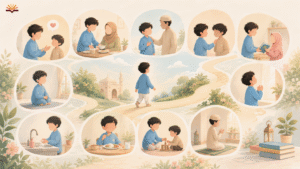
These lessons do not cover every manner in Islam. They are a practical starting point for parents who want to teach Islamic Manners for Kids in a clear and age-appropriate way.
1. Speaking Kindly
Kind speech is one of the first manners children should learn. Children need to understand that words can help or hurt. Islam teaches Muslims to speak in a good way, avoid insulting, and choose words carefully.
For children, this can begin with simple reminders:
- Use gentle words with your parents.
- Do not mock your brother or sister.
- Say “please” and “thank you.”
- Do not shout when you can speak calmly.
- Say something good or stay quiet when needed.
When teaching Islamic Manners for Kids, parents can model kind speech at home. Children notice how adults speak when they are tired, upset, or busy.
2. Respecting Parents
Respect for parents is a major Islamic value. Children should learn to speak respectfully, listen when parents guide them, help at home, and show appreciation.
For young children, this can be taught through small actions:
- Answering parents politely.
- Helping with simple tasks.
- Saying thank you.
- Not interrupting constantly.
- Making dua for parents.
Islamic Manners for Kids should not make children fear parents. It should teach them that parents have a special place in Islam and deserve kindness, care, and respect.
3. Telling the Truth
Honesty is one of the most important manners children need. Children may lie because they are afraid, embarrassed, or trying to avoid trouble. Parents should teach honesty in a way that encourages truth, not fear.
You can say: “Telling the truth is brave. If you make a mistake, tell the truth and we will fix it together.”
When teaching Islamic Manners for Kids, honesty should be practised in daily life. For example, if a child breaks something, encourage them to tell the truth, apologize, and help fix the problem.
4. Saying Sorry and Fixing Mistakes
Children should learn that everyone makes mistakes. Islamic manners include admitting mistakes, saying sorry, trying to fix what happened, and asking Allah for forgiveness.
A simple pattern is:
- I made a mistake.
- I say sorry.
- I try to fix it.
- I ask Allah to help me do better.
This helps children understand that Islam does not teach perfectionism. It teaches responsibility, repentance, and growth.
5. Sharing and Caring for Others
Sharing is not always easy for children. But it is an important part of good character. Children can learn to share toys, food, time, attention, and help.
Parents can teach this gently by saying:
- “Your brother would like a turn too.”
- “Let’s give some to your sister.”
- “Can we help someone who needs it?”
- “Allah loves kindness.”
Islamic Manners for Kids should connect sharing to mercy and care, not only to rules.
6. Patience When Things Are Difficult
Children need patience when they wait, lose a game, struggle with homework, feel tired, or do not get what they want immediately.
Patience can be taught through simple phrases:
- “Let’s take a deep breath.”
- “We can try again.”
- “Waiting is hard, but you can do it.”
- “Allah loves patience.”
When teaching Islamic Manners for Kids, patience should be practised in small daily situations. Children learn patience by trying it again and again, not by hearing one lecture.
7. Gratitude for Blessings
Gratitude helps children notice what Allah has given them. Food, family, safety, health, home, water, learning, and friends are all blessings.
Parents can teach gratitude by saying:
- “Alhamdulillah for our food.”
- “Alhamdulillah for our home.”
- “Allah gave us so many blessings.”
- “Let’s say thank you when someone helps us.”
Gratitude is one of the most practical Islamic Manners for Kids because it can be repeated every day.
8. Cleanliness and Personal Care
Children should learn that cleanliness matters in Islam and daily life. This includes washing hands, brushing teeth, wearing clean clothes, keeping their space tidy, and learning basic cleanliness before worship.
For children, cleanliness can be taught through routines:
- Wash hands before eating.
- Brush teeth regularly.
- Keep the prayer area clean.
- Put toys back after playing.
- Use the bathroom properly and cleanly.
When teaching Islamic Manners for Kids, cleanliness should feel like care and dignity, not only correction.
9. Manners with Food
Food manners are easy to practise because children eat every day. They can learn to say Bismillah, eat calmly, avoid wasting food, thank Allah, and show appreciation.
Simple food manners include:
- Say Bismillah before eating.
- Eat calmly.
- Do not waste food.
- Say Alhamdulillah after eating.
- Thank the person who prepared the food.
These manners help children connect everyday meals to Islamic values.
10. Manners with Friends and Siblings
Children need Islamic manners with people close to them. It is sometimes easier to be polite outside the home than with siblings. That is why family manners are important.
Teach children to:
- Take turns.
- Use kind words.
- Do not hit or insult.
- Apologize after hurting someone.
- Share when possible.
- Forgive small mistakes.
Islamic Manners for Kids should help children understand that good character starts with the people closest to them.
11. Manners with Allah
The most important manners are manners with Allah. Children should learn to love Allah, thank Allah, make dua, respect salah, listen to Quran carefully, and understand that Allah sees their good actions.
For children, this can be simple:
- Say Alhamdulillah for blessings.
- Make dua when worried or happy.
- Respect the Quran.
- Learn salah step by step.
- Ask Allah for help.
- Try to do good because Allah loves good actions.
This lesson connects Islamic Manners for Kids to faith. Manners are not only social behavior; they are part of a child’s relationship with Allah.
If you want to build this meaning more deeply, read: Teach Children About Allah.
Sibghah Teacher Note: children need manners explained in small real situations. A short reminder during daily life is often more effective than a long lecture after the mistake.
How to Teach Islamic Manners in Daily Life
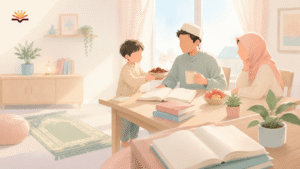
The best way to teach Islamic Manners for Kids is to connect them to daily routines. Children need to see how manners work during breakfast, school preparation, playtime, online lessons, salah time, family visits, and bedtime.
Here is a simple way to use daily moments:
| Daily Moment | Manner to Teach | Parent Phrase |
|---|---|---|
| Before eating | Gratitude and food manners | “Let’s say Bismillah and thank Allah for our food.” |
| Sibling conflict | Kind speech and apologizing | “How can we fix this in a kind way?” |
| Homework struggle | Patience | “Let’s try again slowly. Patience is part of good character.” |
| Bedtime | Gratitude and dua | “What blessing can we thank Allah for today?” |
| Making a mistake | Honesty and responsibility | “Tell the truth, say sorry, and let’s fix it.” |
This approach makes Islamic Manners for Kids practical. The child does not only hear “be good.” They learn what good looks like in real life.
Need a structured Islamic manners path for your child?
Sibghah Academy can help your child learn Islamic values through stories, examples, activities, and age-appropriate Islamic Studies lessons.
Islamic Manners by Age
Islamic Manners for Kids should be taught according to the child’s age. Young children need simple actions. Older children can understand deeper meanings.
Ages 4–6
At this age, focus on very simple manners: saying Bismillah, saying Alhamdulillah, using kind words, sharing, saying sorry, and helping parents with small tasks.
Use stories, repetition, and praise. Keep reminders short.
Ages 7–9
Children at this stage can understand reasons. You can explain that Allah loves honesty, kindness, patience, and gratitude. They can also begin to connect manners to Quran, Hadith, and stories of the Prophet ﷺ.
Use short discussions and real-life examples.
Ages 10–12
Older children can reflect on choices. They can discuss manners at school, online behavior, friendship, anger, responsibility, and respect.
This is a good age to teach that Islamic manners are part of Muslim identity, not only home rules.
Ages 13–15
Teenagers need respectful conversation. They may not respond well to childish reminders, but they can respond to meaningful discussion about character, purpose, accountability, peer pressure, and self-control.
At this age, Islamic Manners for Kids should be connected to maturity and real-life responsibility.
Using Stories to Teach Islamic Manners
Stories are one of the best ways to teach Islamic Manners for Kids. Children remember characters, choices, consequences, and emotions more easily than abstract instructions.
You can use stories of the Prophet ﷺ, stories of the companions, stories of the Prophets عليهم السلام, and simple moral stories. After the story, ask one gentle question:
- “What good manner did we see in this story?”
- “Who showed patience?”
- “Who told the truth?”
- “How did the character fix the mistake?”
- “What can we do like that today?”
Stories make Islamic manners feel alive. Instead of saying “be patient” in a general way, you can show patience through a story. Instead of saying “be honest,” you can show what honesty looks like when it is difficult.
You may find these guides useful: Arabic Moral Stories for Kids and Stories of the Prophets for Kids.
Simple Home Activities for Islamic Manners
Activities can help children practise Islamic Manners for Kids instead of only hearing about them.
Kind Words Jar
Each time your child uses kind words, add a small paper or token to a jar. At the end of the week, talk about how good speech improved the home atmosphere.
Gratitude Circle
At bedtime, ask each child to name one blessing from Allah. Keep it short and sincere.
Sorry and Fix It Practice
When a mistake happens, guide the child through apology and repair. Do not only demand “say sorry.” Help them understand how to fix the harm.
Story Reflection
After a story, ask your child which Islamic manner appeared in the story and how they can practise it tomorrow.
Helping Task
Give your child one small family responsibility, such as setting the table, tidying books, helping a younger sibling, or preparing for prayer time.
Small activities make Islamic Manners for Kids easier to practise because they turn manners into repeated habits.
Common Mistakes Parents Should Avoid
Parents usually want to build good character, but some methods can make children feel ashamed, resistant, or confused.
Only correcting bad behavior
If children only hear about Islamic manners when they make mistakes, manners may feel negative. Also notice and praise good manners when they happen.
Giving long lectures
Children often stop listening when the reminder is too long. Use short, clear reminders linked to the moment.
Expecting instant change
Manners need repetition. A child may understand kindness but still need many reminders before it becomes a habit.
Correcting with anger
If the parent teaches manners while shouting, the message becomes confusing. A calm tone teaches more than angry words.
Separating manners from faith
Islamic manners are not only social skills. Connect them gently to Allah, the Prophet ﷺ, Quran, dua, gratitude, and accountability.
Comparing children
Comparison can create resentment. Each child needs personal guidance and encouragement.
Forgetting to model the manners
Children learn by watching. If adults want kind speech, patience, honesty, and gratitude from children, children need to see those manners at home.
How Sibghah Academy Supports Islamic Manners
Sibghah Academy offers live online Quran, Arabic, and Islamic Studies lessons for Muslim children aged 5–15.
When teaching Islamic Manners for Kids, Sibghah Academy focuses on clear Islamic meanings, practical examples, child-friendly discussion, and real-life application.
Children can learn manners through Islamic Studies topics such as Aqeedah, worship, daily etiquettes, stories, Islamic identity, and the lives of role models in Islam.
The Minhaj Al-Muslim Course for Kids helps children learn Islamic beliefs, worship, manners, and daily values in a structured way.
The Stories of the Prophets for Kids program helps children see Islamic manners through the choices and lessons of the Prophets عليهم السلام.
The Lives of the Companions for Kids program can also help children learn values such as courage, honesty, sacrifice, kindness, and love for Islam through inspiring role models.
For Muslim families in the UK, one-to-one online Islamic Studies lessons can help children ask questions, understand manners in context, and connect Islamic values to school, home, friendships, and daily life.
Quick Parent Checklist
Use this checklist when teaching Islamic Manners for Kids at home:
- Am I teaching manners through daily examples?
- Am I modelling the manners I want my child to learn?
- Am I praising good manners when I see them?
- Am I using short reminders instead of long lectures?
- Am I connecting manners to Allah and the Prophet ﷺ?
- Am I helping my child apologize and fix mistakes?
- Am I teaching kindness with siblings and friends?
- Am I using stories to make manners memorable?
- Does my child need a structured Islamic Studies path?
FAQ: Islamic Manners for Kids
1. What are Islamic Manners for Kids?
Islamic Manners for Kids are daily behaviors and values that help children live Islam through honesty, kindness, respect, gratitude, patience, cleanliness, good speech, and worship.
2. What Islamic manners should children learn first?
Children should begin with simple manners such as speaking kindly, respecting parents, telling the truth, saying sorry, sharing, saying Bismillah, and showing gratitude.
3. How can parents teach Islamic Manners for Kids at home?
Parents can teach Islamic Manners for Kids through daily routines, stories, gentle reminders, modelling good behavior, and praising sincere effort.
4. Why are Islamic manners important for children?
Islamic manners help children build good character, strengthen Muslim identity, improve family relationships, and connect Islam to daily life.
5. Should Islamic manners be taught through stories?
Yes. Stories help children understand manners through examples, emotions, choices, and consequences.
6. How do I teach my child to speak kindly?
Model kind speech, correct rude words calmly, praise gentle words, and remind your child that Islam teaches us to speak in a good way.
7. How can I teach my child honesty?
Make truth-telling safe. Encourage your child to admit mistakes, say sorry, and fix the problem without excessive fear.
8. How do I teach Islamic manners without constant lectures?
Use short reminders, practical examples, stories, role play, and daily routines instead of long lectures.
9. What if my child knows the manners but does not practise them?
This is normal. Children need repetition, modelling, reminders, and time before manners become habits.
10. How can I teach gratitude to children?
Say Alhamdulillah often, ask your child to name blessings, thank people, and connect daily blessings to Allah’s generosity.
11. Are Islamic Manners for Kids part of Islamic Studies?
Yes. Islamic Manners for Kids are an important part of Islamic Studies because they connect belief and worship to daily behavior.
12. How can Muslim children practise manners at school?
They can speak kindly, avoid mocking others, tell the truth, respect teachers, help classmates, and keep their Muslim identity with confidence.
13. What if siblings keep fighting?
Teach turn-taking, kind speech, apology, forgiveness, and repair. Focus on one behavior at a time instead of trying to fix everything at once.
14. Can online Islamic Studies teach manners?
Yes. Live online lessons can teach manners through stories, examples, questions, discussion, and parent follow-up.
15. How can Sibghah Academy help with Islamic Manners for Kids?
Sibghah Academy helps children learn Islamic Manners for Kids through structured Islamic Studies, stories, values, practical examples, and one-to-one online learning.
16. What is the best way to make Islamic manners a habit?
The best way is to practise one manner at a time, repeat it in daily life, praise effort, and connect it gently to Allah and Islamic values.
Book your child’s free Islamic Studies trial on WhatsApp
Islamic Manners for Kids can help your child build good character, strengthen Islamic identity, and apply Islam in daily life.
Send Sibghah Academy a WhatsApp message with your child’s age and learning goal, and we will help you choose the right Islamic Studies path.