Many Muslim parents in the UK want their children to read Arabic, but they also want the reading material to be meaningful. A child may read a list of words and forget them quickly, but a short story can stay in the heart because it has a character, a situation, a choice, and a lesson.
This article gives you real Arabic Moral Stories for Kids, not just advice about stories. Each story is written in simple Arabic, followed by a clear English translation, a moral lesson, a question for children, and useful Arabic vocabulary.
These Arabic Moral Stories for Kids are suitable for Muslim children who are building Arabic sentence reading, especially children living in English-speaking environments. The English translation is included to help children understand the meaning, but the Arabic story should remain the main reading focus.
You can use these stories at home, in an online Arabic lesson, or as part of a gentle weekly reading routine. The goal is to make Arabic reading feel useful, enjoyable, and connected to good manners.

Quick answer: Arabic Moral Stories for Kids work best when the story is short, the Arabic is simple, the English translation supports understanding, and the child reflects on one clear moral lesson.
| Story | Main Value | Best For |
|---|---|---|
| The Trust in the Park | Honesty and trust | Children learning right and wrong |
| Maryam and the Cup of Water | Kindness and sharing | Children learning empathy |
| The Small Seed | Patience | Children who rush results |
| Layla’s Broken Toy | Responsibility and apology | Children learning to admit mistakes |
Table of Contents
- Why Arabic Moral Stories Help Children Learn
- How to Use These Arabic Moral Stories for Kids
- Story 1: The Trust in the Park
- Story 2: Maryam and the Cup of Water
- Story 3: The Small Seed
- Story 4: Layla and The Broken Toy
- Useful Arabic Vocabulary from the Stories
- How Sibghah Academy Supports Arabic Story Reading
- FAQ
Why Arabic Moral Stories Help Children Learn
Arabic Moral Stories for Kids help children learn Arabic in context. Instead of reading disconnected words, the child reads about a person, a place, a problem, and a choice.
This makes Arabic easier to remember. For example, when a child reads a story about returning a lost bag, words like “bag,” “boy,” “mother,” “thank you,” and “honesty” become connected to a real situation.
Stories also help children understand values. A moral story does not only teach language. It teaches the child how to think, how to behave, and how to make better choices.
For Muslim children in the UK, Arabic Moral Stories for Kids can also connect Arabic learning with Islamic manners. Children can practise Arabic while learning honesty, kindness, patience, gratitude, respect, apology, and care for others.
The most useful stories are not always long. In fact, short stories are often better for beginners because the child can finish them, understand them, and read them again later.
If your child still needs help with early reading before stories, you may also read: Arabic Reading Practice for Kids.
Not sure if your child is ready for Arabic stories?
Sibghah Academy can help you understand whether your child needs Arabic letters, sentence reading, story practice, or speaking support.
How to Use These Arabic Moral Stories for Kids
Before reading the stories, it helps to know how to use them. Arabic Moral Stories for Kids should not become a stressful test. They should feel calm, useful, and encouraging.
Use this simple method:
- Read the Arabic story slowly.
- Help your child with difficult words.
- Read the English translation together.
- Ask the moral question at the end.
- Choose three Arabic words to repeat.
- Read the same story again later in the week.
If your child is a beginner, read one short paragraph at a time. If your child can read sentences comfortably, ask them to read more independently.
The English translation is not there to replace Arabic. It is there to support meaning. The child should still return to the Arabic story and read it again with more confidence.
When used this way, Arabic Moral Stories for Kids become a full learning activity: Arabic reading, English understanding, vocabulary, moral reflection, and speaking practice.
Sibghah Teacher Note: do not rush through all four stories in one sitting. One story, read well, repeated gently, and discussed with love, is more useful than four stories read quickly.
Story 1: The Trust in the Park
This is one of the Arabic Moral Stories for Kids that teaches honesty, trust, and returning what belongs to others.
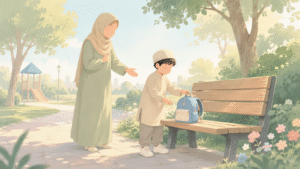
Arabic Story: الأمانة في الحديقة
في يَوْمٍ هادِئٍ، ذَهَبَ سامي مَعَ أُمِّهِ إِلى الحَديقَةِ.
كانَ سامي يَلْعَبُ بِالكُرَةِ قُرْبَ الشَّجَرَةِ، فَرَأى حَقيبَةً صَغيرَةً عَلى المَقْعَدِ.
قالَ سامي: “أُمِّي، هذِهِ الحَقيبَةُ لَيْسَتْ لَنا.”
قالَتْ أُمُّهُ: “أَحْسَنْتَ يا سامي. ماذا نَفْعَلُ الآن؟”
فَكَّرَ سامي قَليلًا، ثُمَّ قالَ: “نَبْحَثُ عَنْ صاحِبِها.”
نَظَرَ سامي حَوْلَهُ، فَرَأى وَلَدًا صَغيرًا يَبْكي.
سَأَلَتْهُ الأُمُّ: “هَلْ فَقَدْتَ شَيْئًا؟”
قالَ الوَلَدُ: “نَعَم، فَقَدْتُ حَقيبَتي الصَّغيرَةَ.”
أَعْطاهُ سامي الحَقيبَةَ، فَابْتَسَمَ الوَلَدُ وَقالَ: “شُكْرًا لَكَ.”
شَعَرَ سامي بِفَرَحٍ كَبيرٍ.
قالَتْ أُمُّهُ: “الأَمانَةُ تَجْعَلُ القَلْبَ نَظيفًا وَسَعيدًا.”
English Translation: The Trust in the Park
On a calm day, Sami went to the park with his mother.
Sami was playing with a ball near the tree when he saw a small bag on the bench.
Sami said, “Mother, this bag is not ours.”
His mother said, “Well done, Sami. What should we do now?”
Sami thought for a little while, then said, “We should look for its owner.”
Sami looked around and saw a young boy crying.
His mother asked him, “Did you lose something?”
The boy said, “Yes, I lost my small bag.”
Sami gave him the bag. The boy smiled and said, “Thank you.”
Sami felt very happy.
His mother said, “Honesty makes the heart clean and happy.”
Moral Lesson: Honesty brings happiness to the heart.
Arabic Moral Lesson: الأمانة تُدخِل السعادة على القلب.
Question for Kids: What did Sami do when he found the bag?
Arabic Question: ماذا فعل سامي عندما وجد الحقيبة؟
| Arabic Word | Meaning |
|---|---|
| حَديقَة | Park |
| حَقيبَة | Bag |
| الأَمانَة | Honesty / trust |
| سَعيد | Happy |
This story is a good example of how Arabic Moral Stories for Kids can teach language and character at the same time. The child practises simple Arabic sentences while learning that honesty is a beautiful action.
Story 2: Maryam and the Cup of Water
This story is one of the Arabic Moral Stories for Kids that teaches kindness, sharing, and noticing the needs of others.
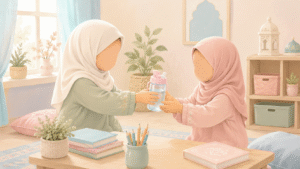
Arabic Story: مريم وكوب الماء
كانَتْ مَرْيَمُ جالِسَةً في الفَصْلِ.
رَأَتْ صَديقَتَها هُدى تَضَعُ يَدَها عَلى رَأْسِها.
سَأَلَتْها مَرْيَمُ: “هَلْ أَنْتِ بِخَيْرٍ؟”
قالَتْ هُدى: “أَشْعُرُ بِالعَطَشِ، وَلَكِنِّي نَسيتُ زُجاجَةَ الماءِ.”
نَظَرَتْ مَرْيَمُ إِلى زُجاجَةِ الماءِ الَّتي مَعَها.
كانَ فيها ماءٌ قَليلٌ، وَلَكِنَّ مَرْيَمَ قالَتْ: “تَفَضَّلي، اشْرَبي.”
قالَتْ هُدى: “لَكِنَّ الماءَ قَليلٌ.”
قالَتْ مَرْيَمُ: “لا بَأْسَ. نَتَقاسَمُهُ مَعًا.”
شَرِبَتْ هُدى قَليلًا، وَابْتَسَمَتْ.
في الوَقْتِ نَفْسِهِ، رَأَتِ المُعَلِّمَةُ ما فَعَلَتْ مَرْيَمُ.
قالَتِ المُعَلِّمَةُ: “اللُّطْفُ لا يَحتاجُ إِلى أَشياءَ كَثيرَةٍ. أَحْيانًا يَكْفي كُوبُ ماءٍ وَقَلْبٌ رَحيمٌ.”
English Translation: Maryam and the Cup of Water
Maryam was sitting in the classroom.
She saw her friend Huda putting her hand on her head.
Maryam asked her, “Are you okay?”
Huda said, “I feel thirsty, but I forgot my water bottle.”
Maryam looked at the water bottle she had.
There was only a little water in it, but Maryam said, “Here, please drink.”
Huda said, “But there is only a little water.”
Maryam said, “That is okay. We can share it together.”
Huda drank a little and smiled.
At the same time, the teacher saw what Maryam did.
The teacher said, “Kindness does not need many things. Sometimes a cup of water and a merciful heart are enough.”
Moral Lesson: Kindness appears in small actions.
Arabic Moral Lesson: اللطف يظهر في الأشياء الصغيرة.
Question for Kids: How did Maryam help her friend Huda?
Arabic Question: كيف ساعدت مريم صديقتها هدى؟
| Arabic Word | Meaning |
|---|---|
| صَديقَة | Friend |
| ماء | Water |
| العَطَش | Thirst |
| اللُّطْف | Kindness |
Arabic Moral Stories for Kids like this one can help children understand that good manners are not always big actions. Sometimes, sharing a little water can be a beautiful lesson.
Want your child to read Arabic stories with confidence?
Sibghah Academy can help your child move from Arabic words to sentences and meaningful stories through live online Arabic lessons.
Story 3: The Small Seed
This story is one of the Arabic Moral Stories for Kids that teaches patience, care, and waiting for good results.

Arabic Story: البذرة الصغيرة
أَعْطى الأَبُ لِيوسُفَ بَذْرَةً صَغيرَةً.
قالَ الأَبُ: “ازْرَعْها في التُّرابِ، وَاسْقِها كُلَّ يَوْمٍ.”
زَرَعَ يوسُفُ البَذْرَةَ في إِناءٍ صَغيرٍ.
في اليَوْمِ الأَوَّلِ، نَظَرَ إِلَيْها، فَلَمْ يَرَ شَيْئًا.
في اليَوْمِ الثّاني، نَظَرَ إِلَيْها، فَلَمْ يَرَ شَيْئًا.
قالَ يوسُفُ: “لِماذا لا تَكْبُرُ؟ أَنا أُريدُها الآن.”
قالَ أَبوهُ: “بَعْضُ الأَشياءِ الجَميلَةِ تَحتاجُ إِلى صَبْرٍ.”
اسْتَمَرَّ يوسُفُ في سَقْيِ البَذْرَةِ.
بَعْدَ أَيّامٍ، رَأى نَبْتَةً صَغيرَةً خَضْراءَ تَخْرُجُ مِنَ التُّرابِ.
فَرِحَ يوسُفُ كَثيرًا وَقالَ: “لَقَدْ كَبُرَتْ!”
قالَ أَبوهُ: “نَعَم، لِأَنَّكَ صَبَرْتَ وَاعْتَنَيْتَ بِها.”
تَعَلَّمَ يوسُفُ أَنَّ الصَّبْرَ يَصْنَعُ أَشْياءَ جَميلَةً.
English Translation: The Small Seed
Yusuf’s father gave him a small seed.
His father said, “Plant it in the soil and water it every day.”
Yusuf planted the seed in a small pot.
On the first day, he looked at it, but he saw nothing.
On the second day, he looked at it, but he saw nothing.
Yusuf said, “Why is it not growing? I want it now.”
His father said, “Some beautiful things need patience.”
Yusuf continued watering the seed.
After some days, he saw a small green plant coming out of the soil.
Yusuf was very happy and said, “It has grown!”
His father said, “Yes, because you were patient and took care of it.”
Yusuf learned that patience makes beautiful things grow.
Moral Lesson: Patience helps us see beautiful results.
Arabic Moral Lesson: الصبر يساعدنا على رؤية النتائج الجميلة.
Question for Kids: What did Yusuf learn from the small seed?
Arabic Question: ماذا تعلّم يوسف من البذرة الصغيرة؟
| Arabic Word | Meaning |
|---|---|
| بَذْرَة | Seed |
| التُّراب | Soil |
| نَبْتَة | Plant |
| الصَّبْر | Patience |
This story can be useful for children who want quick results. Arabic Moral Stories for Kids can gently show that learning Arabic, memorizing Quran, and building good habits all need patience.
Story 4: Layla and The Broken Toy
This story is one of the Arabic Moral Stories for Kids that teaches responsibility, apology, and telling the truth after making a mistake.
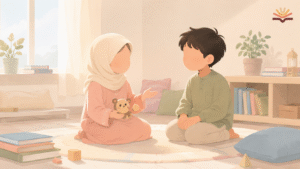
Arabic Story: ليلى واللعبة المكسورة
كانَتْ لَيْلى تَلْعَبُ في غُرْفَتِها.
رَأَتْ لُعْبَةَ أَخِيها عُمَرَ عَلى المَكْتَبِ.
قالَتْ لَيْلى: “سَأَلْعَبُ بِها قَليلًا فَقَطْ.”
أَخَذَتِ اللُّعْبَةَ، وَلَكِنَّها سَقَطَتْ مِنْ يَدِها.
انْكَسَرَ جُزْءٌ صَغيرٌ مِنَ اللُّعْبَةِ.
خافَتْ لَيْلى، وَأَرادَتْ أَنْ تُخْفيَها.
ثُمَّ تَذَكَّرَتْ أَنَّ الصِّدْقَ أَفْضَلُ مِنَ الخَوْفِ.
ذَهَبَتْ إِلى عُمَرَ وَقالَتْ: “آسِفَةٌ يا عُمَر. أَخَذْتُ لُعْبَتَكَ بِدُونِ إِذْنٍ، وَانْكَسَرَ جُزْءٌ مِنْها.”
نَظَرَ عُمَرُ إِلى اللُّعْبَةِ، ثُمَّ قالَ: “أَنا حَزينٌ، لَكِنَّني أُحِبُّ أَنَّكِ قُلْتِ الصِّدْقَ.”
قالَتْ لَيْلى: “سَأُساعِدُكَ في إِصْلاحِها.”
جَلَسَتْ لَيْلى مَعَ عُمَرَ، وَحاوَلا إِصْلاحَ اللُّعْبَةِ مَعًا.
تَعَلَّمَتْ لَيْلى أَنَّ المَسْؤُولِيَّةَ تَبْدَأُ بِالصِّدْقِ وَالاعْتِذارِ.
English Translation: Layla and The Broken Toy
Layla was playing in her room.
She saw her brother Omar’s toy on the desk.
Layla said, “I will play with it for just a little while.”
She took the toy, but it fell from her hand.
A small part of the toy broke.
Layla felt afraid and wanted to hide it.
Then she remembered that honesty is better than fear.
She went to Omar and said, “I am sorry, Omar. I took your toy without permission, and a part of it broke.”
Omar looked at the toy, then said, “I am sad, but I like that you told the truth.”
Layla said, “I will help you fix it.”
Layla sat with Omar, and they tried to fix the toy together.
Layla learned that responsibility begins with honesty and apology.
Moral Lesson: Responsibility means admitting mistakes and trying to fix them.
Arabic Moral Lesson: المسؤولية تعني أن نعترف بالخطأ ونحاول إصلاحه.
Question for Kids: What did Layla do after she broke the toy?
Arabic Question: ماذا فعلت ليلى بعد أن كسرت اللعبة؟
| Arabic Word | Meaning |
|---|---|
| لُعْبَة | Toy |
| آسِفَة | Sorry |
| الصِّدْق | Truthfulness |
| المَسْؤُولِيَّة | Responsibility |
This is one of the most practical Arabic Moral Stories for Kids because children often make mistakes and feel afraid to admit them. The story teaches that honesty and apology are better than hiding the truth.
Useful Arabic Vocabulary from the Stories
Arabic Moral Stories for Kids become more powerful when parents review useful vocabulary after reading. Do not ask your child to memorize every word. Choose a few words and repeat them naturally.
| Arabic Word | English Meaning | Value Connected to It |
|---|---|---|
| الأَمانَة | Honesty / trust | Returning what belongs to others |
| اللُّطْف | Kindness | Helping gently |
| الصَّبْر | Patience | Waiting for good results |
| الصِّدْق | Truthfulness | Telling the truth |
| المَسْؤُولِيَّة | Responsibility | Admitting mistakes |
| الاعْتِذار | Apology | Saying sorry and fixing harm |
After reading, ask your child to choose one Arabic word from the story and use it in a simple sentence. This turns Arabic Moral Stories for Kids into reading, vocabulary, and speaking practice.
How Parents Can Turn Each Story into a Lesson
Each of these Arabic Moral Stories for Kids can become a simple home lesson. You do not need a long lesson plan. Use a short, calm structure.
- Read the Arabic story.
- Read the English translation.
- Ask the moral question.
- Choose three Arabic words.
- Ask your child to retell the story in English.
- Ask your child to repeat one Arabic sentence.
- Talk about how the moral lesson appears in real life.
For example, after the story of Sami and the bag, ask your child what they would do if they found something at school. After the story of Maryam, ask when they can show kindness to a friend.
This helps children understand that Arabic Moral Stories for Kids are not only for reading. They are for thinking, speaking, and practising good character.
How Sibghah Academy Supports Arabic Story Reading
Sibghah Academy offers live online Arabic, Quran, and Islamic Studies lessons for Muslim children aged 5–15.
For Arabic learning, Sibghah Academy helps children move step by step from Arabic letters and sounds to words, sentences, reading fluency, speaking, and story understanding.
Arabic Moral Stories for Kids can be very useful when the child is ready for sentence reading. A teacher can help the child read the story, understand vocabulary, practise pronunciation, answer questions, and connect the story to daily life.
Some children may need to start with Noor Al-Bayan if they are still building Arabic reading foundations. Other children may be ready for the Takallam Series, where they can develop reading, vocabulary, speaking, and confidence.
For Muslim children in the UK, story-based Arabic learning can be especially helpful because it connects Arabic with meaning, emotion, Islamic manners, and home identity.
If your child enjoys stories, Arabic Moral Stories for Kids can become part of a wider Arabic learning path that includes reading, speaking, listening, and Islamic values.
Quick Parent Checklist
Use this checklist when reading Arabic Moral Stories for Kids with your child:
- Is the story short enough for my child?
- Can my child read some Arabic sentences?
- Did we use the English translation for meaning?
- Did we choose a few Arabic words to repeat?
- Did we discuss the moral lesson?
- Did I avoid correcting every small mistake?
- Can we read the same story again later?
- Does my child need a teacher to support story reading?
FAQ: Arabic Moral Stories for Kids
1. What are Arabic Moral Stories for Kids?
Arabic Moral Stories for Kids are short Arabic stories that help children practise reading while learning values such as honesty, kindness, patience, responsibility, and respect.
2. Are these stories suitable for beginners?
These stories are suitable for children who can read simple Arabic words and are beginning to read short sentences. Younger beginners may need parent or teacher support.
3. Why include English translation?
English translation helps children understand the meaning, especially if they live in the UK or speak English more than Arabic. The Arabic story should still remain the main focus.
4. How should parents use Arabic Moral Stories for Kids at home?
Parents can read one story slowly, check the English meaning, discuss the moral lesson, choose useful Arabic words, and reread the story later.
5. Can Arabic Moral Stories for Kids improve vocabulary?
Yes. Arabic Moral Stories for Kids help children learn vocabulary in context, which can make words easier to remember than isolated lists.
6. Can these stories help with speaking Arabic?
Yes. After reading, ask simple questions and encourage your child to answer with one word, two words, or a short Arabic phrase.
7. Should I correct every mistake while my child reads?
No. Correct the most important mistakes first. Too much correction can make story reading feel stressful.
8. How many stories should we read in one session?
One story is usually enough for many children. Reading one story well is better than rushing through many stories.
9. What values do these Arabic Moral Stories for Kids teach?
These Arabic Moral Stories for Kids teach honesty, kindness, patience, responsibility, apology, and caring for others.
10. Can Muslim children in the UK benefit from Arabic moral stories?
Yes. Arabic moral stories can help Muslim children in the UK connect Arabic with family values, Islamic manners, and meaningful reading practice.
11. What if my child only reads the English translation?
Use the English translation for meaning, but bring the child back to the Arabic story. Start with one Arabic sentence if the full story feels hard.
12. Can Sibghah Academy help my child read Arabic stories?
Yes. Sibghah Academy helps children build Arabic reading, vocabulary, sentence understanding, and story reading confidence through live online lessons.
Book your child’s free Arabic trial on WhatsApp
Arabic Moral Stories for Kids can help your child enjoy Arabic, build vocabulary, understand simple sentences, and learn beautiful values.
Send Sibghah Academy a WhatsApp message with your child’s age, Arabic level, and main goal, and we will help you choose the right Arabic learning path.