
Reviews of Arabic Language Programs for Children can be helpful when parents are deciding where their child should learn Arabic, but reviews alone do not always tell you whether a programme will suit your own child.
One parent may praise a course because their child learned to read Arabic letters. Another may be looking for speaking confidence. A third may want their child to understand Arabic spoken by grandparents. Another family may be focused on Arabic reading as preparation for Quran learning.
All of these parents may give positive reviews to completely different programmes.
That is why Reviews of Arabic Language Programs for Children are most useful when you know what to look for behind the star rating or testimonial.
Does the programme teach only reading, or does it also develop listening and speaking? Are lessons one-to-one or group? Is the child assessed before starting? Does the teacher adapt to the child’s age and current level? Can parents see real progress over time?
These questions are especially important for Muslim families in the UK, where children may have very different relationships with Arabic.
Some children are complete beginners. Some hear Arabic at home but answer mainly in English. Some can recognise Arabic letters but cannot read comfortably. Others can read but struggle to understand or speak.
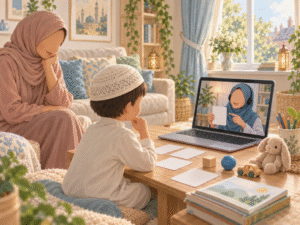
Quick answer: when reading Reviews of Arabic Language Programs for Children, do not look only for phrases such as “great teacher” or “my child enjoyed it.” Stronger evidence includes comments about the teacher adapting to the child, progress in reading or speaking, appropriate challenge, patience, confidence, structured progression, parent communication and whether the child is actually using more Arabic over time.
Book a free one-to-one Arabic trial
Table of Contents
- What Can Reviews of Arabic Language Programs for Children Really Tell You?
- Reviews of Arabic Language Programs for Children: 10 Smart Checks
- Arabic Reading Programme vs Full Arabic Language Programme
- Should a Good Arabic Programme Teach Four Language Skills?
- One-to-One vs Group Arabic Programmes
- What About Non-Arabic-Speaking Children?
- What About Arab Children Growing Up in the UK?
- How Should Parents Read Online Reviews?
- What Do Sibghah Families Say?
- How Sibghah Arabic Programmes Work
- Review Red Flags to Watch For
- Why a Trial Can Tell You More Than a Review
- Parent Comparison Checklist
- FAQ
What Can Reviews of Arabic Language Programs for Children Really Tell You?
Reviews of Arabic Language Programs for Children can give parents useful clues about the learning experience.
A good review may tell you about:
- How the teacher communicates with children
- Whether the child enjoys lessons
- Whether the teacher is patient
- Whether lessons are adapted to different ages
- Whether parents feel informed
- Whether the child has made noticeable progress
- Whether a family would recommend the teacher
However, reviews have limits.
A programme that worked brilliantly for a twelve-year-old Arabic-speaking child may not automatically suit a five-year-old complete beginner.
A child who needs Arabic reading foundations may require a different programme from a child who already reads but needs speaking practice.
That means parents should use reviews as one source of information, not the entire decision.
A useful review answers:
What improved, for what type of child, through what kind of teaching?

Reviews of Arabic Language Programs for Children: 10 Smart Checks
1. Does the Programme Have a Clear Goal?
The first thing to check in Reviews of Arabic Language Programs for Children is what the programme is actually trying to teach.
“Learn Arabic” is too broad.
A course may focus on:
- Arabic letters
- Reading foundations
- Reading fluency
- Vocabulary
- Listening
- Speaking
- Writing
- Grammar
- Quran readiness
A good programme should be able to explain its objective clearly.
For example, a beginner reading programme might aim to help children recognise letters, understand sounds and vowels, join letters and begin reading words.
A broader Arabic language programme should go further and help the child understand and use Arabic through listening, speaking, reading and writing.
Before trusting a review, ask whether the reviewer’s goal was similar to yours.
2. Is the Child’s Level Checked Before Starting?
Strong Reviews of Arabic Language Programs for Children often mention that the teacher understood the child’s needs rather than simply placing them into a standard lesson.
Children can have uneven Arabic skills.
A child might:
- Understand Arabic but refuse to speak it.
- Speak some Arabic but not read it.
- Know the alphabet but struggle to blend letters.
- Read confidently but understand very little.
- Have studied Arabic before but forgotten much of it.
These children should not necessarily begin at the same point.
A useful level check can explore:
- Letter knowledge
- Pronunciation
- Reading
- Vocabulary
- Listening comprehension
- Speaking confidence
- Previous learning
The result should lead to a suitable starting point rather than a generic age-based placement.
3. Is the Programme Reading-Only or Full Language Learning?
This is one of the most important distinctions when comparing Reviews of Arabic Language Programs for Children.
A child can learn to decode Arabic words without becoming comfortable using Arabic as a language.
Reading foundations are valuable, especially for Muslim children preparing for Quran reading.
But parents whose long-term goal includes communication should also look for:
- Listening practice
- Vocabulary in context
- Questions and answers
- Sentence building
- Conversation
- Writing appropriate to the child’s level
This does not mean every programme must teach everything from lesson one.
It means the programme should have a clear progression.
A beginner may first need to learn how Arabic sounds and writing work before moving into broader language use.
4. How Much Arabic Does the Child Actually Use?
When reading Reviews of Arabic Language Programs for Children, look for comments about participation, not only teacher explanations.
A language lesson should give the child opportunities to do something with Arabic.
Depending on level, this might mean:
- Repeating sounds
- Reading words aloud
- Answering simple questions
- Naming familiar objects
- Building short sentences
- Responding to spoken Arabic
- Describing pictures
- Having short conversations
If the teacher speaks for most of the lesson while the child listens passively, the child may receive less practice than the timetable suggests.
For speaking development especially, active participation matters.
5. Does the Teacher Adapt to the Child?
Teacher adaptability is one of the most useful things parents can look for in Reviews of Arabic Language Programs for Children.
Children of different ages cannot always be taught in the same way.
A six-year-old beginner may need:
- Shorter activities
- More repetition
- Visual support
- Simple instructions
- Frequent encouragement
An older child may manage:
- Longer reading passages
- More independent answers
- Sentence-building tasks
- Writing
- More explicit grammar
Even children of the same age may need different approaches.
Look for reviews that describe the teacher responding to the learner rather than simply praising the teacher in general.
6. Is the Teacher Patient Without Lowering Expectations?
Patience appears frequently in positive Reviews of Arabic Language Programs for Children, and for good reason.
Children learning a language will make repeated mistakes.
A child may need to hear a sound several times.
They may forget vocabulary that appeared last week.
They may know an answer but feel nervous saying it.
A good teacher gives the child space to try again.
But patience should not mean ignoring mistakes.
The strongest teaching combines:
encouragement + correction + another opportunity to try.
This helps children understand that mistakes are a normal part of learning rather than something embarrassing.
7. Is There a Clear Curriculum and Progression?
Another important feature in Reviews of Arabic Language Programs for Children is whether learning seems to move somewhere.
Finishing worksheets is not the same as progressing.
A structured programme should be able to show how one skill leads to another.
For example:
letters → sounds → vowels → joined letters → words → short reading → fluency.
Or in broader language learning:
familiar vocabulary → short phrases → questions and answers → sentences → conversation → longer reading and writing.
Parents should be able to understand why the child is studying today’s material and what it is preparing them for next.
8. Does the Programme Develop More Than One Language Skill?
A useful way to evaluate Reviews of Arabic Language Programs for Children is to ask what kind of progress reviewers describe.
Do they only mention completing books?
Or do children become better at listening, speaking, reading and writing?
England’s national curriculum for modern languages expects pupils to develop understanding of spoken and written language, communicate through speech and writing, improve pronunciation and interact in the language.
See the national curriculum in England for languages.
This is not an Arabic-course accreditation standard and does not mean private Arabic programmes must copy the school curriculum.
It is useful because it reminds parents that language ability is broader than reading alone.
Education Scotland similarly describes progression across the four language skills of listening, talking, reading and writing.
Explore Education Scotland’s modern languages progression framework.
For a child learning Arabic as a living language, these four skills provide a useful framework for parents to think about progress.
9. Do Parents Receive Useful Progress Feedback?
Strong Reviews of Arabic Language Programs for Children sometimes mention communication with the teacher or academy.
Parents should not need to guess whether the course is working.
Useful feedback might say:
- Your child now recognises letters more confidently.
- Your child can read short words without prompting.
- Speaking confidence is improving but vocabulary remains limited.
- Your child can answer familiar questions in Arabic.
- Pronunciation of several sounds still needs practice.
- Your child is ready to move from reading foundations into broader Arabic language work.
Compare that with:
“She is doing well.”
The second comment is encouraging, but it tells the parent very little about actual development.
10. Can the Family Try the Programme Before Committing?
No collection of Reviews of Arabic Language Programs for Children can tell you exactly how your child will respond to a specific teacher.
This is why a trial lesson can be extremely useful.
During a trial, parents can observe:
- Whether the teacher understands the child’s current level
- How the child responds
- How much the child participates
- How mistakes are corrected
- Whether the activity is too easy or too difficult
- Whether the teacher adapts
- Whether the child becomes more comfortable during the session
A trial gives your family first-hand evidence instead of relying entirely on someone else’s experience.

Reviews of Arabic Language Programs for Children: Reading Programme vs Full Language Programme
Parents reading Reviews of Arabic Language Programs for Children should distinguish between two valuable but different goals.
Arabic Reading Foundations
A reading-foundation programme may focus on:
- Letters
- Sounds
- Short vowels
- Long vowels
- Sukoon
- Shaddah
- Joining letters
- Reading words
- Early fluency
This can be exactly what a complete beginner needs.
At Sibghah, the Noor Al-Bayan Course for Kids is used for children who need these Arabic reading foundations.
Fuller Arabic Language Development
Once reading foundations are stronger, the child may need broader language skills.
These can include:
- Vocabulary
- Listening comprehension
- Speaking
- Reading comprehension
- Sentence building
- Writing
- Simple grammar
At Sibghah, the Takallam Arabic Series supports children who are ready to move beyond basic reading into wider language use.
So when comparing Reviews of Arabic Language Programs for Children, ask whether the reviewer is talking about learning to read Arabic or learning to use Arabic more broadly.
The two goals overlap, but they are not identical.
Should a Good Arabic Programme Teach Listening, Speaking, Reading and Writing?
For broader language learning, yes, although the balance should change according to age and level.
A complete beginner does not need to practise all four skills equally from the first minute.
A young child may begin with:
- Listening
- Sounds
- Simple speaking
- Letter recognition
Writing may develop gradually.
An older child who already reads may spend more time on:
- Reading comprehension
- Conversation
- Sentence building
- Writing
When reading Reviews of Arabic Language Programs for Children, look for evidence that the programme develops meaningful language ability over time rather than teaching isolated vocabulary forever.
Reviews of Arabic Language Programs for Children: One-to-One vs Group Lessons
Neither format is automatically right for every child.
| Area | One-to-One | Group Programme |
|---|---|---|
| Teacher attention | Focused on one child | Shared |
| Speaking time | Can be much higher | Children take turns |
| Reading correction | Individual | Depends on class size |
| Learning pace | Can follow the child | Influenced by the group |
| Peer interaction | Limited during lesson | Higher |
| Personalisation | High | Depends on teacher and group size |
A confident child who enjoys learning with others may thrive in a good group.
One-to-one can be especially useful when a child:
- Needs extra reading correction
- Is shy speaking Arabic
- Needs more repetition
- Has an unusual level for their age
- Understands Arabic but rarely speaks
- Needs a pace different from a class
Our Arabic Teacher for Kids UK guide explains what parents can look for in the teacher herself, not only the programme.
What Should Non-Arabic-Speaking Families Look For?
Reviews of Arabic Language Programs for Children can be particularly confusing for non-Arab families because some Arabic courses assume children already hear the language regularly.
A complete beginner may need:
- Clear sound modelling
- Simple instructions
- Lots of repetition
- Visual support
- Gradual vocabulary
- Enough time to answer
The programme should not assume that the child already understands everyday Arabic.
At the same time, lessons should gradually create opportunities for the child to hear and use Arabic instead of translating everything permanently.
What About Arab Children Growing Up in the UK?
An Arab family may still need to read Reviews of Arabic Language Programs for Children carefully because heritage does not automatically equal fluency.
A child may:
- Understand parents but answer in English.
- Speak a family dialect but not read Modern Standard Arabic.
- Recognise letters but read slowly.
- Know everyday vocabulary but struggle to form longer sentences.
- Feel embarrassed speaking Arabic outside the home.
These children may need a very different course from a complete beginner.
A good programme should identify what the child already has and build from there rather than restarting everything unnecessarily.
How Should Parents Read Reviews of Arabic Language Programs for Children?
Not all Reviews of Arabic Language Programs for Children carry the same amount of information.
Less informative review:
Great course. We love the teacher.
This is positive, but it tells you little about teaching.
More informative review:
The teacher changed her approach for two children of different ages, kept them engaged and helped them progress.
This tells you something about adaptability.
Look especially for reviews that mention:
- The child’s age or starting point
- A particular difficulty
- How the teacher responded
- What changed over time
- How the child felt about learning
- Whether the parent could see progress
Also ask where the review is published
A testimonial published on an academy’s own website is first-party feedback.
It can still be useful, but parents should understand that the academy selected or published it.
Independent review platforms, personal recommendations, trials and direct experience provide additional information.
What Do Sibghah Families Say About Their Learning Experience?
Sibghah publishes parent and student feedback on its own website. These are first-party testimonials, not independent reviews, so they should be read alongside the programme information and your child’s own trial experience.
Several pieces of feedback are useful when evaluating the teaching approach.
A child who enjoys her Arabic teacher
One student specifically says that her friends and family know how much she loves her Arabic teacher.
This does not by itself prove language progress, but it is a useful sign of a positive teacher-child relationship.
That relationship matters because children usually participate more freely when they feel comfortable attempting answers and making mistakes.
Different approaches for children of different ages
One parent describes Usthadha Laila teaching two daughters of different ages and using a different approach with each child. The parent says both children remained engaged and made progress.
The testimonial ultimately discusses Quran learning, so it should not be treated as evidence of Arabic-language outcomes.
However, it does provide relevant feedback about age-appropriate teaching, engagement and personalisation, which are also important when parents evaluate an Arabic teacher.
Patience and repeated explanation
Another published student testimonial praises a teacher for explaining things clearly and repeating explanations when something is not understood.
Again, this is feedback about teaching style rather than a measured Arabic outcome.
But patience and willingness to explain differently are useful qualities in children’s language learning.
Family recommendation
Another parent says they recommended teacher Nourhan to family members.
A recommendation is a useful trust signal, although it does not tell us exactly which skill improved or how quickly.
This illustrates an important lesson when reading Reviews of Arabic Language Programs for Children: positive sentiment is valuable, but specific evidence about the child’s learning tells you more.
How Do Sibghah Arabic Language Programs Work?

For parents comparing Reviews of Arabic Language Programs for Children, Sibghah uses two main Arabic learning paths depending on the child’s current level.
Noor Al-Bayan: Arabic Reading Foundations
Noor Al-Bayan is designed for beginners and children who need stronger reading foundations.
The programme can include:
- Arabic letters
- Letter sounds
- Short vowels
- Long vowels
- Tanween
- Sukoon
- Shaddah
- Joined letters
- Early reading
The goal is to help children become more confident readers and prepare them for stronger Arabic and Quran reading.
Takallam: Broader Arabic Language Development
Takallam is more suitable for children who already have basic reading foundations and are ready to develop Arabic as a wider language.
It supports:
- Vocabulary
- Listening
- Speaking
- Reading
- Writing
- Sentence structure
- Simple grammar
- Confidence using Arabic
The programme progresses through levels rather than expecting children to move directly from the alphabet into difficult texts.
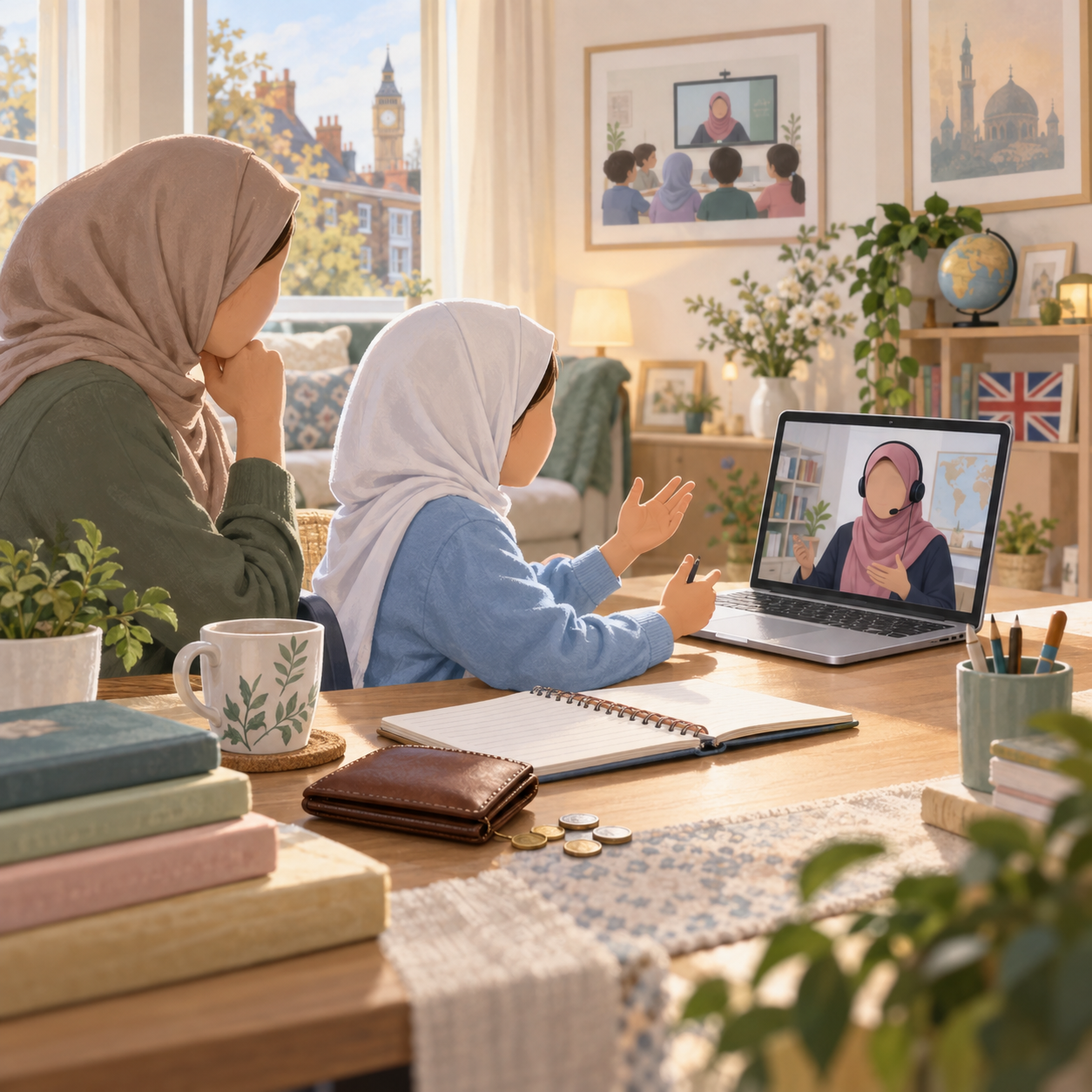
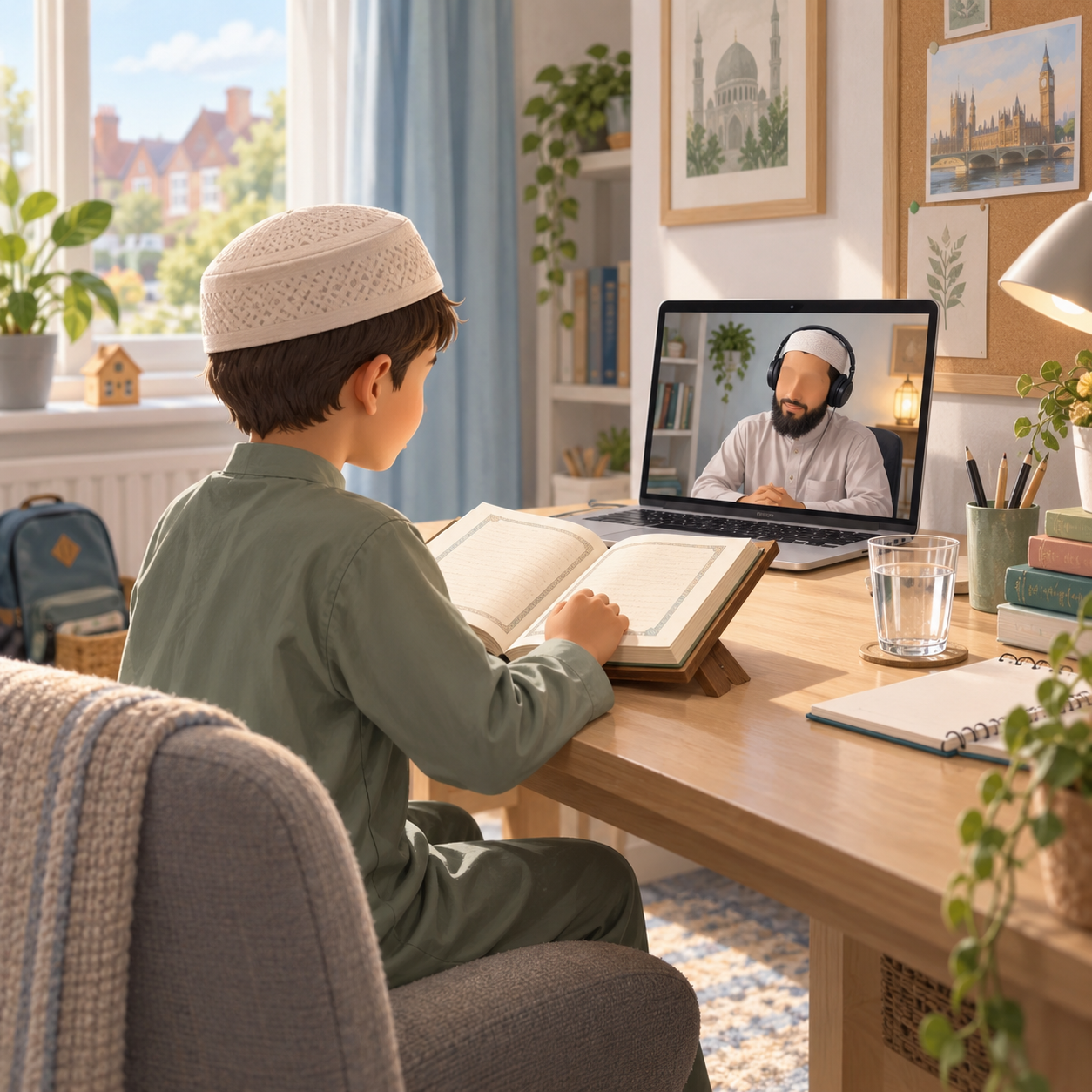
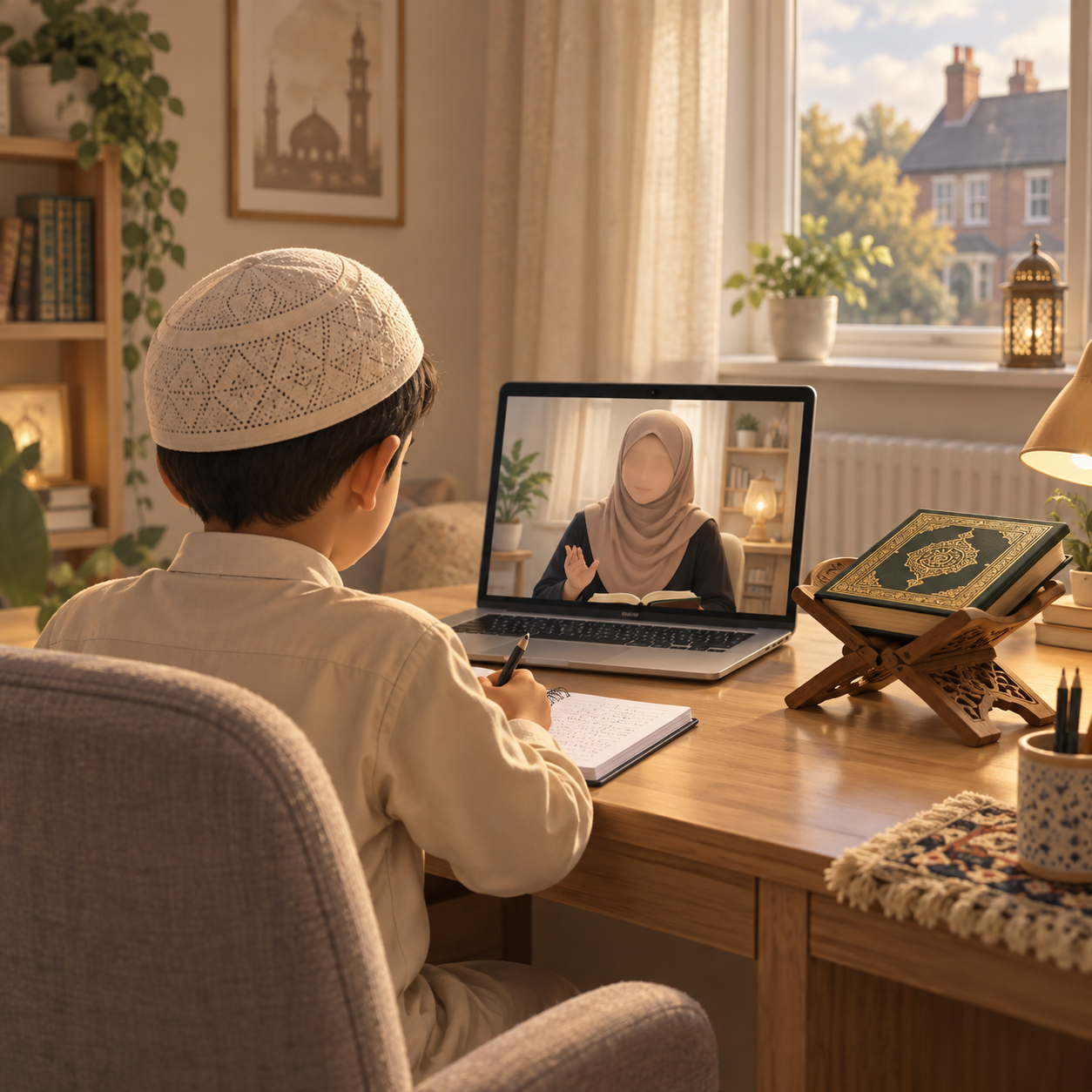
Sibghah Arabic lessons are live and one-to-one, which allows the teacher to adjust the pace according to the individual learner.
Parents can also read our Arabic Classes for Kids UK guide for a broader comparison of course-selection criteria.
How Should Progress Be Judged?
One weakness in many Reviews of Arabic Language Programs for Children is that they describe happiness but not learning.
Enjoyment matters, especially for children.
But parents should also look for change in skills.
| Area | Possible Sign of Progress |
|---|---|
| Letter knowledge | Child recognises sounds more independently |
| Reading | Less hesitation and less prompting |
| Listening | Understands more familiar questions and instructions |
| Speaking | Answers with longer or more independent Arabic |
| Vocabulary | Uses previously learned words in new situations |
| Writing | Produces words and sentences with increasing independence |
| Confidence | Attempts answers without waiting for English translation every time |
A programme should not promise instant fluency.
Progress may be gradual, and different skills can develop at different speeds.
Red Flags in Reviews of Arabic Language Programs for Children
Parents should be cautious when Reviews of Arabic Language Programs for Children rely heavily on claims such as:
- Fluent in weeks
- Guaranteed results
- Perfect Arabic quickly
- One method works for every child
- No practice needed outside lessons
Other warning signs include:
Only vague testimonials
If every review says “amazing” but none explains what children actually learned, the reviews provide limited information.
Only screenshots with no context
A screenshot may be genuine, but parents still need to know whether the feedback relates to Arabic, Quran, Islamic Studies or general customer service.
Reviews focused only on finishing books
Completing a book can be useful, but the real question is whether the child can use the skills taught.
No negative or balanced information anywhere
No programme is perfect for every child.
A trustworthy provider should be able to explain who the programme is designed for and when a different starting level may be more appropriate.
Why a Trial Can Tell You More Than Reviews of Arabic Language Programs for Children
You can read dozens of Reviews of Arabic Language Programs for Children and still not know how your child will respond.
A trial lesson lets you see:
- Whether your child understands the teacher
- Whether the teacher understands your child’s level
- How much Arabic your child uses
- How corrections are handled
- Whether the pace feels appropriate
- Whether the child engages
- Whether the teacher can explain the next learning step
This is particularly important in one-to-one learning because teacher-child fit matters.
A teacher may have excellent testimonials and still not be the ideal personality match for one particular child.
At Sibghah, families can begin with a free trial before regular enrolment.
Sibghah Teacher Note
A child’s progress in Arabic should not be measured only by how many pages they finish. We look for growing independence: needing less help to read, understanding more of what the teacher says, using vocabulary without being prompted, building longer answers, and feeling more comfortable trying Arabic even when the child is not completely sure.
Parent Checklist for Reviews of Arabic Language Programs for Children
Use this checklist when comparing Reviews of Arabic Language Programs for Children:
- I understand what the programme is designed to teach.
- The child’s level is checked before or during the first lessons.
- I know whether the course is reading-only or broader Arabic learning.
- The child gets active practice, not only explanations.
- The teacher has experience working with children.
- The teaching approach suits the child’s age.
- Mistakes are corrected patiently.
- The programme has a clear progression.
- Listening and speaking are included when appropriate.
- Reading and writing develop at the right stage.
- The lesson pace can adjust to the child.
- Parents receive useful progress feedback.
- Reviews mention specific experiences, not only praise.
- I know whether testimonials are first-party or independent.
- The programme does not promise unrealistic speed.
- We can try the lesson before committing.
FAQ About Reviews of Arabic Language Programs for Children
What should I look for in Reviews of Arabic Language Programs for Children?
Look for specific information about the child’s starting point, teacher approach, reading or speaking progress, confidence, curriculum, individual attention and parent feedback. Specific examples are usually more useful than general praise.
Are parent reviews enough to choose an Arabic programme?
No. Reviews can provide useful clues, but parents should also examine the curriculum, teacher experience, lesson format, level assessment, progression and ideally try a lesson before committing.
Should children’s Arabic classes teach speaking as well as reading?
If the family’s goal includes wider Arabic communication, yes. A broader Arabic programme should gradually develop listening, speaking, reading and writing. A reading-foundation programme may correctly focus more heavily on reading at the beginning.
What is the difference between an Arabic reading course and an Arabic language course?
A reading course focuses mainly on recognising letters, sounds, vowels, joining and reading words. A broader language course develops vocabulary, listening, speaking, reading comprehension, sentence structure and writing as well.
Are one-to-one Arabic lessons better than group classes?
One-to-one lessons can provide more individual speaking time, reading correction and personal pacing. Group classes provide stronger peer interaction and may suit children who learn comfortably at the group pace. The better format depends on the child.
What should I look for in reviews from parents of non-Arab children?
Look for evidence that the teacher can work from zero, explain sounds clearly, build vocabulary gradually and help the child use Arabic without assuming previous exposure.
What about Arabic-speaking families whose children answer in English?
These children may need structured speaking and vocabulary development rather than starting Arabic from zero. A good programme should assess what the child understands, reads and speaks separately.
Can a child enjoy the teacher but still make limited progress?
Yes. A positive relationship is valuable, but enjoyment alone is not enough. Parents should also look for development in skills such as reading independence, vocabulary, listening comprehension, speaking or writing.
Are testimonials on an academy’s own website trustworthy?
They can provide useful first-party feedback, but the academy controls what it publishes. Parents should combine testimonials with programme information, questions, a trial lesson and their own child’s experience.
What do Sibghah reviews say about the teachers?
Sibghah’s published testimonials include positive comments about teacher-child relationships, patience, clear explanations, engagement and adapting approaches for children of different ages. One student specifically mentions loving her Arabic teacher. These testimonials are first-party feedback published by Sibghah itself.
What Arabic programmes does Sibghah offer?
Sibghah uses Noor Al-Bayan for children who need Arabic reading foundations and the Takallam Series for children ready to develop broader listening, speaking, reading and writing skills.
Are Sibghah Arabic lessons group or one-to-one?
Sibghah’s Arabic lessons are live online one-to-one lessons, allowing the teacher to adjust the pace and focus according to the individual child’s needs.
Can my child try Sibghah before enrolling?
Yes. Sibghah offers a free trial session so the teacher can understand the child’s current level and parents can observe the one-to-one learning experience before beginning regular lessons.
Final Thoughts on Reviews of Arabic Language Programs for Children
Reviews of Arabic Language Programs for Children are most useful when they help parents understand the learning experience rather than simply tell them that other families were happy.
Look for detail.
What level was the child?
What did they struggle with?
Did the teacher adapt?
Did the child become more confident?
Did reading become more independent?
Did the child begin using more Arabic?
Did parents understand what was improving?
These details tell you much more than a five-star rating alone.
Parents should also distinguish between Arabic reading and broader Arabic language development.
A child who is starting with letters and sounds may need a structured reading programme such as Noor Al-Bayan.
A child who already reads and needs vocabulary, listening, speaking and writing may need a broader programme such as Takallam.
One-to-one and group classes can both work, but they provide different learning experiences.
And testimonials should always be read in context. First-party reviews can show genuine family experiences, but they are still selected or published by the provider.
That is why the strongest next step after reading Reviews of Arabic Language Programs for Children is usually to see the teaching for yourself.
At Sibghah Academy, Arabic lessons are live and one-to-one, with the learning path chosen according to the child’s level rather than using one programme for every learner.
A free trial allows your child to meet the teacher and gives you the opportunity to judge something no online review can fully answer:
Is this programme right for my child?
Message Sibghah Academy to book a free one-to-one Arabic trial