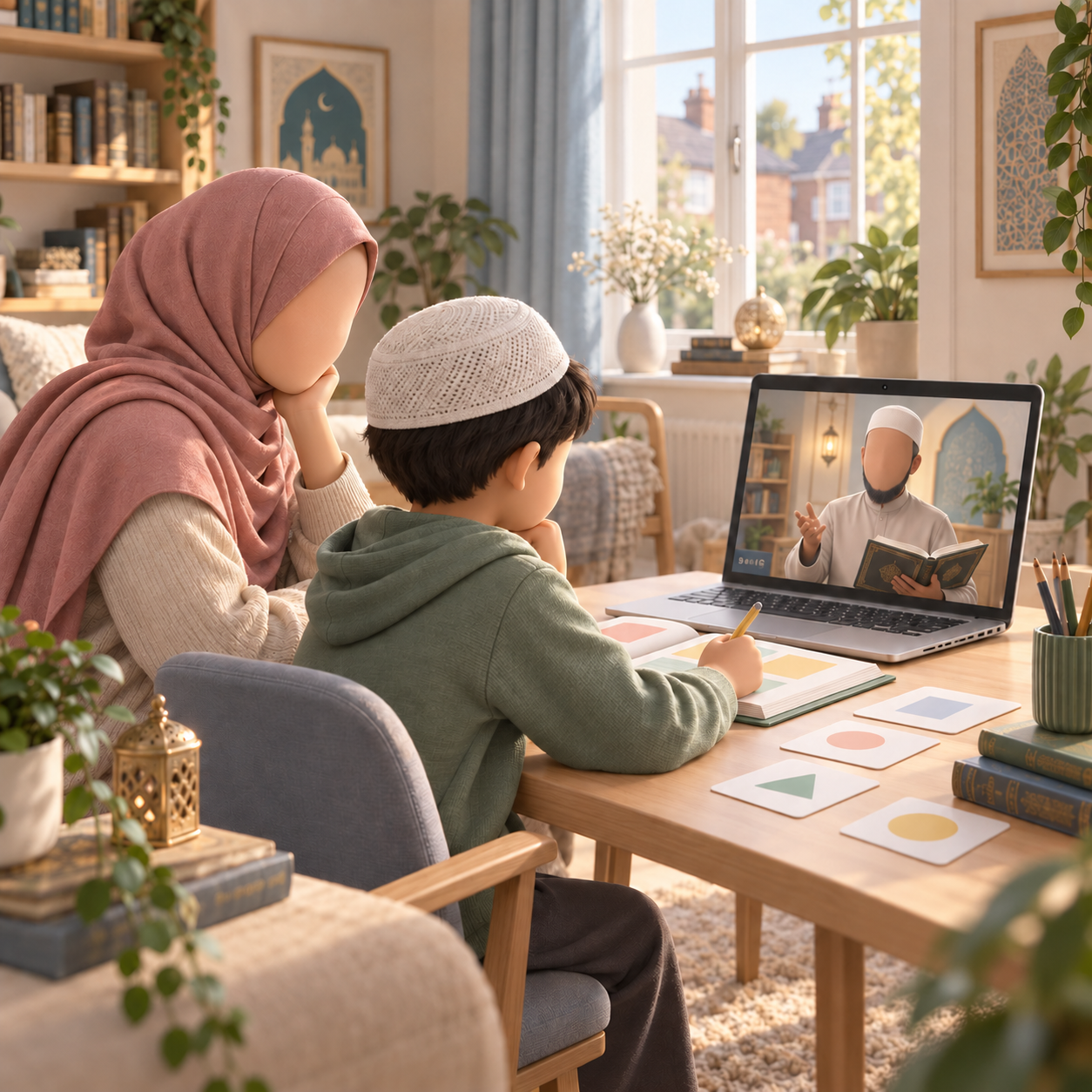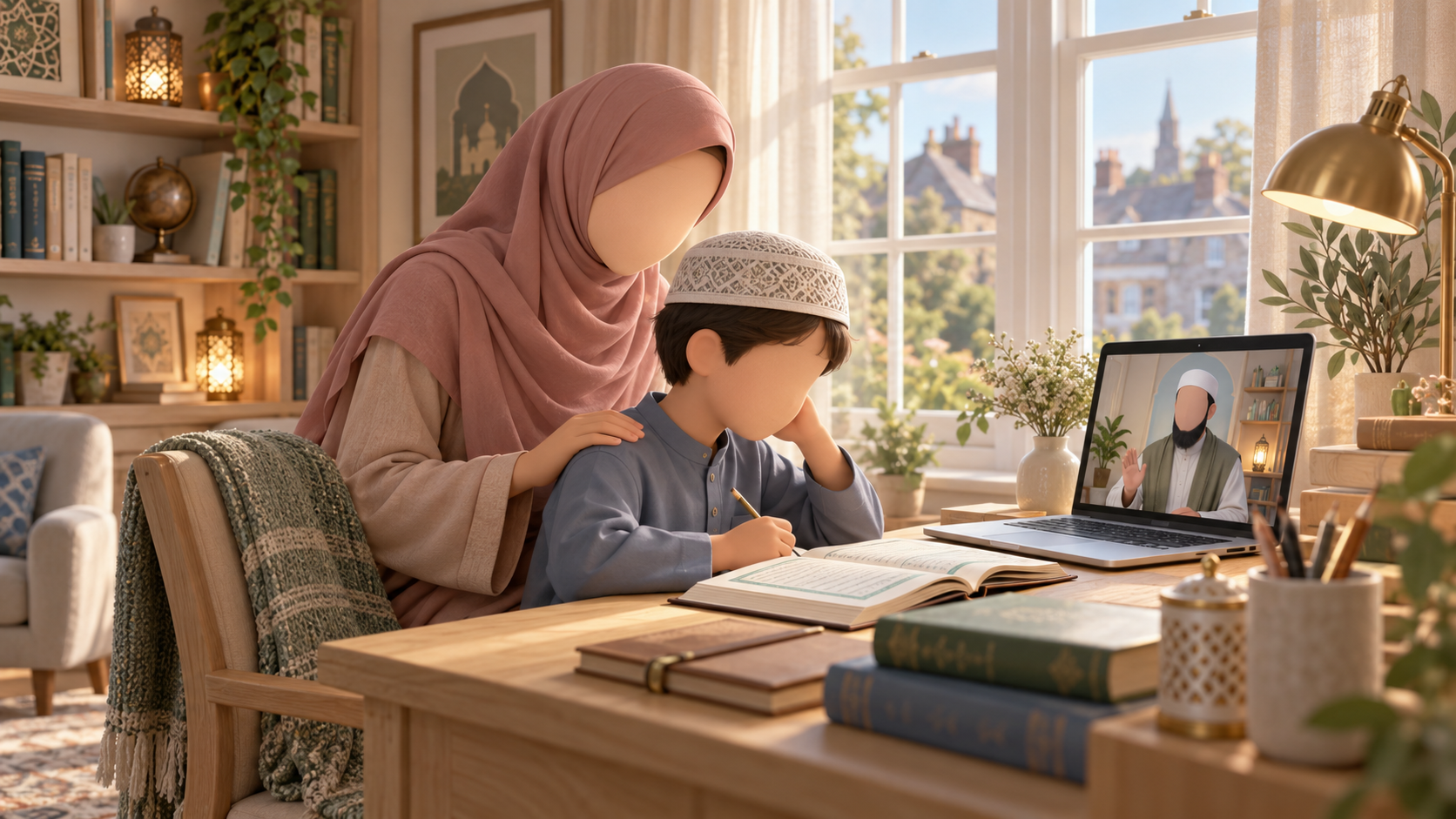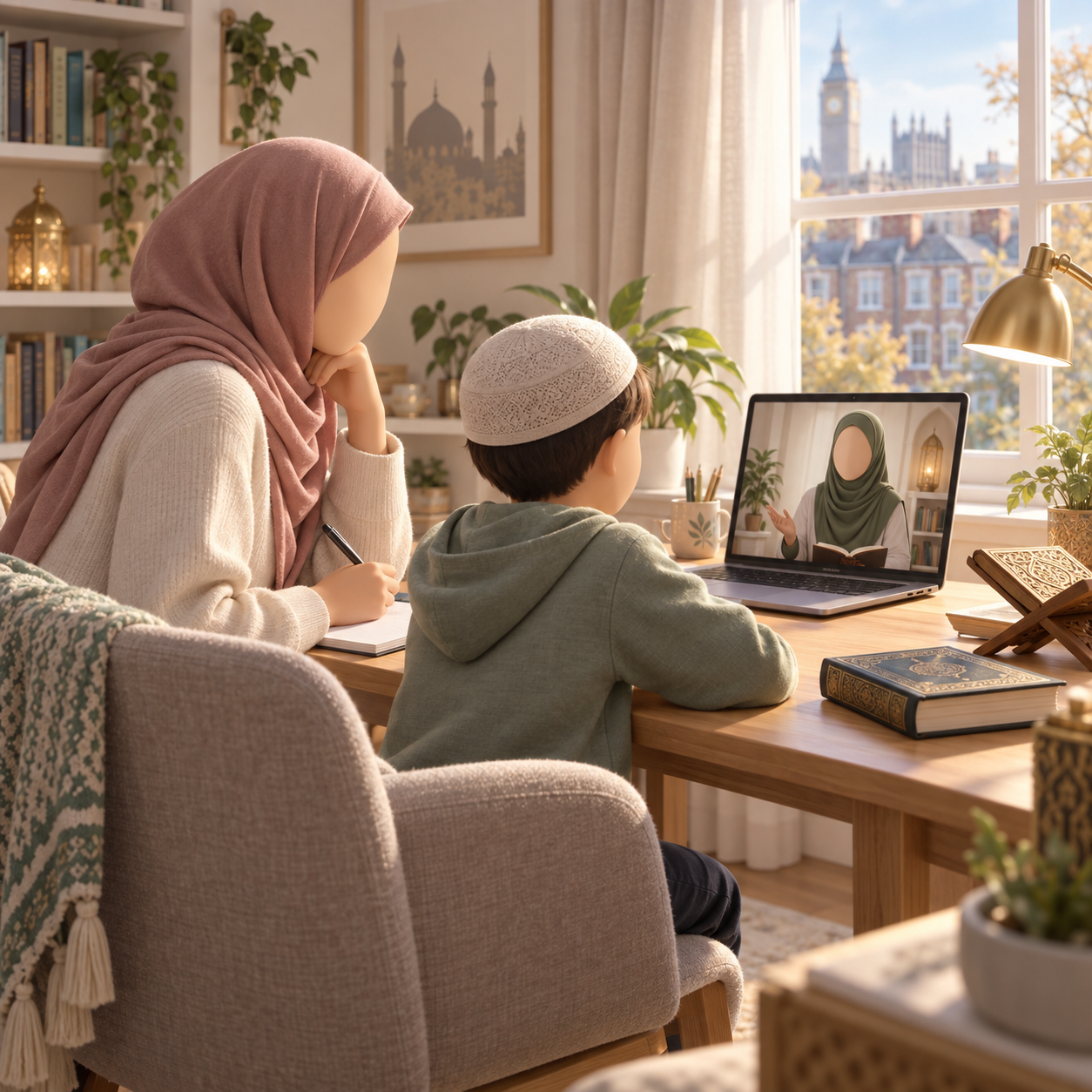

This guide explains quran memorization for kids in a practical, parent-friendly way. It is not only about making a schedule. It is about readiness, listening, repetition, revision, Tajweed, motivation, teacher support, and protecting the child’s love for Quran.
Some children can memorise short surahs before they read Arabic fluently. Other children need stronger Arabic reading foundations first. Some children memorise quickly but forget because revision is weak. Some children need a gentle one-to-one teacher who can listen, correct, and build confidence step by step.
A successful approach to quran memorization for kids should not focus only on “how much did my child memorise?” It should also ask, “Can my child recite it clearly? Can they revise it later? Do they feel calm when reciting? Are they building love and respect for Quran?”
This article gives parents 9 helpful tips for quran memorization for kids, with practical examples, common mistakes to avoid, and guidance on when one-to-one Quran memorization lessons may help.
Quick answer: The best approach to quran memorization for kids is short, consistent memorization with listening, repetition, gentle correction, Tajweed support, strong revision, parent encouragement, and one-to-one teacher guidance when needed.
| Parent Question | Helpful Answer |
|---|---|
| When should my child start memorizing Quran? | When they can listen, repeat, focus for short periods, and revise calmly. |
| Should memorization come before reading? | Some children can start with short surahs by listening, but reading foundations help long-term progress. |
| How much should my child memorise? | Small consistent portions are usually better than large portions without revision. |
| Why does my child forget? | Usually because revision is weak, inconsistent, or not built into the plan. |
| Are one-to-one lessons useful? | Yes, because the teacher can listen to your child, correct mistakes, and personalise the memorization plan. |
Table of Contents
- Why Quran Memorization for Kids Needs a Gentle Plan
- Quran Memorization for Kids: 9 Helpful Tips for Parents
- How to Know If Your Child Is Ready for Quran Memorization
- Why Revision Matters More Than New Memorization
- Why One-to-One Quran Memorization Lessons Help
- Simple Home Routine for Quran Memorization
- Common Mistakes Parents Should Avoid
- How Sibghah Academy Supports Quran Memorization for Kids
- FAQ
Why Quran Memorization for Kids Needs a Gentle Plan
quran memorization for kids is an act of great value, but children need a plan that matches their age, level, attention span, and emotional readiness.
Allah says:
Quran — Surah Al-Qamar 54:17
وَلَقَدْ يَسَّرْنَا الْقُرْآنَ لِلذِّكْرِ فَهَلْ مِن مُّدَّكِرٍ
English meaning: “And We have certainly made the Quran easy to remember. So is there anyone who will be mindful?”
This verse gives parents hope. Quran memorization is possible by the help of Allah. At the same time, children still need patience, repetition, revision, and suitable teaching.
A child-friendly approach to quran memorization for kids should feel steady, not rushed. Children should not feel that every Quran session is a test they may fail. They should feel that Quran memorization is a journey of listening, repeating, improving, and returning again.
Many memorization problems happen when parents focus only on new portions. The child memorises a few lines, then moves to the next lines, then forgets the old ones. Over time, the child may feel that Quran memorization is difficult or discouraging.
A better path for quran memorization for kids includes three connected parts:
- New memorization: a small suitable portion.
- Recent revision: reviewing what was memorised recently.
- Old revision: returning to older surahs so they do not fade.
This balanced approach helps children memorise and keep what they memorise. It also prevents the common pattern of memorising quickly and forgetting quickly.
Not sure if your child is ready for Quran memorization?
Sibghah Academy offers live one-to-one Quran lessons, so the teacher can check your child’s reading, recitation, revision, and readiness before building a memorization plan.
Quran Memorization for Kids: 9 Helpful Tips for Parents
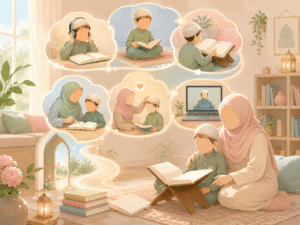
Use these tips to make quran memorization for kids more consistent, calmer, and easier to maintain.
1. Check Readiness Before Starting Hifz
The first step in quran memorization for kids is checking whether your child is ready for memorization in a healthy way.
Readiness does not mean your child must be perfect. It means they can begin with a small portion and handle repetition without becoming overwhelmed.
Your child may be ready if they can:
- Listen carefully for a short time.
- Repeat after a teacher or parent.
- Memorise short lines or short surahs.
- Revise without strong resistance.
- Accept gentle correction.
- Stay calm during short recitation practice.
- Recognise some Arabic letters or follow a recitation by listening.
If your child cannot read Arabic yet, they may still memorise short surahs through listening. But for long-term quran memorization for kids, Arabic reading foundations are very helpful.
If your child struggles with letters or vowels, consider building reading first through Noor Al-Bayan or early Quran reading lessons. This can make memorization stronger later.
2. Start with Short, Consistent Portions
Parents sometimes want their child to memorise quickly. But quran memorization for kids usually works better with small, consistent portions.
A child who memorises one short line well and revises it daily may progress better than a child who memorises many lines quickly and forgets them after a week.
Small portions help children:
- Feel successful.
- Repeat more easily.
- Keep mistakes under control.
- Revise without stress.
- Build a regular habit.
- Stay motivated.
A suitable portion depends on age and level. For some children, one short ayah is enough. For others, two or three lines may be suitable. The right amount is the amount your child can memorise, recite correctly, and revise later.
In quran memorization for kids, quality matters more than quantity. A small portion with clear recitation is better than a large portion full of mistakes.
3. Use Listening Before Repetition
Listening is one of the strongest tools in quran memorization for kids. Before asking your child to memorise, let them hear the portion several times.
Listening helps children absorb rhythm, pronunciation, pauses, and flow. This is especially helpful for young children and children who are not yet fluent Arabic readers.
A simple listening method:
- Choose a short portion.
- Let your child listen once without repeating.
- Play or recite the same portion again.
- Ask your child to repeat one small part.
- Repeat the same part several times.
- Connect the parts slowly.
When parents rush repetition without listening, the child may memorise mistakes. For quran memorization for kids, correct listening at the beginning can prevent repeated errors later.
A one-to-one teacher can help by modelling the recitation, listening to your child, and correcting mistakes before they become fixed.
4. Repeat in Small Pieces, Not Long Blocks
Children memorise better when the portion is broken into small pieces. A long ayah or long line can feel difficult if the child tries to memorise it all at once.
For effective quran memorization for kids, divide the portion into short phrases. Let the child repeat one phrase until it becomes familiar, then add the next phrase.
For example:
- Listen to phrase 1.
- Repeat phrase 1.
- Repeat phrase 1 again.
- Listen to phrase 2.
- Repeat phrase 2.
- Join phrase 1 and phrase 2.
This method helps children feel progress. Instead of facing a full passage, they succeed step by step.
Small-piece repetition is especially important for children who lose focus quickly, feel anxious, or struggle with pronunciation.
5. Correct Mistakes Gently Before They Become Habits
Correction is essential in quran memorization for kids. If a child memorises a word incorrectly many times, the mistake becomes harder to fix later.
But correction must be gentle. The goal is not to make the child feel ashamed. The goal is to help them recite the words of Allah more carefully.
A gentle correction style may sound like:
- “Good effort. Let’s repeat this word slowly.”
- “Listen first, then try again.”
- “This letter needs a clearer sound.”
- “Let’s fix the vowel here.”
- “Much better. One more time.”
Good quran memorization for kids should never depend on fear. Children need respect for Quran, but they also need emotional safety while learning.
This is one of the main benefits of one-to-one Quran lessons. The teacher can hear your child clearly, notice small mistakes, and correct them in a calm personal way.
6. Connect Memorization with Tajweed Gradually
Quran memorization should not ignore recitation quality. Children do not need advanced Tajweed terminology too early, but they do need correct habits.
Allah says:
Quran — Surah Al-Muzzammil 73:4
أَوْ زِدْ عَلَيْهِ وَرَتِّلِ الْقُرْآنَ تَرْتِيلًا
English meaning: “or a little more—and recite the Quran ˹properly˺ in a measured way.”
For quran memorization for kids, gradual Tajweed may include:
- Clear letter pronunciation.
- Short and long vowels.
- Basic Madd practice.
- Correct stopping.
- Slow and clear recitation.
- Repeating corrected words.
If Tajweed is ignored completely, children may memorise with mistakes. If Tajweed is made too technical too early, children may feel overwhelmed. The balance is gradual correction.
Helpful guide: Tajweed for Kids.
7. Make Revision Part of Every Memorization Plan
Revision is not a separate extra. It is part of quran memorization for kids.
If a child memorises new portions every week but does not revise old ones, memorization becomes weak. Parents may feel their child is progressing, but the child may forget earlier surahs.
A strong memorization plan includes:
- New memorization.
- Recent revision.
- Old revision.
- Correction of weak places.
- Repeated listening.
- Regular recitation to a teacher.
For many children, revision should take more time than new memorization. This may feel slow, but it protects the child’s progress.
Parents should ask every Quran teacher: “How will my child revise what they already memorised?” This is one of the most important questions in quran memorization for kids.
Helpful guides: Quran Revision Plan for Kids and Quran Memorization Schedule for Kids.
8. Encourage Without Turning Memorization into Pressure
Children need encouragement in quran memorization for kids. But encouragement is different from pressure.
Pressure may sound like:
- “Why did you forget again?”
- “Your brother memorised faster.”
- “You must finish this today.”
- “You are not trying hard enough.”
Encouragement sounds different:
- “You remembered more than yesterday.”
- “Let’s fix this part together.”
- “It is okay to repeat.”
- “Small steps are still progress.”
- “I am proud of your effort.”
The emotional side of quran memorization for kids matters. If the child connects Quran memorization with fear, comparison, or shame, they may resist Quran learning later.
Parents should protect the child’s relationship with Quran. Correction is needed, but it should be joined with mercy, patience, and praise for effort.
9. Choose a Teacher Who Can Build a Personal Plan
A good teacher is one of the biggest factors in successful quran memorization for kids. The teacher should not only assign new memorization. They should understand the child’s level and build the plan accordingly.
A helpful Quran teacher should be able to:
- Check the child’s current level.
- Listen carefully to recitation.
- Correct mistakes gently.
- Choose a suitable memorization portion.
- Build a revision plan.
- Support Tajweed gradually.
- Give parents clear feedback.
- Adjust the pace when needed.
This is why one-to-one Quran memorization lessons can be better than a fixed group class for many children. In one-to-one lessons, the teacher can focus fully on your child’s memorization, mistakes, revision, and confidence.
The Prophet ﷺ said:
Hadith — Sahih al-Bukhari 5027
خَيْرُكُمْ مَنْ تَعَلَّمَ الْقُرْآنَ وَعَلَّمَهُ
English meaning: “The best among you are those who learn the Qur’an and teach it.”
This hadith reminds parents of the great value of learning and teaching Quran. For children, this learning should be serious, kind, and suitable for their stage.
How to Know If Your Child Is Ready for Quran Memorization
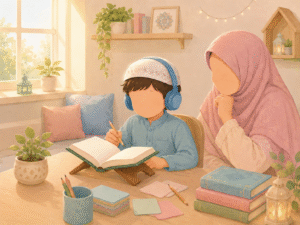
Not every child should begin quran memorization for kids in the same way. Some children are ready for memorization by listening. Some need stronger reading first. Some need confidence before they can recite comfortably.
Use this table to understand your child’s starting point:
| Your Child’s Situation | Best Starting Point |
|---|---|
| Does not know Arabic letters. | Start with Arabic alphabet and Noor Al-Bayan foundations. |
| Knows letters but reads slowly. | Build Quran reading fluency before heavier memorization. |
| Can listen and repeat short surahs. | Start with short memorization by listening and repetition. |
| Memorises quickly but forgets. | Focus on revision before adding more new memorization. |
| Reads well but makes recitation mistakes. | Add Tajweed correction with memorization. |
| Feels nervous reciting aloud. | Use one-to-one support and confidence-building. |
This is why quran memorization for kids should be personalised. The right plan depends on your child’s current ability, not only their age.
If you are unsure, a trial Quran lesson can help. A teacher can listen to your child and recommend whether to start with reading, memorization, revision, or Tajweed support.
Why Revision Matters More Than New Memorization

One of the biggest mistakes in quran memorization for kids is focusing on new memorization while ignoring revision.
Parents may feel proud when their child memorises new surahs, and this is beautiful. But if those surahs are not revised regularly, the child may forget them.
A simple memorization structure can look like this:
| Part of Lesson | Purpose |
|---|---|
| Old revision | Protects earlier memorization from being forgotten. |
| Recent revision | Strengthens what was memorised in the last few lessons. |
| New memorization | Adds a small suitable new portion. |
| Error correction | Fixes repeated mistakes before they become habits. |
In many cases, a child should spend more time revising than adding new portions. This is not a delay. It is protection.
A strong approach to quran memorization for kids should make revision normal. The child should understand that returning to old surahs is part of success, not a punishment.
Why One-to-One Quran Memorization Lessons Help

One-to-one lessons can be especially helpful for quran memorization for kids because memorization needs individual listening and correction.
In a group class, the teacher may not have enough time to hear every child fully. Some children may recite only a small part. Some may hide mistakes. Some may move at the group pace even if they need more revision.
In a one-to-one lesson, the teacher can focus completely on your child.
| One-to-One Benefit | How It Helps Quran Memorization for Kids |
|---|---|
| More recitation time | Your child recites more during the lesson. |
| Direct correction | The teacher catches mistakes immediately. |
| Personal memorization pace | The portion matches your child’s ability. |
| Stronger revision | The teacher reviews your child’s weak places. |
| Better confidence | Shy children can recite without group pressure. |
| Parent feedback | Parents know exactly what to practise at home. |
This is why one-to-one Quran memorization lessons can be a strong choice for families who want personal attention, especially if the child needs correction, revision, or confidence-building.
Looking for one-to-one Quran memorization support?
Sibghah Academy helps children memorise Quran through live one-to-one lessons with recitation correction, revision, Tajweed support, and a plan matched to your child’s level.
Simple Home Routine for Quran Memorization
Parents can support quran memorization for kids with a short home routine. It does not need to be long.
Try this 15-minute routine:
| Time | Activity | Purpose |
|---|---|---|
| 3 minutes | Listen to the target portion. | Build correct sound and rhythm. |
| 4 minutes | Repeat the new portion in small pieces. | Build memorization gradually. |
| 4 minutes | Revise yesterday’s memorization. | Protect recent learning. |
| 3 minutes | Review an older surah. | Keep old memorization alive. |
| 1 minute | Praise effort and set the next small goal. | Build motivation and confidence. |
This routine can be adjusted. Younger children may need only 5–10 minutes. Older children may handle longer sessions. The main point is consistency.
For quran memorization for kids, short daily practice usually works better than one long stressful session.
Common Mistakes Parents Should Avoid
Parents want the best for their children, but some common mistakes can make quran memorization for kids harder than it needs to be.
Starting too much too soon
A large portion may look impressive, but it can overwhelm the child. Start small and build gradually.
Ignoring revision
Revision is the heart of Quran memorization. Without revision, memorized surahs may fade quickly.
Correcting harshly
Children need correction, but they should not feel ashamed or afraid when they make mistakes.
Comparing children
Every child has a different pace. Comparing siblings or classmates can damage confidence.
Memorizing without understanding readiness
Some children need Arabic reading foundations before serious memorization. Others can begin with short surahs by listening.
Separating memorization from Tajweed
Children should memorise with correct recitation habits as much as possible for their level.
Choosing a class without parent feedback
Parents need to know what was memorised, what needs revision, and what mistakes need practice.
Turning Quran into a daily conflict
If Quran time becomes a fight every day, reduce the pressure, shorten the session, and rebuild the routine gently.
A healthy approach to quran memorization for kids should protect both memorization and love for Quran.
How Sibghah Academy Supports Quran Memorization for Kids

Sibghah Academy offers live one-to-one Quran, Arabic, and Islamic Studies lessons for Muslim children aged 5–15.
For families looking for quran memorization for kids, Sibghah Academy helps children memorise Quran through one-to-one lessons matched to their level, pace, and confidence.
Sibghah Quran memorization lessons can support:
- Quran memorization for beginners.
- Short surah memorization.
- Revision of previous memorization.
- Recitation correction.
- Basic Tajweed support.
- Listening and repetition.
- Parent-friendly follow-up.
- Confidence reciting aloud.
- Arabic reading foundations when needed.
Because lessons are one-to-one, the teacher can focus fully on your child. If your child needs more revision, the lesson can focus on revision. If your child is ready for new memorization, the teacher can add a suitable portion. If your child needs Tajweed correction, the teacher can slow down and correct gently.
This makes one-to-one support especially helpful for quran memorization for kids, because memorization depends on listening, correction, repetition, and regular review.
If your child needs stronger Arabic reading before memorization, Sibghah Academy can also support them through Noor Al-Bayan.
The goal is not only to memorise more. The goal is to help your child memorise, revise, recite correctly, and keep a positive relationship with the Quran.
Quick Parent Checklist
Use this checklist when planning quran memorization for kids:
- Is my child ready to listen and repeat calmly?
- Can my child revise what they memorised before?
- Is the new portion small enough?
- Does the plan include recent revision?
- Does the plan include old revision?
- Is my child reciting clearly?
- Are mistakes corrected gently?
- Does my child need Tajweed support?
- Does my child need Arabic reading foundations first?
- Would one-to-one teacher support help my child?
FAQ: Quran Memorization for Kids
1. What is the best way to start quran memorization for kids?
The best way to start quran memorization for kids is with short portions, repeated listening, gentle repetition, correction, and regular revision.
2. What age should children start Quran memorization?
Children can begin with short surahs when they are ready to listen and repeat, but the right age depends on attention, confidence, Arabic exposure, and family routine.
3. Should my child learn Arabic reading before memorizing Quran?
Arabic reading foundations are very helpful for long-term memorization, but some children can begin with short surahs by listening while they build reading skills.
4. How much Quran should a child memorise each day?
It depends on the child’s age and level. A small consistent portion that the child can revise is better than a large portion that is quickly forgotten.
5. Why does my child forget memorized surahs?
Forgetting often happens when revision is weak or irregular. Strong quran memorization for kids needs both new memorization and review.
6. How can I motivate my child to memorise Quran?
Use encouragement, short sessions, praise effort, avoid comparison, and make Quran time calm and consistent.
7. Should Tajweed be included in Quran memorization?
Yes, Tajweed should be introduced gradually. Children should memorise with correct pronunciation and recitation habits according to their level.
8. Are one-to-one Quran memorization lessons better?
One-to-one Quran memorization lessons can be better for many children because the teacher can listen carefully, correct mistakes, adjust the pace, and build a personal revision plan.
9. How can parents help at home?
Parents can help by playing the target portion, listening to revision, keeping sessions short, praising effort, and following the teacher’s home practice plan.
10. What if Quran memorization becomes stressful?
Reduce the portion, increase encouragement, shorten the session, add listening, and speak to the teacher about rebuilding the plan gently.
11. Does Sibghah Academy support quran memorization for kids?
Yes. Sibghah Academy supports quran memorization for kids through live one-to-one Quran lessons with memorization, revision, Tajweed support, correction, and parent-friendly follow-up.
12. What is the best next step for parents?
The best next step is to check your child’s Quran level and decide whether they need reading foundations, memorization, revision, Tajweed correction, or confidence-building.
Book your child’s free one-to-one Quran memorization trial
If you are looking for quran memorization for kids, Sibghah Academy can help your child start from the right level through live one-to-one Quran lessons.
Send us your child’s age, current Quran level, and memorization goal, and we will recommend the right starting point.