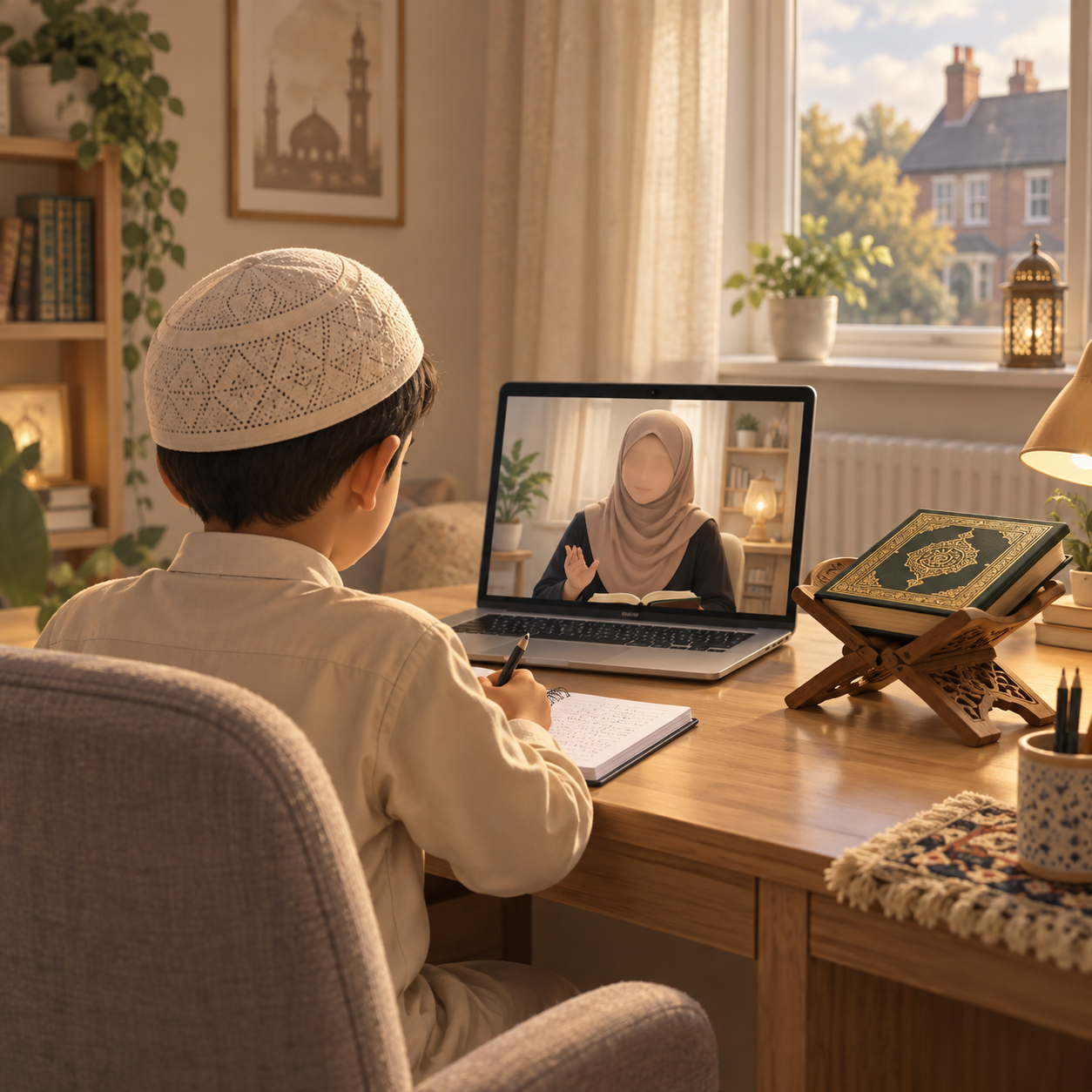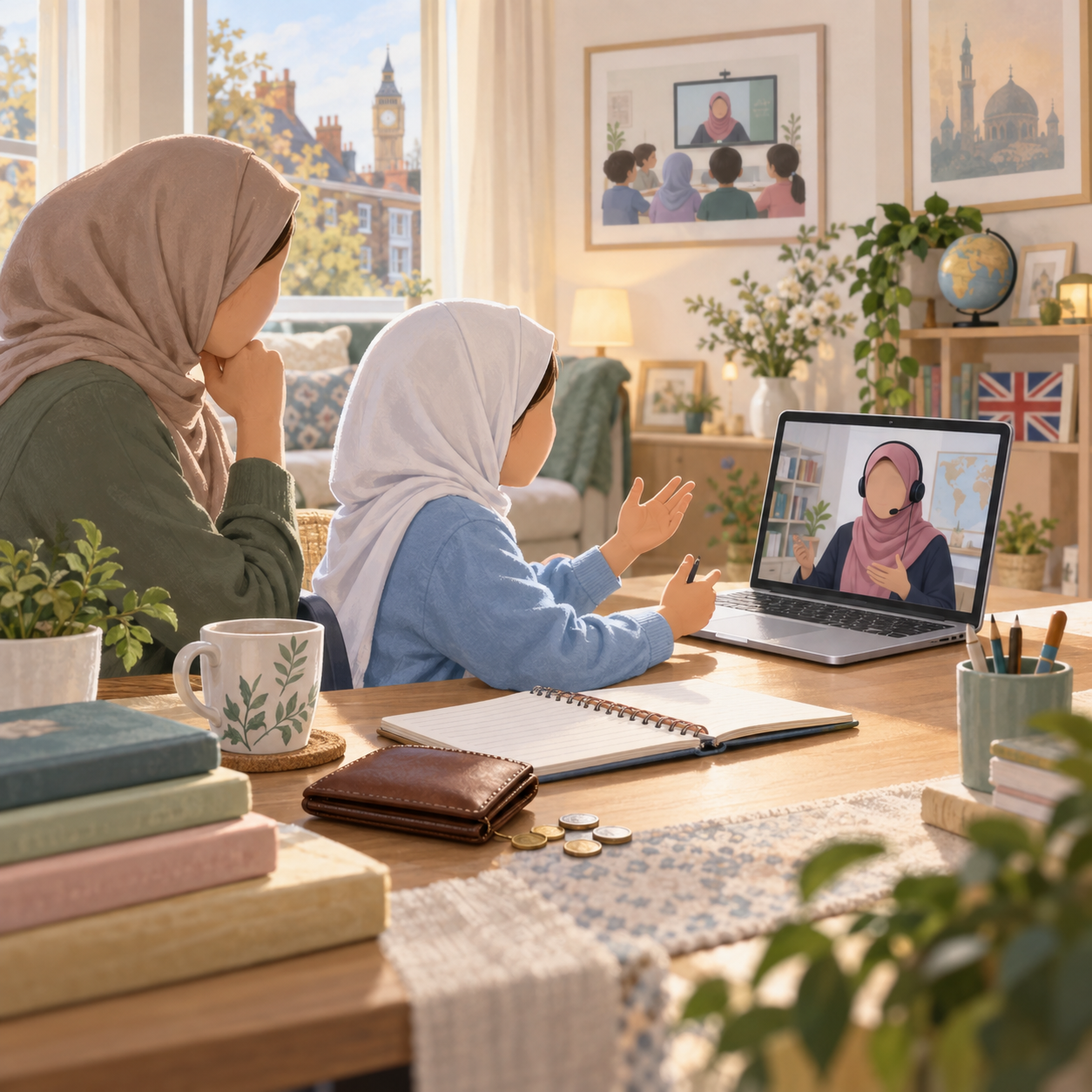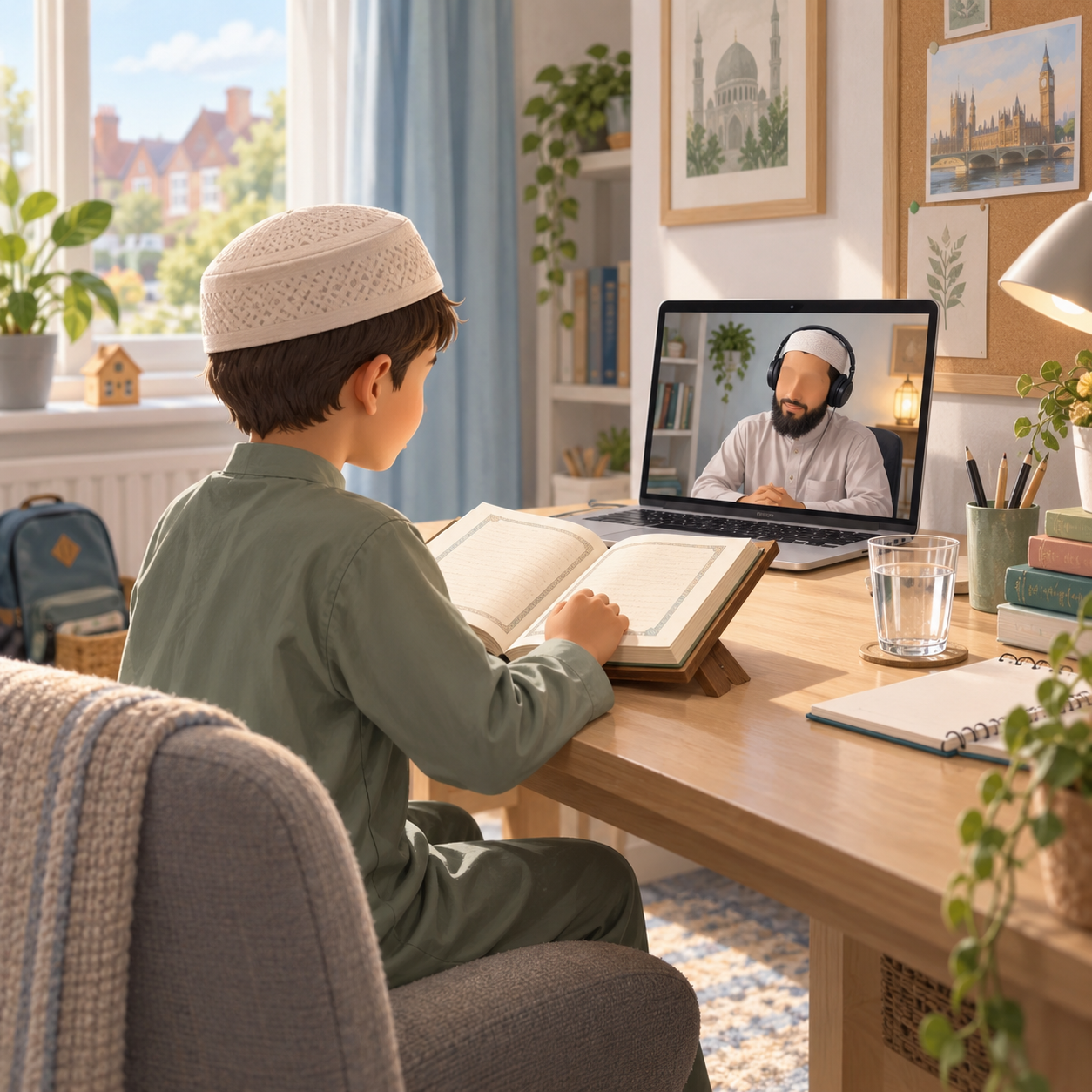
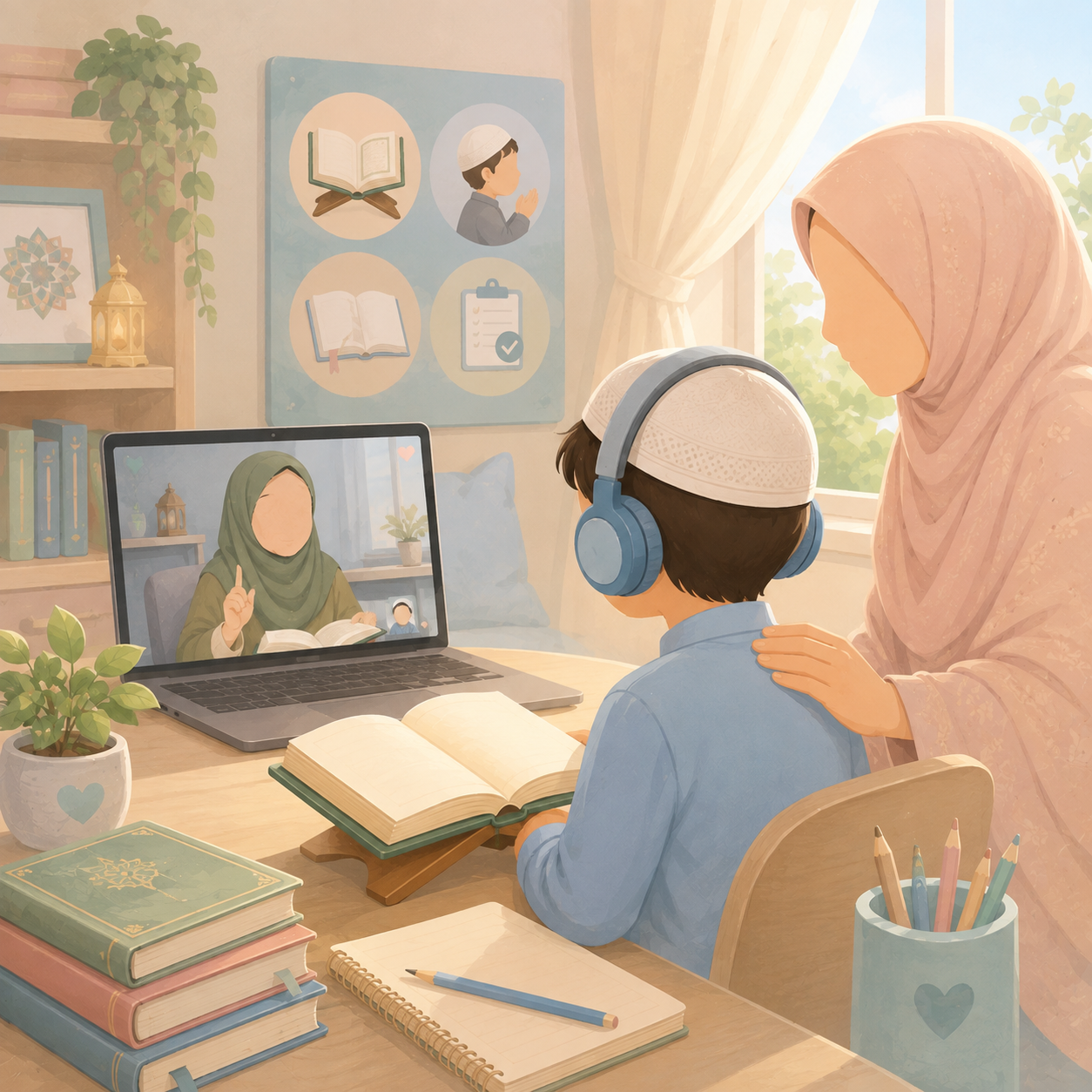
A good Quran class should not be only listening and repeating. It should include careful level checking, enough recitation time, gentle correction, revision, suitable pace, parent feedback, and a clear next step.
This matters even more for children growing up in English-speaking environments. Some children are still learning Arabic letters. Some can read Arabic but struggle with fluency. Some memorise quickly but forget because revision is weak. Some need confidence before they can recite clearly.
That is why quran classes for kids should be chosen carefully. A one-to-one Quran class can be especially helpful because the teacher can listen to your child directly, correct mistakes immediately, and build the class around your child’s real level.
This guide gives parents 9 helpful checks before choosing or continuing quran classes for kids. Use it before a trial class, after the first few lessons, or whenever you feel unsure whether your child is getting real benefit.
Quick answer: Good quran classes for kids should include level checking, one-to-one attention, enough recitation time, gentle correction, Tajweed support, memorization with revision, parent feedback, and a clear learning path.
| What to Check | Why It Matters |
|---|---|
| Level check | The teacher should know where your child really is before starting. |
| One-to-one attention | Your child gets more reading time, correction, and confidence. |
| Enough recitation time | A child improves by reading, not only listening. |
| Real correction | Mistakes should be corrected gently before they become habits. |
| Revision plan | Memorization becomes weak if review is missing. |
| Parent feedback | Parents need to know what to practise at home. |
Table of Contents
- Why Quran Classes for Kids Should Be Chosen Carefully
- Quran Classes for Kids: 9 Helpful Checks Before You Choose
- Good Quran Class vs Weak Quran Class
- One-to-One Quran Classes vs Group Quran Classes
- Which Quran Class Type Does Your Child Need?
- How to Use a Trial Quran Class Properly
- What Progress Can Look Like After 4 Weeks
- Common Mistakes Parents Should Avoid
- How Sibghah Academy Supports Quran Classes for Kids
- FAQ
Why Quran Classes for Kids Should Be Chosen Carefully
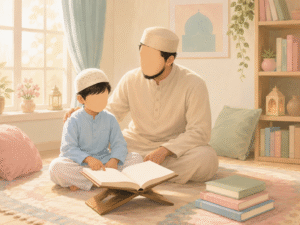
The Quran is not only a subject children complete. It is guidance, worship, recitation, memorization, reflection, and connection with Allah’s words. This is why parents should choose quran classes for kids with care.
Quran — Surah Al-Isra 17:9
إِنَّ هَٰذَا الْقُرْآنَ يَهْدِي لِلَّتِي هِيَ أَقْوَمُ وَيُبَشِّرُ الْمُؤْمِنِينَ الَّذِينَ يَعْمَلُونَ الصَّالِحَاتِ أَنَّ لَهُمْ أَجْرًا كَبِيرًا
English meaning: “Surely this Quran guides to what is most upright, and gives good news to the believers—who do good—that they will have a mighty reward.”
This verse reminds parents that Quran learning is not just academic achievement. The Quran guides. So quran classes for kids should protect the child’s respect for Quran and help them approach it with confidence, love, and seriousness.
A weak class may make the child dislike Quran time because the lesson feels rushed, confusing, or full of pressure. A strong class can help the child feel seen, supported, and able to improve step by step.
Good quran classes for kids should help children with one or more of these areas:
- Arabic letter foundations.
- Quran reading fluency.
- Correct pronunciation.
- Basic Tajweed.
- Memorization.
- Revision.
- Confidence reciting aloud.
- Love and respect for the Quran.
Parents should not judge a Quran class only by how much new material the child covers. A child may memorise more pages but forget them later. A child may read faster but keep repeating the same pronunciation mistakes. A child may attend weekly lessons but still feel nervous when asked to recite.
The best sign of progress is not speed alone. The best sign is steady improvement with clarity, correction, revision, and confidence.
Not sure if your child’s Quran class is the right fit?
Sibghah Academy offers live one-to-one Quran lessons, so the teacher can check your child’s level and recommend the right path for reading, Tajweed, memorization, or revision.
Quran Classes for Kids: 9 Helpful Checks Before You Choose
Use these 9 checks when comparing quran classes for kids, booking a trial, or deciding whether to continue with a current class.
1. Does the Teacher Check Your Child’s Level First?
The first sign of good quran classes for kids is a proper level check. A child should not be placed directly into memorization, Tajweed, or reading practice without knowing their current level.
A teacher should check:
- Can the child recognise Arabic letters?
- Can the child read letters with vowels?
- Can the child join letters in words?
- Can the child read from the mushaf?
- Does the child know basic Tajweed rules?
- How much Quran has the child memorised?
- Can the child revise previous memorization?
- Is the child confident reciting aloud?
Without this level check, quran classes for kids may start in the wrong place. If the class is too easy, the child becomes bored. If it is too hard, the child becomes stressed.
A level check should be gentle. The teacher is not testing the child to embarrass them. The teacher is simply discovering the right starting point.
2. Is the Class One-to-One, Not Lost in a Large Group?
One-to-one quran classes for kids can be more effective for many children because Quran learning needs listening, correction, repetition, and personal attention.
In a group class, your child may only recite for a short time. If several children are present, the teacher has to divide attention. Some children hide quietly. Some repeat mistakes because the teacher cannot hear each child clearly.
In a one-to-one Quran class, the teacher can focus on your child only. This means:
- More recitation time.
- More correction.
- More chances to repeat.
- More confidence for shy children.
- Better pacing for your child’s level.
- Clearer feedback for parents.
This does not mean every group class is bad. Some children enjoy groups. But for reading correction, pronunciation, memorization, and revision, one-to-one quran classes for kids often give children the attention they need.
3. Does Your Child Get Enough Time to Recite?
A child improves Quran reading by reading. Listening is important, but the child needs actual recitation time.
When evaluating quran classes for kids, ask yourself: how much of the lesson does my child actually recite?
In a strong class, the child should not spend most of the lesson silently watching, waiting, or listening while others recite. The teacher should hear the child repeatedly and correct mistakes in real time.
Enough recitation time helps your child:
- Build fluency.
- Notice mistakes.
- Improve pronunciation.
- Become less shy.
- Read with more confidence.
- Practise Tajweed gradually.
This is one of the clearest reasons one-to-one quran classes for kids can help. Your child gets the full class time for their own recitation, not only a few minutes.
4. Does the Teacher Correct Mistakes Gently and Clearly?
Correction is essential in quran classes for kids. But the style of correction matters.
If correction is harsh, the child may become afraid to recite. If correction is missing, mistakes may become habits. Good correction is clear, gentle, and repeated when needed.
A helpful teacher may say:
- “Good effort. Let’s repeat this word slowly.”
- “Listen to the sound first, then try again.”
- “This letter needs a stronger sound.”
- “Let’s correct the vowel here.”
- “Much better. Read it one more time.”
The goal is not to make the child feel wrong. The goal is to help the child improve.
Good quran classes for kids should correct letter sounds, vowels, elongations, stopping, fluency, and memorization errors according to the child’s level.
5. Does the Class Teach Tajweed Gradually?
Parents often ask whether quran classes for kids should include Tajweed. The answer is yes, but gradually.
Children do not need advanced Tajweed terminology too early. But they do need correct recitation habits from the beginning. Allah says:
Quran — Surah Al-Muzzammil 73:4
أَوْ زِدْ عَلَيْهِ وَرَتِّلِ الْقُرْآنَ تَرْتِيلًا
English meaning: “or a little more—and recite the Quran ˹properly˺ in a measured way.”
For children, gradual Tajweed may include:
- Correct letter pronunciation.
- Short and long vowels.
- Madd basics.
- Stopping at the right place.
- Reading slowly and clearly.
- Correcting repeated recitation mistakes.
Strong quran classes for kids should not rush into complex Tajweed rules before the child can read comfortably. The teacher should build Tajweed step by step.
Helpful guide: Tajweed for Kids.
6. Does Memorization Come with Revision?
Many parents choose quran classes for kids because they want their child to memorise Quran. Memorization is a beautiful goal, but memorization without revision becomes weak quickly.
A strong Quran class should not only ask for new memorization every time. It should include revision of what the child already memorised.
Good memorization support includes:
- New memorization at a suitable pace.
- Daily or weekly review.
- Correction of old mistakes.
- Revisiting weak surahs.
- Parent-friendly home tasks.
- Testing memorization gently over time.
The Prophet ﷺ said:
Hadith — Sahih al-Bukhari 5027
خَيْرُكُمْ مَنْ تَعَلَّمَ الْقُرْآنَ وَعَلَّمَهُ
English meaning: “The best among you are those who learn the Qur’an and teach it.”
This hadith reminds us of the value of learning and teaching Quran. For children, learning should be steady, supported, and reviewed.
Good quran classes for kids treat revision as part of memorization, not as something optional.
Helpful guides: Quran Memorization Schedule for Kids and Quran Revision Plan for Kids.
7. Is the Teacher Gentle and Child-Friendly?
Children do not only remember what they learned. They remember how they felt while learning.
Good quran classes for kids should be serious about Quran, but still gentle with children. A child-friendly teacher can correct mistakes without making the child feel ashamed.
Look for signs such as:
- The teacher speaks calmly.
- The child is encouraged after effort.
- The teacher does not compare the child to others.
- The lesson pace is suitable.
- The teacher notices when the child is tired.
- The child feels safe to try again.
This is very important because a child who feels afraid of Quran class may resist future learning. But a child who feels supported may keep trying even when Quran reading is challenging.
One-to-one quran classes for kids can help shy or sensitive children because the teacher can build trust personally.
8. Do Parents Receive Clear Follow-Up?
Parents should not be left guessing what happened in class. Good quran classes for kids should give parents simple feedback.
Parent feedback may include:
- What the child read today.
- What the child memorised.
- Which mistakes need practice.
- Which surah or page needs revision.
- What to practise before the next lesson.
- Whether the child is ready to move forward.
This does not need to be a long report. Even short clear feedback can help parents support the child at home.
When quran classes for kids include parent follow-up, the learning continues between lessons. Without follow-up, parents may not know how to help.
9. Is There a Clear Next Step After the Trial?
A trial class should not end with vague comments only. After trying quran classes for kids, parents should know what the teacher recommends.
A useful trial should answer:
- What is my child’s current Quran level?
- Should my child start with Arabic foundations?
- Does my child need Quran reading practice?
- Is my child ready for Tajweed?
- Should memorization start now?
- How much revision does my child need?
- How often should lessons happen?
- What should we practise at home?
This final check is important because good quran classes for kids should give your child a learning path, not only a single lesson.
Sibghah Teacher Note: A Quran class should not only ask a child to repeat. It should listen, correct, review, guide, and build confidence step by step.
Good Quran Class vs Weak Quran Class
When comparing quran classes for kids, this table can help parents see the difference between a class that supports progress and a class that may need improvement.
| Good Quran Class | Weak Quran Class |
|---|---|
| Starts with a gentle level check. | Starts immediately without knowing the child’s level. |
| Gives the child enough recitation time. | The child spends most of the class waiting or listening. |
| Corrects mistakes clearly and gently. | Ignores mistakes or corrects harshly. |
| Includes revision with memorization. | Only adds new memorization without review. |
| Builds Tajweed gradually. | Uses rules too early or ignores Tajweed completely. |
| Gives parents simple feedback. | Parents do not know what happened in the lesson. |
| Matches the child’s pace. | Pushes every child through the same pace. |
| Builds confidence and love for Quran. | Makes the child feel stressed or embarrassed. |
This comparison does not mean a class must be perfect from day one. But strong quran classes for kids should show clear signs of care, structure, and child-focused teaching.
One-to-One Quran Classes vs Group Quran Classes
Many parents compare one-to-one and group quran classes for kids. Both can have benefits, but they are not equal for every child.
Group classes may help some children feel part of a learning community. But Quran reading, Tajweed correction, memorization checking, and revision often need individual attention.
One-to-one quran classes for kids are especially helpful when your child:
- Needs more reading time.
- Is shy in groups.
- Struggles with pronunciation.
- Needs Tajweed correction.
- Has weak memorization revision.
- Moves slower or faster than the group.
- Needs parent-specific feedback.
- Gets distracted in group settings.
In a one-to-one lesson, the whole class is built around your child. The teacher can pause, repeat, correct, review, or move forward depending on the child’s needs.
| Learning Need | Why One-to-One Helps |
|---|---|
| Reading fluency | The child reads more during the lesson. |
| Pronunciation | The teacher hears the child clearly and corrects directly. |
| Tajweed | The teacher can correct rules according to the child’s level. |
| Memorization | The child recites individually without waiting for others. |
| Revision | The teacher can focus on the child’s weak surahs or pages. |
| Confidence | The child can try again without group pressure. |
This is why Sibghah Academy focuses on one-to-one quran classes for kids. Personal attention helps the teacher see what the child truly needs.
Looking for one-to-one Quran classes for your child?
Sibghah Academy provides live one-to-one Quran lessons for reading, Tajweed, memorization, and revision, with a learning path matched to your child’s level.
Which Quran Class Type Does Your Child Need?
Not all quran classes for kids should start in the same place. Your child’s class should match their current level.
| Your Child’s Situation | Best Starting Point | Helpful Resource |
|---|---|---|
| Does not know Arabic letters well. | Arabic foundations or Noor Al-Bayan. | Arabic Alphabet for Kids |
| Knows letters but reads slowly. | Quran reading fluency. | Quran for Kids |
| Reads but makes repeated recitation mistakes. | Tajweed and correction. | Tajweed for Kids |
| Can memorise but forgets quickly. | Revision plan. | Quran Revision Plan for Kids |
| Wants to start Hifz. | Memorization schedule. | Quran Memorization Schedule for Kids |
| Feels stressed around Quran learning. | Gentle Quran confidence-building. | Help Your Child Love Quran |
This table shows why quran classes for kids should begin with level checking. The right class for one child may not be right for another.
If your child cannot read Arabic letters yet, do not rush into memorization. If your child can read but forgets memorised surahs, do not focus only on new memorization. If your child reads quickly but makes Tajweed mistakes, correction is needed.
How to Use a Trial Quran Class Properly
A trial can help parents understand whether quran classes for kids are suitable before committing.
During a trial, do not only ask whether your child liked the teacher. Also observe what the teacher checked, corrected, and recommended.
Before the trial, prepare:
- Your child’s age.
- Whether your child can read Arabic.
- Current Quran level.
- Surahs already memorised.
- Main goal: reading, Tajweed, memorization, or revision.
- Any previous class difficulties.
After the trial, ask:
- What level is my child at?
- What should my child start with?
- What mistakes did the teacher notice?
- Does my child need Arabic foundations?
- How often should lessons happen?
- What should we practise at home?
- How will progress be followed?
A strong trial for quran classes for kids should leave you with clarity. You should know the next step, not just that the class was “nice”.
What Progress Can Look Like After 4 Weeks
Parents often want to know how quickly quran classes for kids should show progress. Progress depends on age, level, frequency, home practice, and the child’s starting point.
After around 4 weeks, you may begin to notice small signs such as:
- Your child reads with less hesitation.
- Your child makes fewer repeated mistakes.
- Your child remembers revision better.
- Your child is less nervous when reciting.
- Your child understands what to practise at home.
- Your child can correct some mistakes after teacher guidance.
- Your child has a clearer routine.
Not every child will progress at the same speed. Some children need more time with Arabic letters before Quran reading becomes easier. Some need repeated revision before memorization becomes stable.
Good quran classes for kids should show steady progress, not rushed progress. The teacher should be able to explain what improved and what still needs work.
Common Mistakes Parents Should Avoid
Parents choose quran classes for kids with good intentions, but some mistakes can slow progress.
Choosing based on price only
A cheaper class may not be better if your child gets little recitation time or weak correction. Quran learning needs attention and quality.
Starting memorization before reading foundations
Some children can memorise by listening, but weak reading may cause problems later. Reading foundations are important.
Ignoring revision
If your child keeps memorising new surahs but forgets old ones, the plan needs stronger revision.
Expecting fast results
Quran learning takes time. Children need repetition, confidence, correction, and patience.
Keeping a class that makes the child fear Quran
Respect for Quran should not mean harshness with children. A child should be corrected, but not humiliated.
Not asking for feedback
Parents should know what happened in class and what to practise before the next lesson.
Using group classes when the child needs individual support
If your child needs pronunciation correction, reading time, or confidence-building, one-to-one quran classes for kids may be more suitable.
Avoiding these mistakes helps parents choose quran classes for kids that genuinely support the child’s Quran journey.
How Sibghah Academy Supports Quran Classes for Kids
Sibghah Academy offers live one-to-one Quran, Arabic, and Islamic Studies lessons for Muslim children aged 5–15.
For families looking for quran classes for kids, Sibghah Academy helps children learn Quran according to their level, pace, and learning goal.
Sibghah Quran lessons can support:
- Quran reading foundations.
- Arabic letter and vowel readiness.
- Quran recitation practice.
- Gentle correction.
- Tajweed basics.
- Quran memorization.
- Revision and review.
- Confidence reciting aloud.
- Parent-friendly follow-up.
Because lessons are one-to-one, the teacher can focus fully on your child. If your child needs more time reading, the lesson can focus on reading. If your child needs revision, the lesson can focus on revision. If your child is ready for memorization, the teacher can build a suitable plan.
This makes one-to-one quran classes for kids especially helpful for families who want personal attention, clear correction, and a Quran path matched to the child.
Sibghah Academy can also help children who need Arabic foundations before Quran reading through the Noor Al-Bayan Course.
The goal is not only to complete lessons. The goal is to help your child read, recite, memorise, revise, and connect with Quran step by step.
Quick Parent Checklist
Use this checklist before choosing quran classes for kids:
- Did the teacher check my child’s level?
- Does my child get enough time to recite?
- Does the teacher correct mistakes gently?
- Is the class suitable for my child’s pace?
- Does the class include revision?
- Is Tajweed introduced gradually?
- Does my child feel confident, not afraid?
- Do I receive clear parent feedback?
- Does my child need one-to-one support?
- Do I know the next step after the trial?
FAQ: Quran Classes for Kids
1. What should good quran classes for kids include?
Good quran classes for kids should include level checking, recitation practice, gentle correction, Tajweed support, memorization if suitable, revision, and parent feedback.
2. Are one-to-one Quran classes better for kids?
One-to-one Quran classes can be better for many children because the teacher can focus fully on the child’s reading, pronunciation, memorization, revision, and confidence.
3. Should my child start with Quran reading or memorization?
It depends on your child’s level. If your child cannot read Arabic letters or words yet, reading foundations may be needed before memorization.
4. How often should children attend Quran classes?
This depends on age, goal, and schedule. Some children benefit from two or more short lessons weekly, especially when combined with home revision.
5. How do I know if my child’s Quran class is working?
Your child should show steady improvement in reading, fewer repeated mistakes, better revision, more confidence, and clearer home practice.
6. What if my child feels nervous in Quran class?
Choose a gentle teacher, reduce pressure, keep goals small, and consider one-to-one quran classes for kids so the child can practise without group pressure.
7. Should Quran classes for kids include Tajweed?
Yes, but gradually. Children should begin with correct pronunciation, clear reading, and simple Tajweed habits before advanced rules.
8. Why is revision important in Quran classes?
Revision protects memorization. Without review, children may memorise new surahs but forget older ones.
9. Can online Quran classes work for young children?
Yes, online Quran classes can work well when they are live, one-to-one, child-friendly, and matched to the child’s attention span and level.
10. What should I ask after a trial Quran class?
Ask about your child’s current level, main mistakes, recommended starting point, lesson frequency, revision plan, and home practice.
11. Does Sibghah Academy offer quran classes for kids?
Yes. Sibghah Academy offers live one-to-one quran classes for kids, including Quran reading, Tajweed support, memorization, revision, and parent-friendly follow-up.
12. What is the best next step for parents?
The best next step is to check your child’s current Quran level, then choose the right path: Arabic foundations, reading, Tajweed, memorization, revision, or confidence-building.
Book your child’s free one-to-one Quran trial
If you are looking for quran classes for kids, Sibghah Academy can help your child start from the right level through live one-to-one Quran lessons.
Send us your child’s age, Quran level, and main goal, and we will recommend the right starting point.