Arabic Classes for Kids UK: 7 Smart Ways to Choose the Right Course

Arabic Classes for Kids UK is a common search for Muslim parents who want their children to read, understand, speak, and feel connected to Arabic in a meaningful way. For many families in the UK, Arabic is not only another language. It can be part of family identity, Islamic culture, communication with relatives, and a child’s connection to Arabic words they hear in Quran, duaa, and daily Muslim life.
Choosing the right Arabic course can feel confusing. Some children need Arabic alphabet foundations. Some can read but cannot speak confidently. Some understand Arabic at home but answer in English. Others are non-Arab Muslim children who are starting Arabic from zero.
This Arabic Classes for Kids UK guide will help parents choose Arabic lessons based on the child’s age, level, learning goal, confidence, and family background. It will also explain the difference between Arabic reading, Arabic speaking, Noor Al-Bayan, Takallam-style language learning, apps, group lessons, and one-to-one Arabic classes.
Quick answer: Good Arabic Classes for Kids UK should match your child’s level, teach Arabic step by step, balance reading and speaking, use a child-friendly teacher, give enough practice time, and provide clear feedback to parents. For many children, one-to-one online Arabic lessons are helpful because the teacher can focus on the child’s exact needs, whether they need alphabet support, reading fluency, vocabulary, conversation, or confidence.
Book a free Arabic trial session for your child on WhatsApp
Table of Contents
- Why Parents Search for Arabic Classes for Kids UK
- What Children Actually Need from Arabic Classes
- Arabic Classes for Kids UK: 7 Smart Ways to Choose
- Arabic Reading vs Arabic Speaking
- Noor Al-Bayan and Takallam: Which Path Fits?
- Apps vs Live Arabic Classes
- Why One-to-One Arabic Classes Can Help
- How Sibghah Supports Arabic Learning
- Parent Checklist
- FAQ
This guide is written to make Arabic Classes for Kids UK easier to compare, especially for parents who want Arabic learning to be useful, calm, and suitable for their child’s real level.
Why Parents Search for Arabic Classes for Kids UK
Parents usually search for Arabic Classes for Kids UK when they notice a gap between what they wish their child could do in Arabic and what the child can currently do.
Some children can understand Arabic but reply in English. Some know a few words but cannot build sentences. Some can recognize letters but cannot read smoothly. Some children from Arab families feel shy speaking Arabic because English has become their stronger daily language.
For non-Arab Muslim children, Arabic may feel completely new. The child may need a gentle path that starts with sounds, letters, simple vocabulary, and confidence. The goal is not to rush the child. The goal is to build a foundation that can grow steadily.
Good Arabic Classes for Kids UK should understand these different family situations. A child from an Arab home and a child from a non-Arab home may both need Arabic, but they may not need the same lesson plan.
What Children Actually Need from Arabic Classes
Before choosing a course, parents should ask: what does my child need Arabic for right now?
Some parents want their child to read Arabic. Some want speaking confidence. Some want the child to understand family conversations. Some want Arabic to support Islamic identity. Some want the child to build stronger foundations before Quran reading. These are connected goals, but they are not exactly the same.
| Child’s Need | What Arabic Classes Should Focus On |
|---|---|
| Beginner with no Arabic | Sounds, letters, simple words, listening, and confidence |
| Knows letters but reads slowly | Joining letters, vowels, fluency, and repeated reading practice |
| Understands Arabic but replies in English | Speaking practice, vocabulary, sentence building, and confidence |
| Arab child losing Arabic | Conversation, reading, identity, and regular Arabic exposure |
| Non-Arab Muslim child | Gentle beginner Arabic, useful vocabulary, and clear pronunciation |
| Child preparing for Quran reading | Arabic letters, sounds, vowels, and reading foundations |
The strongest Arabic Classes for Kids UK are not one-size-fits-all. They begin by understanding the child’s level and then choosing the right path.
Arabic Classes for Kids UK: 7 Smart Ways to Choose the Right Course
Use these seven checks before choosing Arabic Classes for Kids UK for your child.
1. Choose Arabic classes based on your child’s level, not age only
Age matters, but level matters more. A 10-year-old child may still need beginner Arabic reading support. A 6-year-old may already understand many Arabic words from home. A child’s age does not always tell you what they can actually do.
Good Arabic Classes for Kids UK should begin with a simple level check. The teacher may check whether the child recognizes letters, can pronounce sounds, understands basic words, reads simple syllables, or can answer short questions.
This helps the teacher avoid two common mistakes: making the lesson too easy and boring, or making it too difficult and stressful.
2. Check whether the course teaches reading and speaking differently
Arabic reading and Arabic speaking are connected, but they are not the same skill. A child may read Arabic letters but still struggle to speak. Another child may speak at home but not read well.
When choosing Arabic Classes for Kids UK, parents should ask whether the course supports both skills. Reading needs letter recognition, sounds, vowels, joining, and fluency. Speaking needs listening, vocabulary, sentence patterns, repetition, and real conversation practice.
If your child needs both, the teacher should create a balanced plan. If your child only needs reading foundations, the plan should focus there first.
3. Look for a child-friendly Arabic teacher
A strong Arabic teacher for children is not only someone who knows Arabic. The teacher must know how children learn. Children need patience, repetition, encouragement, and lessons that feel clear and manageable.
Some children are shy. Some answer quickly without thinking. Some lose focus after school. Some are afraid of making mistakes. A child-friendly teacher knows how to guide the child without pressure.
This is one of the most important checks in Arabic Classes for Kids UK. If the child feels safe and respected, they are more likely to practise and improve.
4. Ask how the class builds confidence
Many children do not struggle because Arabic is impossible. They struggle because they feel embarrassed. They may worry about pronouncing words incorrectly, reading slowly, or being compared to siblings or classmates.
Good Arabic classes build confidence through small wins. A teacher might begin with simple sounds, easy words, short sentences, and repeated practice. Over time, the child starts to feel, “I can do this.”
The best Arabic Classes for Kids UK should not only measure pages completed. They should also notice whether the child is becoming more willing to try.
5. Check whether the method fits your child’s goal
Different goals need different methods. If your child needs reading foundations, a structured reading method such as Noor Al-Bayan can be helpful. If your child needs speaking and daily language, a communication-based path such as Takallam-style learning may be more suitable.
A child who needs to read Arabic words should not only memorize vocabulary. A child who needs to speak should not only copy letters. Parents should choose a method that matches the actual goal.
When comparing Arabic Classes for Kids UK, ask: will this course help my child with the exact Arabic skill they need now?
6. Make sure parents receive clear feedback
Parents should not be left guessing. After lessons, parents need to know what the child practised, what improved, what still needs work, and what should be reviewed before the next class.
This is especially useful for busy families in the UK. A small amount of parent awareness can make home practice easier and more consistent.
Good Arabic Classes for Kids UK should include simple feedback, not just a lesson booking system.
7. Choose a routine your child can keep
Arabic learning needs consistency. A course may look excellent, but if the timing is stressful or the child is always tired, progress may be slow.
Parents should choose a realistic routine. Some children can handle two or three lessons per week. Others need a lighter start. A child who enjoys the routine is more likely to continue.
For many families, online one-to-one Arabic Classes for Kids UK make the routine easier because the child can learn from home, avoid travel time, and receive personal attention.
Arabic Reading vs Arabic Speaking: What Should Come First?
One of the most common questions parents ask about Arabic Classes for Kids UK is whether the child should start with reading or speaking.
The answer depends on the child. Some children need reading first because they do not know the letters or sounds. Some children need speaking first because they already hear Arabic at home but lack confidence. Some children need both in a balanced way.
| Goal | Useful Starting Point |
|---|---|
| Read Arabic words | Letters, sounds, vowels, joining letters |
| Speak with confidence | Listening, vocabulary, simple sentences, repetition |
| Understand family Arabic | Daily-life vocabulary and simple conversations |
| Prepare for Quran reading | Arabic sounds, letter recognition, vowels, reading fluency |
| Reconnect with Arabic identity | Conversation, stories, reading, and gentle cultural connection |
Parents should avoid choosing a course only because it sounds popular. The right course is the one that meets the child’s current need.
Noor Al-Bayan and Takallam: Which Path Fits Your Child?
Some parents searching for Arabic Classes for Kids UK come across different Arabic learning paths and feel unsure which one is right.
At a simple level, Noor Al-Bayan is often useful for reading foundations. It helps children work on Arabic letters, sounds, vowels, joining, and reading fluency. This can be helpful for children who need to read Arabic words more accurately.
Takallam-style Arabic learning is more connected to communication. It supports vocabulary, sentence building, listening, speaking, and using Arabic in simple contexts. This can help children who need to express themselves in Arabic, not only read.
The right choice depends on the child:
- If your child cannot recognize letters, start with foundations.
- If your child recognizes letters but reads slowly, focus on reading fluency.
- If your child understands Arabic but does not speak, add conversation practice.
- If your child needs both reading and speaking, choose a balanced plan.
Read more about Noor Al-Bayan for kids
Arabic Apps vs Live Arabic Classes for Children
Arabic apps can be useful. They can help children revise letters, hear sounds, play simple vocabulary games, and practise between lessons. But apps are usually not enough on their own for many children.
A child may tap the right answer in an app without being able to pronounce the word clearly. They may recognize a letter on screen but still struggle to read it inside a word. They may repeat vocabulary but not use it in a real sentence.
This is where live Arabic Classes for Kids UK can help. A teacher can listen, correct, repeat, encourage, and adapt the lesson when the child is confused.
| Option | Helpful For | Limitations |
|---|---|---|
| Arabic apps | Extra practice, revision, simple games | Limited correction and little personal feedback |
| Recorded videos | Watching explanations again | No live response to the child’s mistakes |
| Live group classes | Social learning and shared activities | Less individual speaking and correction time |
| One-to-one Arabic classes | Personal attention, correction, confidence-building | Needs a consistent schedule and parent support |
Apps can support learning, but a live teacher can notice what the child actually needs.
Why One-to-One Arabic Classes Can Help Some Children
One-to-one Arabic lessons are not always required for every child, but they can be very helpful when a child needs personal attention.
A child may need one-to-one support if they:
- Feel shy speaking Arabic
- Read slowly and need correction
- Confuse letters or sounds
- Lose focus in group classes
- Need a slower pace
- Need more speaking time
- Have a specific goal, such as reading fluency or conversation
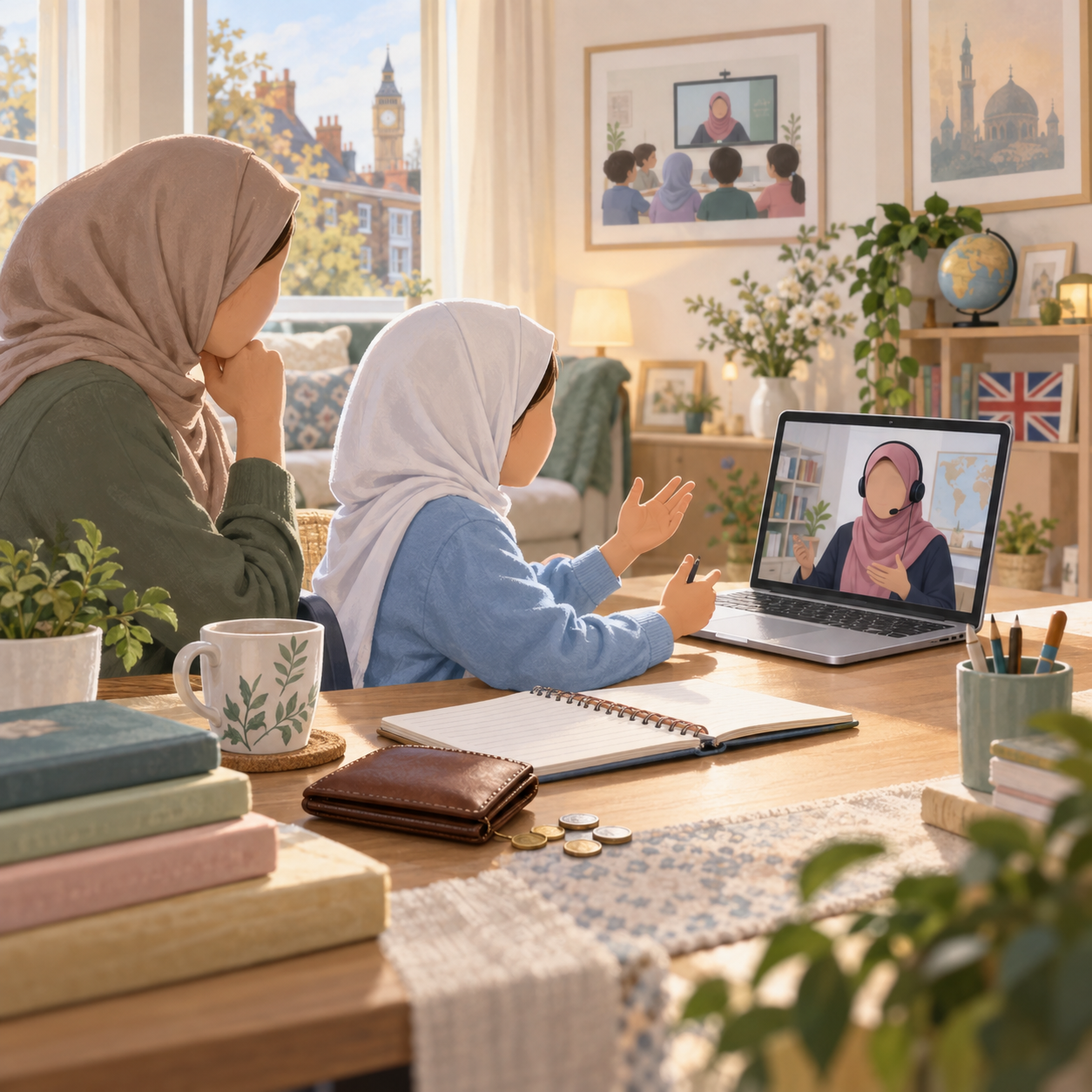
In one-to-one Arabic Classes for Kids UK, the teacher can hear the child clearly, correct mistakes immediately, repeat difficult points, and adjust the lesson pace.
This personal attention can be especially helpful for children who feel embarrassed in front of others. A calmer lesson space can help them try, repeat, and speak with more confidence.
Explore online Arabic classes for kids in the UK
How Sibghah Supports Arabic Learning for Children
Sibghah Academy offers live online Arabic lessons for Muslim children aged 5–15. The lessons are designed to support children at different Arabic levels, whether they are beginners, heritage learners, or children who need stronger reading and speaking confidence.
For parents looking for Arabic Classes for Kids UK, Sibghah focuses on understanding the child first. The teacher looks at the child’s age, Arabic exposure, reading level, confidence, and learning goal before recommending a suitable path.
Sibghah Arabic learning may support:
- Arabic alphabet and sounds
- Reading foundations
- Arabic vocabulary
- Simple sentence building
- Speaking confidence
- Noor Al-Bayan-style reading support
- Takallam-style communication support
The aim is not to pressure children or promise quick fluency. The aim is to give each child a clear, gentle, and consistent Arabic learning path.
Read our parent guide on how children can learn Arabic
Sibghah Teacher Note
When teaching Arabic to children, the first step is to understand the child’s relationship with the language. Some children hear Arabic at home but feel shy speaking it. Some children know letters but cannot read smoothly. Some children are starting from zero. The teacher’s role is to meet the child where they are, then build the next step with patience.
Parent Checklist for Arabic Classes for Kids UK
Use this checklist before choosing Arabic Classes for Kids UK for your child:
- The class starts with a level check.
- The teacher understands children.
- The method matches my child’s goal.
- The lesson includes enough practice time.
- The teacher corrects gently.
- The course supports reading, speaking, or both according to need.
- The child receives encouragement, not pressure.
- Parents receive clear feedback.
- The schedule is realistic for our family.
- The child feels more confident over time.
If most of these points are present, the Arabic course is more likely to support your child well.
FAQ About Arabic Classes for Kids UK
What are the best Arabic Classes for Kids UK?
The best Arabic Classes for Kids UK are the ones that match your child’s level, age, confidence, and learning goal. A good class should include a level check, a child-friendly teacher, clear practice, gentle correction, and parent feedback.
Should my child learn Arabic reading or speaking first?
It depends on your child’s current level. If your child does not know letters and sounds, reading foundations may come first. If your child understands Arabic but cannot reply confidently, speaking practice may be more important. Some children need both together.
Are online Arabic classes suitable for kids?
Yes, online Arabic classes can be suitable for kids when they are live, structured, interactive, and child-friendly. One-to-one online lessons can be especially helpful for children who need personal correction or more speaking time.
Can Arabic classes help my child with Quran reading?
Arabic classes can support letter recognition, sounds, vowels, and reading confidence. Quran reading also needs its own Quran-focused path, especially for recitation, Tajweed, and Hifz. Arabic and Quran learning can support each other, but they are not exactly the same course.
What age should children start Arabic classes?
Many children can begin Arabic classes from an early age when the lessons are gentle and suitable for their attention span. At Sibghah, Arabic lessons are designed for children aged 5–15, with the path adjusted according to the child’s level.
Are Arabic apps enough for children?
Arabic apps can help with revision and simple practice, but many children still need a live teacher for pronunciation, correction, speaking confidence, and a learning plan that fits their level.
Does Sibghah Academy offer Arabic Classes for Kids UK?
Yes. Sibghah Academy offers live online Arabic lessons for Muslim children aged 5–15, including support for Arabic reading, vocabulary, speaking confidence, Noor Al-Bayan-style foundations, and Takallam-style communication.
Final Thoughts on Arabic Classes for Kids UK
Choosing Arabic Classes for Kids UK is an important decision for many Muslim families. Arabic learning can help children read, speak, understand more words, connect with family, and feel closer to an important part of their identity.
The right Arabic course should not rush your child or use the same plan for everyone. It should begin with the child’s level, then build a path that supports reading, speaking, confidence, and steady progress.
For some children, group classes may be enough. For others, one-to-one Arabic lessons can provide the personal support they need. The key is to choose based on your child’s real needs, not only the course name.
Sibghah Academy supports Muslim children aged 5–15 through live online Arabic lessons. If you are unsure where your child should begin, a trial session can help assess their level and recommend a suitable path.
Message Sibghah Academy on WhatsApp to book a free Arabic trial session
Recent Posts

Online Quran Tuition UK: 8 Powerful Benefits for Your Child
September 18, 2026
Madrasa Alternative UK: 7 Powerful Options for Muslim Families
September 18, 2026

Quran Assessment for Kids: 7 Essential Checks to Find the Right Level
September 17, 2026