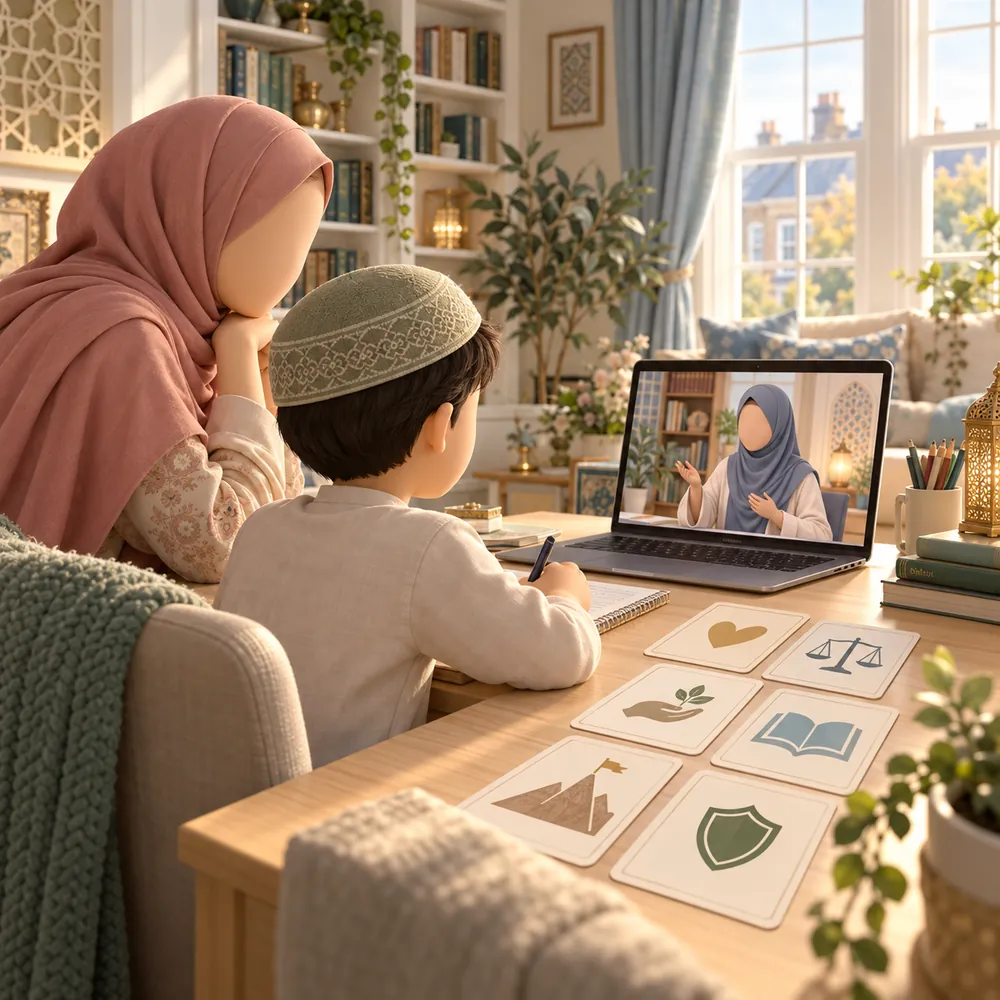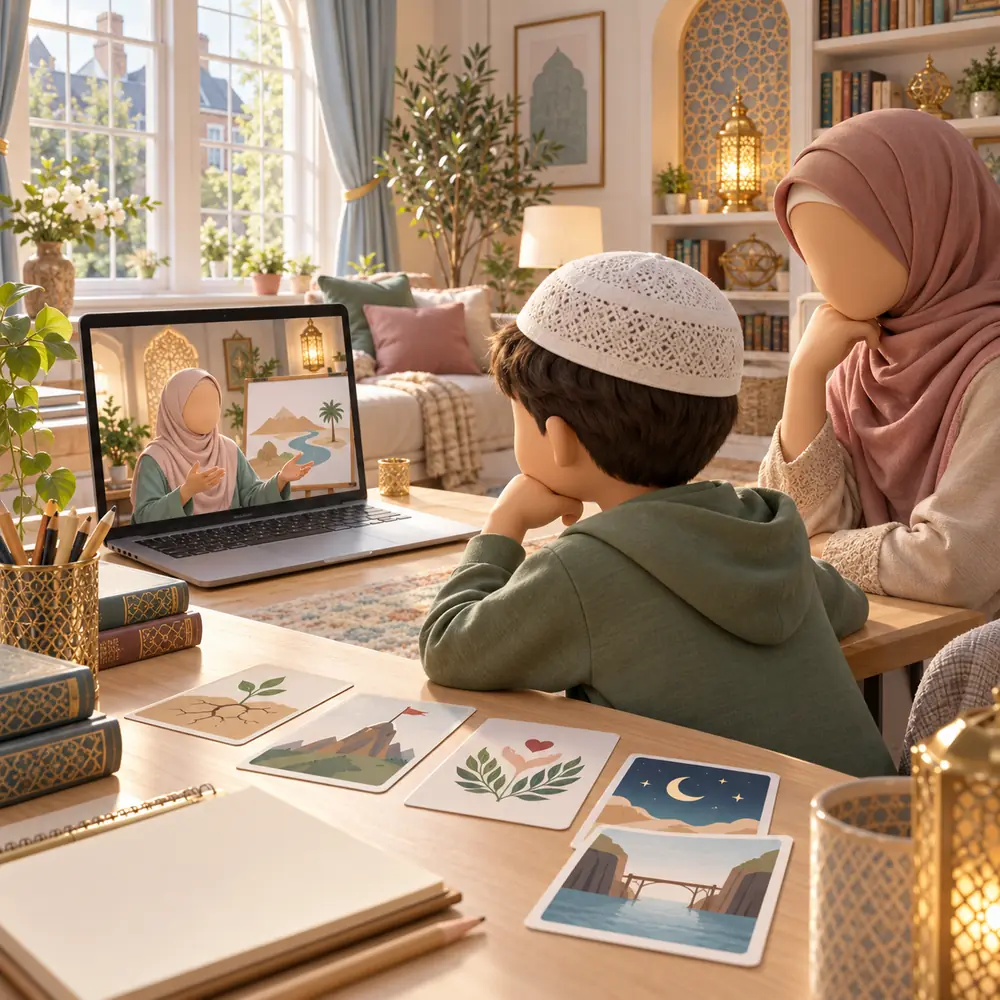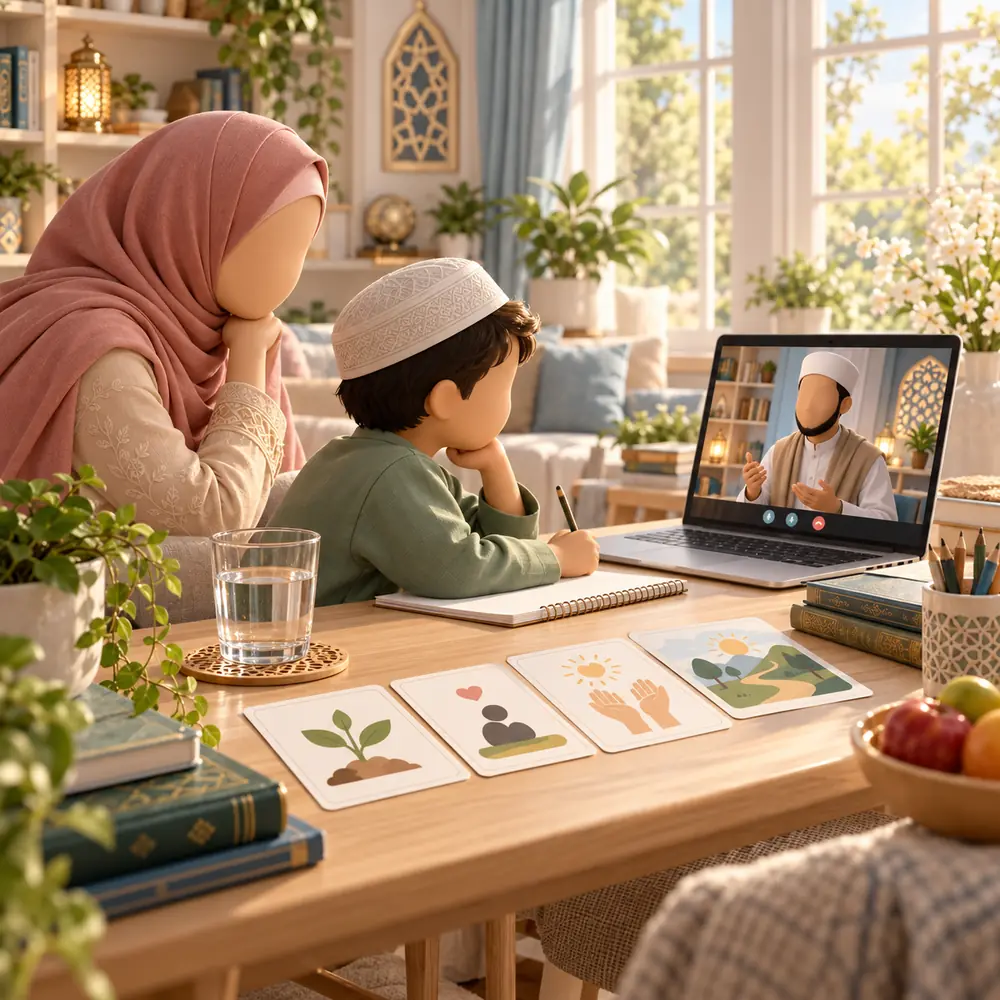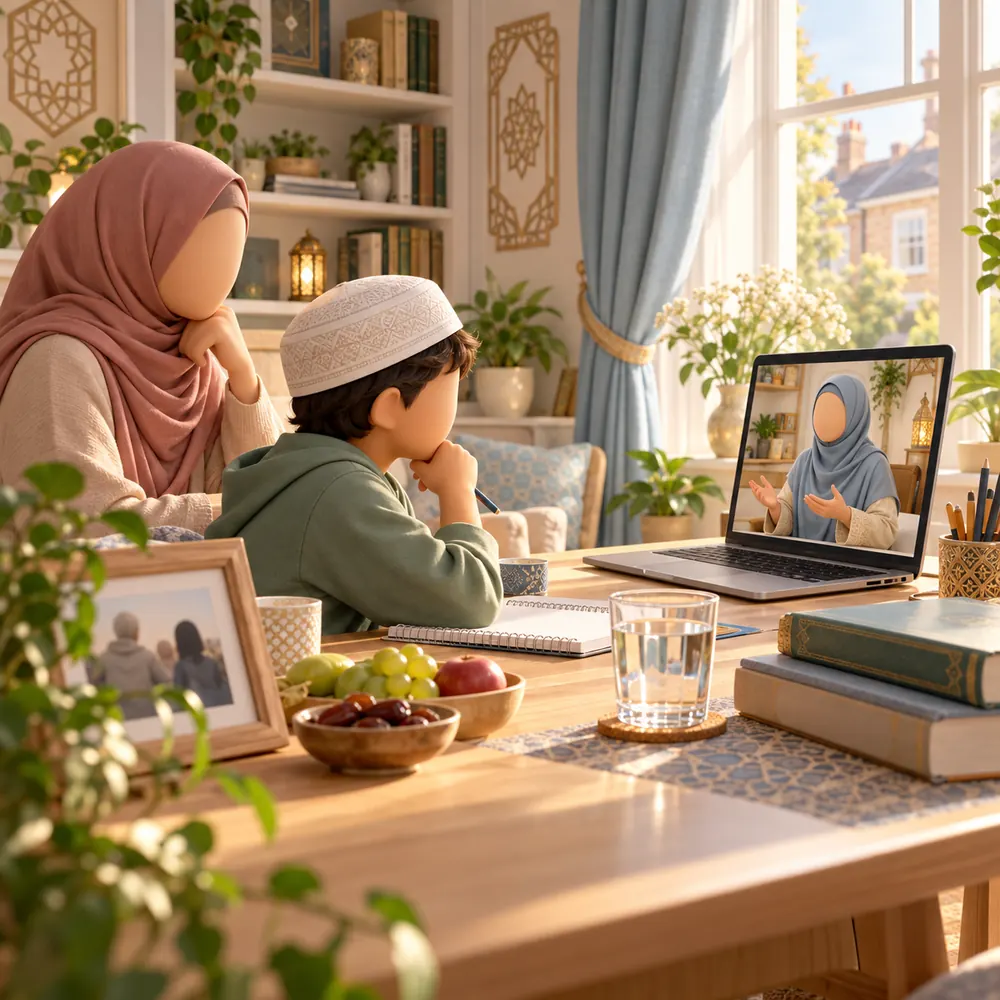

If you are searching for a Sibghah Academy Review, you are probably past the stage of simply looking for “online Quran classes” or “Arabic lessons for kids.” You want to know what Sibghah actually offers, how the lessons work, who the academy is designed for, and most importantly: is it a suitable fit for your child?
This guide is designed to answer those questions clearly.
Important transparency note: this Sibghah Academy Review is published by Sibghah Academy itself. It is not an independent third-party review. The purpose is to give parents a detailed and practical picture of the academy, including its strengths, teaching model, programmes, trial process, and situations where another learning format may suit a family better.
Sibghah Academy provides live one-to-one online lessons for Muslim children aged 5–15, with three main learning areas: Quran, Arabic, and Islamic Studies.
The academy is particularly focused on Muslim families in the UK and children growing up in English-speaking environments who may need a structured way to strengthen Quran reading, Arabic ability, Islamic knowledge, and Muslim identity from home.
Quick answer: this Sibghah Academy Review suggests that Sibghah may be a strong fit for families looking for live one-to-one teaching, a learning path based on the child’s current level, flexible online lessons, parent progress follow-up, and access to Quran, Arabic, and Islamic Studies within the same academy. Families who strongly prefer in-person group learning or whose main priority is peer interaction during the lesson may prefer a different format.
Book a free one-to-one trial session on WhatsApp
Table of Contents
- What Is Sibghah Academy?
- Who Is Sibghah Academy For?
- What Can Children Study at Sibghah?
- How Does One-to-One Learning Work?
- What Happens Before Enrolment?
- Main Strengths in This Sibghah Academy Review
- What Should Parents Consider Before Joining?
- How Is a Child’s Progress Followed?
- What Should Parents Look for in the Teacher?
- Online Learning and Safeguarding
- What Does the Parent Journey Look Like?
- Which Children May Benefit Most?
- When Might Sibghah Not Be the Right Format?
- How to Decide After the Trial
- FAQ
What Is Sibghah Academy?
A useful Sibghah Academy Review should begin with the basics.
Sibghah Academy is an online education academy offering live lessons for Muslim children. Its main learning areas are:
- Quran
- Arabic language
- Islamic Studies
The academy’s teaching model is based primarily on one-to-one lessons. This means one teacher works directly with one child rather than placing the student into a large online group.
The reason for this model is simple: children can be the same age while having completely different learning needs.
One eight-year-old may already read Quran but need help with Tajweed. Another may still be developing Arabic reading foundations. A third may understand spoken Arabic but respond almost entirely in English.
One-to-one learning allows the teacher to work from the child’s actual level rather than expecting every child of the same age to follow the same pace.
Parents can also review Sibghah’s Frequently Asked Questions for practical information about assessment, trial lessons, lesson format, and progress follow-up.
Who Is Sibghah Academy For?
This Sibghah Academy Review is especially relevant to parents of Muslim children aged 5–15.
Sibghah may be particularly useful for families where:
- The child lives in the UK or another English-speaking environment.
- The child needs one-to-one attention.
- Arabic is not the child’s strongest language.
- The child understands some Arabic but speaks mainly English.
- The child needs Quran reading, Tajweed, Hifz, or revision support.
- The parents want structured Islamic Studies in English.
- The child has struggled to keep up with a group class.
- The family wants online learning without regular travel.
- The parents want clearer feedback about what the child is actually working on.
Sibghah is not limited only to complete beginners.
A child may already have previous experience and join at a more suitable level after assessment.
The key question is not simply “How old is the child?” but:
What can this child currently do, and what should they learn next?
What Can Children Study at Sibghah Academy?

One of the most important areas to examine in a Sibghah Academy Review is the range of learning paths.
Sibghah does not treat Quran, Arabic, and Islamic Studies as one single course. They are separate areas with different objectives.
1. Quran Learning
Quran lessons can support children in areas such as:
- Quran reading foundations
- Reading fluency
- Recitation
- Pronunciation correction
- Practical Tajweed
- Hifz
- Revision
- Confidence while reciting
A child does not necessarily need to be an independent Quran reader before beginning every form of Hifz. For some children, memorisation can begin through listening, teacher-led recitation, and repetition while reading skills continue to develop.
This matters because different children need different Quran paths.
2. Arabic Language
Sibghah’s Arabic learning can include two broad types of development.
Reading foundations can help children with:
- Arabic letters
- Sounds
- Short vowels
- Joining letters
- Early reading
Noor Al-Bayan may be used for children who need this foundation.
For broader Arabic language development, the Takallam Series can support areas such as:
- Vocabulary
- Listening
- Reading
- Sentence-building
- Speaking
- Confidence using Arabic
Parents comparing Arabic options can also read our Arabic Classes for Kids UK guide.
3. Islamic Studies
Islamic Studies at Sibghah is a separate learning branch from Arabic language study.
It is taught in English so children who are more comfortable learning in English can understand the meaning of what they study rather than facing an unnecessary language barrier.
Available learning paths include:
- Minhaj Al-Muslim — Aqeedah, Fiqh, worship, manners, and Islamic etiquette.
- Names of Allah — helping children know Allah through His Names and connect those meanings to faith and daily life.
- Stories of the Prophets — learning faith, patience, courage, trust in Allah, and character through the Prophets’ stories.
- Lives of the Companions — learning Islamic values through Muslim role models.
You can explore the educational approach in our Islamic Studies for Kids parent guide.
For this Sibghah Academy Review, the separation between these three branches is a strength because a child does not need to study every subject in exactly the same way or at the same level.
How Does One-to-One Learning Work at Sibghah?
The one-to-one model is probably the most important feature in this Sibghah Academy Review.
Instead of a teacher dividing attention between several children, the lesson focuses on one child.
This can allow the teacher to:
- Listen for longer
- Notice repeated mistakes
- Give immediate correction
- Slow down when needed
- Move forward when the child is ready
- Repeat a difficult concept without pressure from a group pace
- Ask more individual questions
- Adapt examples to the child’s level
This is particularly useful in Quran learning.
If a child needs pronunciation correction, the teacher can spend time on that particular sound.
If a Hifz student needs stronger revision, the teacher can reduce new memorisation and focus on retention.
It can also be useful in Arabic.
A child who understands Arabic but rarely speaks can spend more lesson time answering and building sentences.
And in Islamic Studies, the child can ask questions directly and receive explanations suited to their age and understanding.
One-to-one is not automatically the ideal format for every child. Some children enjoy group interaction and learn well around peers. But when individual correction and personal pacing are major priorities, private lessons can offer clear advantages.
What Happens Before Enrolment?
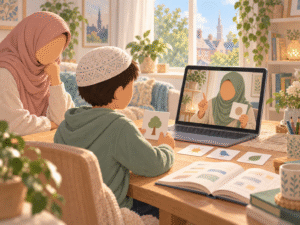
A major practical point in this Sibghah Academy Review is that parents can begin with a free trial session rather than committing immediately.
The trial is useful for two reasons.
First, the child experiences the teacher and lesson format.
Second, the teacher begins identifying the child’s current level.
Depending on the chosen subject, the teacher may explore different things.
For Quran
This may include reading level, pronunciation, recitation, existing Tajweed, Hifz, revision, listening, and confidence.
For Arabic
This may include letters, reading, vocabulary, understanding, listening, speaking, and sentence-building.
For Islamic Studies
The teacher may look at the child’s previous Islamic learning, current knowledge, age, understanding, and topics they need to build next.
The purpose should not be to make the child “pass” a test.
It is to identify the most useful starting point.
For a detailed explanation of the Quran assessment process, read our Quran Trial Lesson UK guide.
Main Strengths in This Sibghah Academy Review
No Sibghah Academy Review would be useful if it only repeated course names. Parents need to understand what the practical strengths actually mean for a child.
1. Personal teacher attention
The strongest feature is the one-to-one structure.
The teacher does not need to divide the lesson between many students, which can create more opportunities for individual reading, speaking, questions, correction, and feedback.
2. Children can start from different levels
A beginner does not need to “catch up” before joining.
Likewise, a child who already knows the basics does not necessarily need to restart from the beginning.
A level check can help find a more appropriate starting point.
3. Quran, Arabic, and Islamic Studies are available in one academy
For families who want more than one area of learning, keeping the subjects within one academy can make organisation simpler.
At the same time, each subject remains its own learning path.
4. Islamic Studies is accessible to English-dominant children
A child should not have to wait until they are fluent in Arabic before learning what Muslims believe, how worship works, or what Islamic character means.
Teaching Islamic Studies in English can help children understand concepts and ask meaningful questions.
5. The online model removes regular travel
For UK families balancing school, work, siblings, and activities, learning from home can make consistency easier.
The family does not need to add regular journeys before and after each lesson.
6. The free trial lowers the commitment needed to evaluate fit
Parents can observe the teaching style before making a longer-term decision.
This is particularly valuable because a teacher who works well with one child may not be the ideal personality match for another.
7. Parent follow-up is part of the model
Parents need to know more than whether a child “attended.”
They need to understand what is improving, what remains difficult, and what the teacher is working on next.
This Sibghah Academy Review considers that especially important for online learning because parents should remain informed even when they are not sitting beside the child throughout every session.
What Should Parents Consider Before Joining Sibghah?
A balanced Sibghah Academy Review should also explain what families need to consider before enrolling.
Your child still needs a suitable learning environment at home
Online one-to-one teaching removes travel, but the child still needs somewhere reasonably calm to learn.
If the television is on, siblings are interrupting constantly, or the child is trying to learn in a noisy room, the teacher may struggle to keep the lesson focused.
Internet and device reliability matter
A live lesson depends on a stable enough connection for the teacher and child to hear each other clearly.
This matters particularly for Quran pronunciation, where sound quality is important.
Consistency matters more than enthusiasm during the first week
A child may enjoy the trial session, but real progress develops through regular learning.
Families should choose a schedule they can realistically maintain rather than beginning with an intensive timetable that quickly becomes difficult.
One-to-one learning has less peer interaction
The same feature that creates stronger teacher attention also means the child is not learning beside a group of peers.
Families who value Muslim community interaction can still provide that through mosque activities, friends, Islamic events, family gatherings, or youth programmes.
Not every child needs the same subjects at the same time
It may be tempting to enrol a child in Quran, Arabic, and Islamic Studies immediately.
That is not always necessary.
For some families, beginning with the highest-priority need and then adding another subject later may create a more sustainable routine.
How Is Progress Followed at Sibghah Academy?
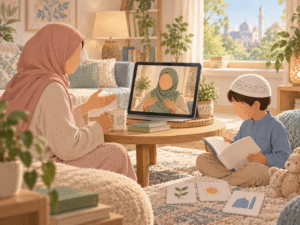
Progress is another important part of this Sibghah Academy Review.
The useful question is not simply:
“How many lessons has my child completed?”
It is:
“What can my child do now that they could not do before?”
Depending on the subject, progress may look different.
| Learning Area | Possible Signs of Progress |
|---|---|
| Quran Reading | Less hesitation, fewer repeated mistakes, stronger fluency |
| Tajweed | Better pronunciation and more accurate application during recitation |
| Hifz | New memorisation becomes stronger while older portions are retained |
| Arabic Reading | More confident letter recognition, joining, and word reading |
| Arabic Speaking | Longer responses, stronger vocabulary, less dependence on English |
| Islamic Studies | Better understanding, stronger vocabulary, thoughtful questions, practical application |
Sibghah also provides progress follow-up so parents can understand the child’s level and development.
Progress will not always be perfectly linear. A child may move quickly through one skill and need more time with another.
The advantage of a personalised learning path is that the teacher can respond to those differences.
What Should Parents Look for in a Sibghah Teacher?
Even within a structured academy, the teacher-child relationship matters enormously.
This Sibghah Academy Review recommends that parents use the trial session to observe the teacher directly.
Look for whether the teacher:
- Listens carefully
- Explains at the child’s level
- Allows enough response time
- Corrects mistakes without embarrassment
- Notices repeated difficulties
- Adjusts when the first explanation does not work
- Encourages the child to try again
- Can explain the recommended next step to the parent
A teacher can know a subject extremely well and still not be the right personality match for a particular child.
The trial gives parents a valuable opportunity to observe that relationship before regular lessons begin.
What About Sibghah Academy Testimonials?
Parents searching for a Sibghah Academy Review may naturally look for feedback from other families.
Sibghah’s website includes testimonials and parent/student feedback.
However, testimonials displayed on an academy’s own website are first-party material. Parents should not rely on them alone when deciding whether any academy is suitable.
A more practical approach is to combine several signals:
- Read how the academy describes its teaching approach.
- Ask questions about the programme.
- Book the trial.
- Observe the teacher-child interaction.
- Ask what the teacher identified during the assessment.
- Evaluate whether the recommended plan makes sense for your child.
Your own child’s trial session can often tell you more about fit than a general testimonial from another family.
Online Learning and Safeguarding
Safeguarding should be part of any serious Sibghah Academy Review, particularly because lessons involve children online.
Parents should understand how lessons are delivered and how communication is handled.
Useful questions for any online provider include:
- Which platform is used for lessons?
- How do parents communicate with the academy?
- How are teachers recruited and checked?
- Who should a parent contact if they have a concern?
- What safeguarding procedures are followed?
- How should younger children use the online learning space?
For families in England, the Department for Education provides guidance for parents using tuition and other out-of-school settings.
Read the Department for Education guidance for parents using tuition and out-of-school settings.
Parents can also use the NSPCC Online Safety Hub for general guidance about children’s online safety.
A parent should feel comfortable asking safeguarding questions before regular lessons begin.
What Does the Sibghah Parent Journey Look Like?
To make this Sibghah Academy Review practical, here is a simple picture of the parent journey.
Step 1: Contact Sibghah
The parent shares basic information such as the child’s age, subject of interest, current level, and preferred schedule.
Step 2: Book the free trial
The child meets the teacher and experiences the one-to-one lesson format.
Step 3: Initial assessment
The teacher observes the child’s current ability.
The assessment differs according to whether the child is joining Quran, Arabic, or Islamic Studies.
Step 4: Receive a recommended starting point
The family should understand what the child needs first and why.
Step 5: Begin regular one-to-one lessons
The child begins the selected learning path at an appropriate level.
Step 6: Follow progress
The teacher and academy can provide parents with updates about development, current focus, and areas that still need support.
This process is intended to reduce guesswork.
Instead of choosing a course purely from its title, the family can first understand the child’s actual starting point.
Which Children May Benefit Most from Sibghah Academy?
Based on the teaching model examined in this Sibghah Academy Review, some children may benefit particularly well from one-to-one online learning.
A child who is shy in groups
One-to-one lessons remove the pressure of answering in front of several other children.
A child who needs repeated correction
The teacher can spend more time on one reading, pronunciation, or language difficulty.
A child whose level is different from their age group
The learning path can follow ability rather than age alone.
A child who understands Arabic but rarely speaks it
One-to-one Arabic lessons can provide more speaking time.
A child beginning Quran from zero
The teacher can start with suitable foundations rather than assuming previous learning.
A child who memorises Quran but has weak revision
Hifz lessons can place greater emphasis on retention instead of continually adding new material.
An English-dominant child learning Islamic Studies
Islamic Studies in English can help the child understand beliefs, worship, manners, stories, and identity without needing advanced Arabic first.
A family with a busy weekly routine
Online lessons remove travel and can make Quran, Arabic, or Islamic Studies easier to fit around school and family responsibilities.
When Might Sibghah Academy Not Be the Right Format?
An honest Sibghah Academy Review should also identify situations where the model may not match a family’s priorities.
If you only want face-to-face teaching
Sibghah is an online academy. Families who strongly prefer a teacher physically present in the same room should consider an in-person option.
If group interaction is your main priority
One-to-one lessons provide individual attention, but they do not provide the same peer interaction as a group madrasa or classroom.
Families can combine one-to-one education with mosque or community activities, but the lesson itself remains private.
If the child cannot currently focus online at all
Some children need support developing an online learning routine.
A trial can help parents see whether the child can engage with the teacher in this format.
If the family cannot maintain a regular schedule
Even personalised teaching needs consistency.
Starting and stopping repeatedly can make progress harder to build.
If you are looking only for recorded self-study content
Sibghah’s main model is live teacher-led education rather than a library of recorded lessons for children to complete independently.
These points do not make Sibghah good or bad. They simply help parents decide whether the format matches what their family actually needs.
What Makes Sibghah Different from Simply Hiring a Tutor?
Another useful question in a Sibghah Academy Review is whether families could simply hire an individual tutor instead.
One-to-one tutoring and Sibghah’s model can look similar because both involve one teacher and one child.
The difference is that Sibghah places that one-to-one relationship inside a broader academy structure with defined learning programmes, assessment, subject pathways, parent communication, and progress follow-up.
For example, an Arabic child may begin with Noor Al-Bayan foundations and later move toward wider language development.
A Quran child may need reading before stronger Tajweed work.
An Islamic Studies child may be better suited to Minhaj Al-Muslim or a more focused programme such as Names of Allah or Stories of the Prophets.
The teacher remains personal, but the learning is not intended to be random from week to week.
Is Sibghah Suitable for Non-Arab Muslim Children?
Yes. This is an important point in a Sibghah Academy Review because parents sometimes assume Arabic or Quran academies are mainly designed for children from Arabic-speaking homes.
A non-Arab Muslim child can begin from foundational levels.
For Arabic, that may mean letters, sounds, simple vocabulary, and reading.
For Quran, the child may begin with reading foundations or teacher-led listening and repetition, depending on their goal.
For Islamic Studies, lessons being taught in English allows the child to understand Islamic meanings without needing Arabic fluency first.
The important thing is that the programme begins from the child’s actual knowledge rather than assuming a particular family language background.
Is Sibghah Suitable for Arab Families in the UK?
This Sibghah Academy Review is also relevant to Arab families whose children are growing up primarily in English.
A child may hear Arabic at home but still:
- Respond mainly in English
- Have limited vocabulary
- Struggle to read Arabic
- Understand more than they can say
- Need structured Quran reading support
In these situations, the child’s Arabic heritage does not automatically mean they should enter an advanced level.
The teacher can look at reading, listening, vocabulary, and speaking separately and identify where the real gaps are.
How Should Parents Decide After the Trial?
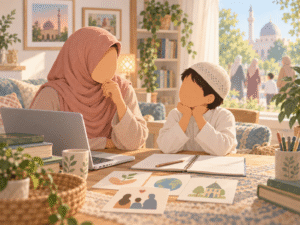
After reading a Sibghah Academy Review, the final decision should still be based on your own child.
After the free trial, ask yourself:
- Did the teacher understand my child’s level?
- Did my child receive enough direct attention?
- Was correction calm and clear?
- Did the teacher adapt when my child struggled?
- Did my child gradually become more comfortable?
- Did I receive specific feedback rather than general praise?
- Do I understand what my child should learn next?
- Does the proposed timetable realistically fit our family?
- Does the one-to-one format suit my child’s personality?
- Can I see how progress will be followed?
You do not need to decide simply because a trial took place.
The point of the trial is to give you enough information to make a more informed decision.
Book your child’s free trial session
Sibghah Teacher Note
Children do not always need “more lessons.” Sometimes they need a clearer next step. One child may need to slow down and rebuild reading foundations. Another may need more opportunities to speak. Another may know Islamic facts but need help understanding what those ideas mean in daily life. One-to-one teaching gives us space to identify that next step and work on it deliberately.
Quick Sibghah Academy Review: Strengths and Considerations
| Area | What Sibghah Offers | Parent Consideration |
|---|---|---|
| Lesson format | Live one-to-one teaching | Less peer interaction during the lesson |
| Age range | Children aged 5–15 | Teaching still needs to suit the individual child’s maturity |
| Quran | Reading, recitation, Tajweed, Hifz and revision support | The exact path depends on assessment |
| Arabic | Reading foundations and wider Arabic language development | Reading and speaking may progress at different rates |
| Islamic Studies | Separate structured programmes taught in English | Choose the programme according to the child’s current needs |
| Starting point | Trial and level assessment | Parents should review the recommendation after the trial |
| Convenience | Online learning from home | A stable device, connection and learning space help |
| Progress | Parent-friendly progress follow-up | Consistency between lessons still matters |
FAQ About Sibghah Academy Review
What is Sibghah Academy?
Sibghah Academy is an online academy offering live one-to-one Quran, Arabic, and Islamic Studies lessons for Muslim children aged 5–15.
Is this Sibghah Academy Review independent?
No. This Sibghah Academy Review is published by Sibghah Academy itself. It is intended as a transparent parent guide explaining the teaching model, programmes, strengths, practical considerations, and trial process. Parents should use the free trial and their own experience to evaluate fit.
Are Sibghah lessons one-to-one?
Yes. Sibghah’s main teaching model uses live one-to-one lessons so the teacher can focus on one child’s level, pace, mistakes, questions, and learning goals.
What age is Sibghah Academy for?
Sibghah Academy focuses on Muslim children aged 5–15.
What subjects does Sibghah teach?
Sibghah offers Quran, Arabic, and Islamic Studies. These are separate learning areas, and children can follow the subject or combination of subjects that fits their needs.
Does Sibghah offer Quran memorisation?
Yes. Quran learning can include Hifz and revision as well as reading, recitation, pronunciation, and Tajweed according to the child’s level.
Can my child start Quran if they cannot read Arabic?
Yes. The trial can identify whether the child should begin with reading foundations. Suitable Hifz can also begin through listening, repetition, and teacher-led recitation for some children while their reading develops.
Does Sibghah teach Arabic to complete beginners?
Yes. Children can begin Arabic from foundational levels. Noor Al-Bayan can support letters, sounds, vowels, joining, and early reading, while broader language pathways can later support vocabulary, listening, speaking, and confidence.
Are Islamic Studies lessons taught in Arabic?
Islamic Studies at Sibghah is taught in English. This allows English-dominant children to understand Islamic beliefs, worship, manners, stories, and identity clearly. Important Arabic Islamic terms can still be introduced and explained.
Which Islamic Studies programmes are available?
Programmes include Minhaj Al-Muslim, Names of Allah, Stories of the Prophets, and Lives of the Companions.
Does Sibghah Academy offer a free trial?
Yes. Parents can book a free trial session before regular enrolment. The trial helps the teacher understand the child’s level and gives the family an opportunity to experience the teaching style.
Is there a placement assessment?
Yes. The initial assessment helps identify the child’s current level and recommend a suitable starting point.
How can parents track progress?
Sibghah provides progress follow-up so parents can understand their child’s development, current level, and areas that still need work.
Is Sibghah Academy suitable for children in the UK?
Yes. Sibghah is specifically positioned to support Muslim families in the UK as well as other families who want structured online Quran, Arabic, and Islamic Studies education.
Is Sibghah suitable for a child who speaks mostly English?
Yes. Many English-dominant children can begin at a suitable level. Arabic teaching can start from foundations, while Islamic Studies is taught in English.
Is Sibghah better than a local madrasa?
The answer depends on the family’s priorities. Sibghah’s one-to-one model can offer more individual teacher attention, personal pacing, and flexible online learning. A local madrasa may offer stronger peer interaction and a physical community environment. Parents should decide which benefits matter most for their child.
How do I know whether Sibghah is right for my child?
The most useful step after reading this Sibghah Academy Review is to book the free trial, observe how your child responds to the teacher, review the level assessment, and decide whether the recommended learning path matches your family’s goals.
Final Sibghah Academy Review: Is It Right for Your Child?
The main conclusion of this Sibghah Academy Review is that Sibghah is built for families who value personalised learning.
Its main distinguishing feature is not simply that lessons happen online. It is that they are live and one-to-one.
For Quran, this can mean more individual recitation, correction, Tajweed support, Hifz revision, and personal pacing.
For Arabic, it can mean identifying whether the child needs reading foundations, vocabulary, speaking, listening, or a combination rather than labelling them only as a “beginner.”
For Islamic Studies, it means English-language teaching with separate pathways for general Islamic foundations, knowing Allah, Prophets’ stories, and Muslim role models.
There are also practical advantages for UK families: no regular travel, lessons from home, easier scheduling, and one academy covering several areas of Muslim children’s education.
But one-to-one online learning is not automatically the right format for every child.
If your main priority is group interaction or you strongly prefer face-to-face education, a local option may fit your family better. If your priority is individual teacher attention, level-based teaching, personal feedback, and flexible learning from home, Sibghah may be worth considering.
The best way to move beyond any Sibghah Academy Review — including this one — is to see how the model works with your own child.
A free trial gives you the opportunity to meet the teacher, understand your child’s current level, see how correction and interaction work, and receive a recommended starting point before deciding whether to enrol.
Message Sibghah Academy on WhatsApp to book your child’s free one-to-one trial session