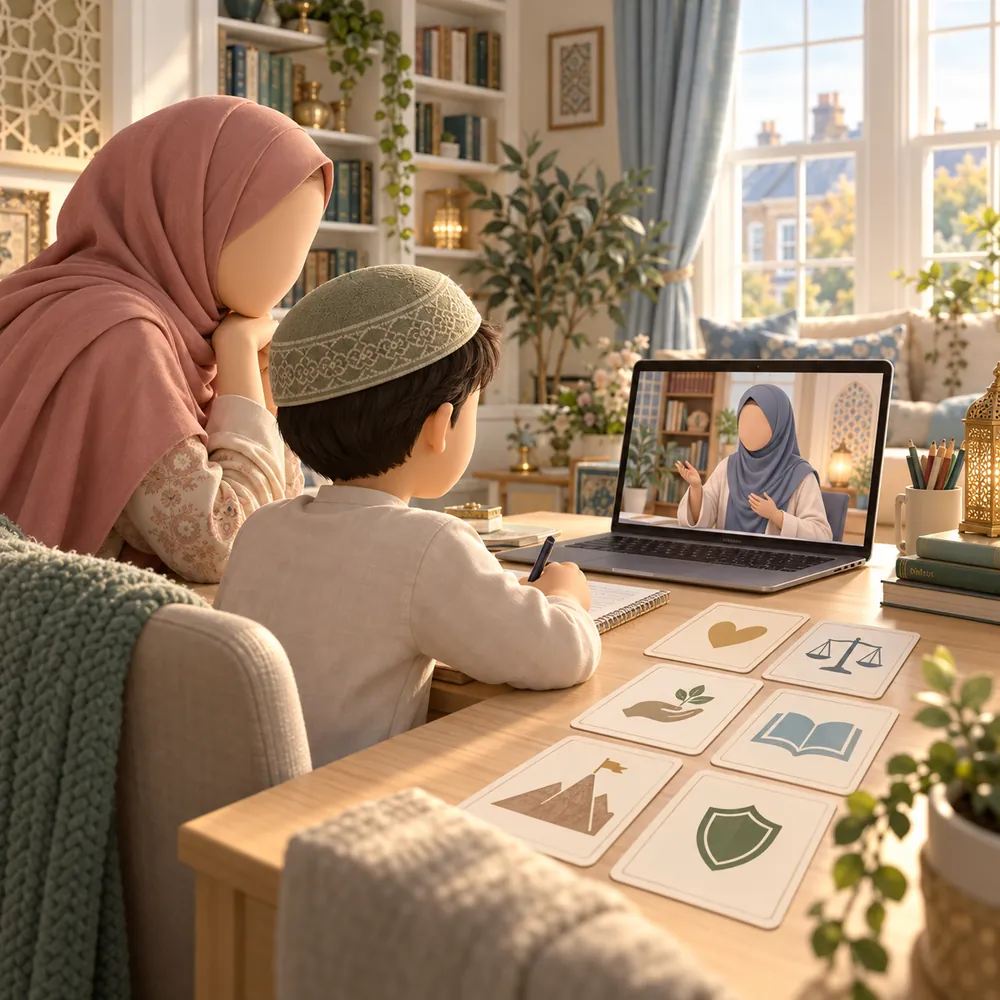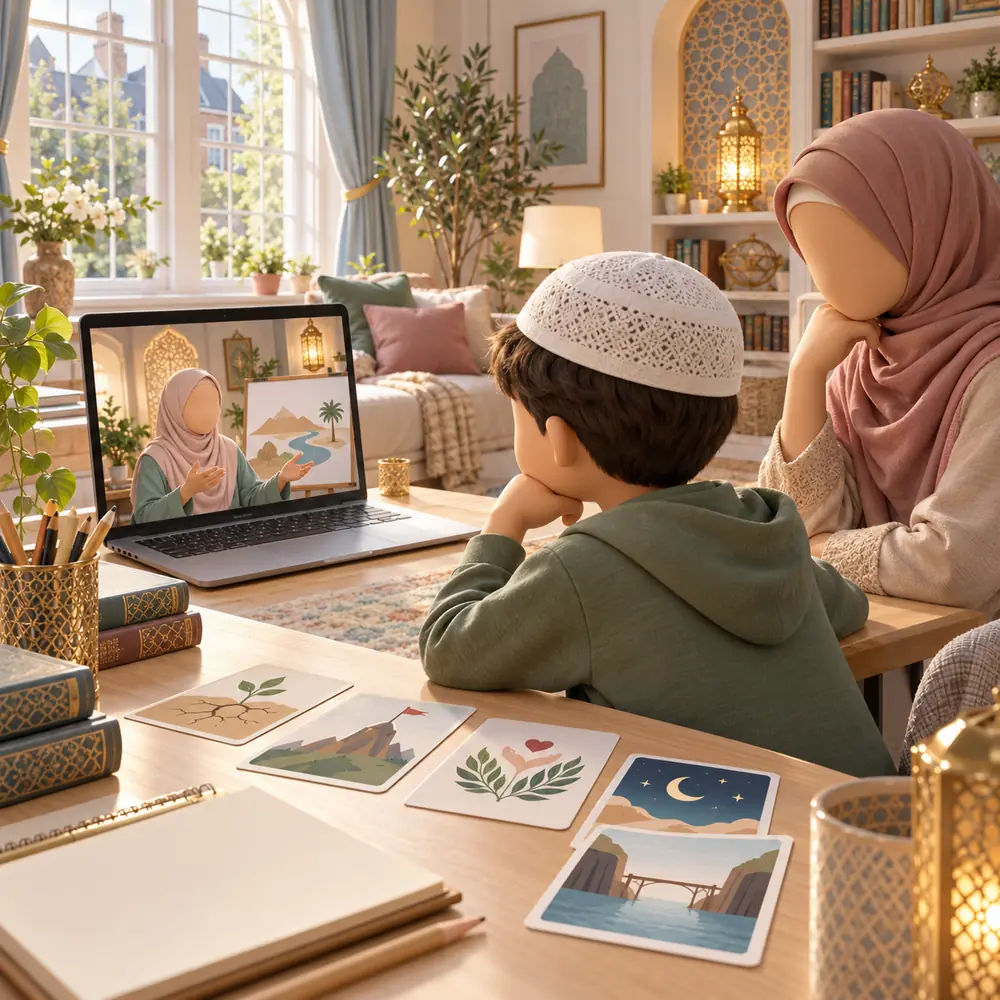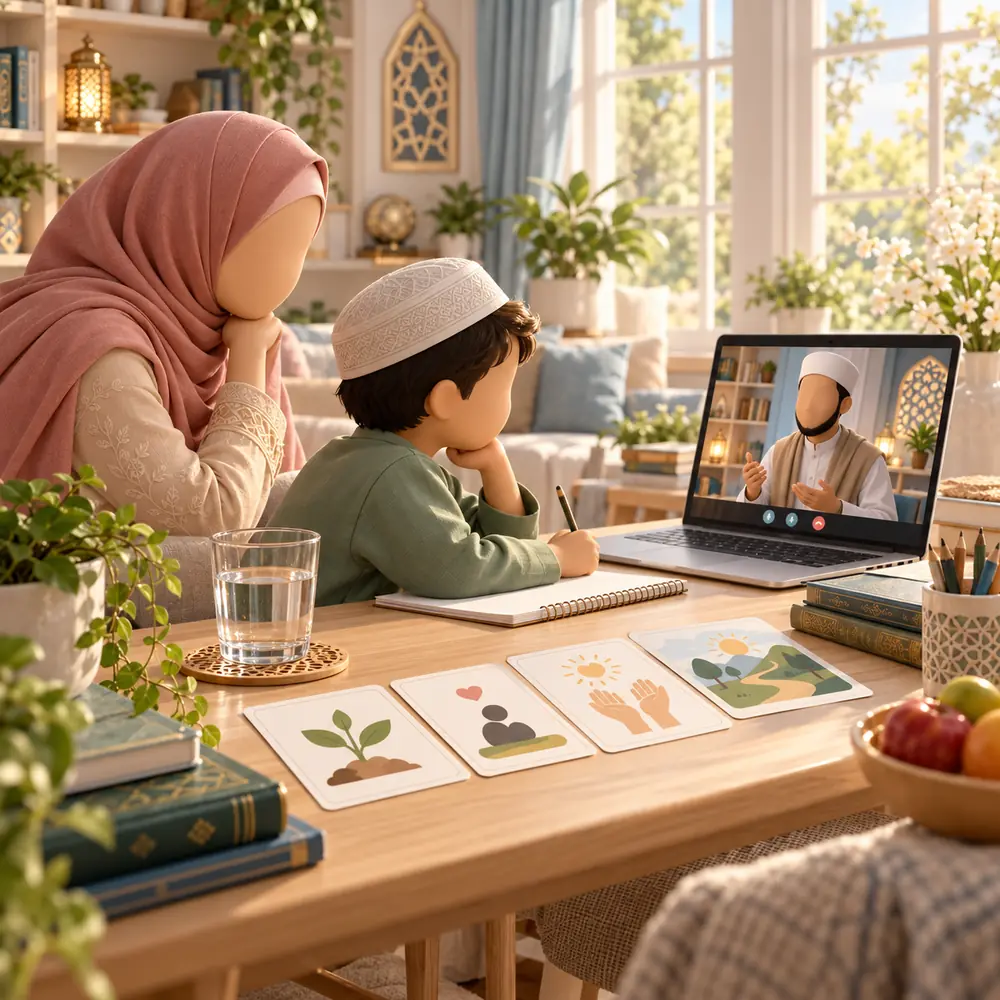

Quran reading classes for kids can help children move from hesitant recitation to clearer, calmer, and more confident Quran reading. Many parents notice that their child can recognize some words, recite short surahs, or repeat after a teacher, but still struggles when reading aloud independently.
Good quran reading classes for kids should not overwhelm children with advanced rules too early. At the same time, Quran reading should not be random or careless. A child needs to hear correct recitation, practise pronunciation, learn how to read slowly, and begin gentle Tajweed support in a child-friendly way.
This is where one-to-one Quran reading lessons can be very helpful. In a one-to-one class, the teacher can hear your child clearly, notice small mistakes, repeat patiently, correct gently, and give the child enough time to read. The child is not rushed by a group pace or embarrassed in front of other students.
At Sibghah Academy, Quran learning for children is built around personal attention. A child may need Quran reading support, gentle Tajweed correction, memorization, revision, or a mix of these. The teacher can recommend the right path after listening to the child carefully.
This guide explains what parents should expect from quran reading classes for kids, how Quran reading connects naturally with gentle Tajweed, why confidence matters, and how to know whether a class is supporting your child properly.

Quick answer: Good quran reading classes for kids should help children read Quran with clearer pronunciation, calm recitation, gentle correction, basic Tajweed support, confidence, and one-to-one teacher attention.
| What Your Child May Need | How Quran Reading Classes Help |
|---|---|
| Clearer pronunciation | The teacher listens carefully and corrects letter sounds gently. |
| Slower, calmer reading | The child learns to read without rushing or guessing. |
| More confidence | One-to-one reading gives the child more time to practise aloud. |
| Gentle Tajweed support | The teacher introduces simple Tajweed awareness without overwhelming the child. |
| Correction without pressure | Mistakes are corrected in a calm and encouraging way. |
| Parent feedback | Parents understand what the child should practise between lessons. |
Table of Contents
- What Are Quran Reading Classes for Kids?
- Why Quran Reading Support Matters for Children
- Quran Reading Should Include Gentle Tajweed Support
- Children Need Confidence When Reading Quran Aloud
- Why One-to-One Quran Reading Classes Help
- Common Quran Reading Difficulties Parents Notice
- How to Use a Quran Reading Trial Class Properly
- How Sibghah Academy Supports Quran Reading
- FAQ
What Are Quran Reading Classes for Kids?
quran reading classes for kids are lessons that help children improve the way they read and recite the Quran. The goal is not only to “finish a page.” The goal is to help the child read more clearly, listen more carefully, correct mistakes, and build confidence with Quran recitation.
A child may join Quran reading lessons at different levels. Some children are still learning how to read Quranic words. Some can read but make many pronunciation mistakes. Some read too quickly. Some feel nervous when reciting aloud. Some need gentle Tajweed support so their reading becomes more accurate.
Good quran reading classes for kids usually include:
- Listening to the teacher’s correct recitation.
- Repeating short parts after the teacher.
- Reading aloud with support.
- Correcting pronunciation mistakes.
- Practising slow and calm recitation.
- Learning basic Tajweed awareness gradually.
- Receiving encouragement and parent feedback.
For children, Quran reading should feel guided. A child should not be left alone to struggle through difficult words without support. The teacher should listen, correct, repeat, and help the child improve step by step.
One important point for parents: Quran reading is different from Hifz. A child may memorize through listening and repetition before they can read independently. So, quran reading classes for kids should not be presented as a condition for memorization. They are a separate Quran learning need for children who need support with reading, recitation, pronunciation, and confidence.
Why Quran Reading Support Matters for Children
Quran reading support matters because children can easily lose confidence when they read aloud and make repeated mistakes. If the child is corrected harshly, rushed, or compared to others, they may begin to avoid Quran reading.
But when correction is gentle, children can improve without feeling ashamed. A calm teacher can help the child hear the correct sound, repeat it, and try again. This makes quran reading classes for kids especially valuable for children who need patient guidance.
The Quran teaches us to recite with care and measured recitation:
Quran — Surah Al-Muzzammil 73:4
وَرَتِّلِ الْقُرْآنَ تَرْتِيلًا
English meaning: “And recite the Quran with measured recitation.”
This verse is a helpful reminder for parents. Quran reading is not about rushing. Children need time to read carefully, listen carefully, and improve gradually.
The Prophet ﷺ also said:
Hadith — Sahih al-Bukhari 5027
خَيْرُكُمْ مَنْ تَعَلَّمَ الْقُرْآنَ وَعَلَّمَهُ
English meaning: “The best among you are those who learn the Qur’an and teach it.”
This hadith shows the great value of learning and teaching the Quran. For parents, it also reminds us to choose a Quran class that teaches with care, patience, and respect for the child’s pace.
Children need Quran reading support for many reasons. Some children are still developing Arabic letter sounds. Some speak English most of the day and find Quranic pronunciation unfamiliar. Some read with hesitation because they fear mistakes. Some need more listening before reading. Some need a teacher to slow the process down.
That is why strong quran reading classes for kids should combine correct recitation, listening, repetition, correction, and confidence-building.
Helpful external references:
Quran Reading Should Include Gentle Tajweed Support
quran reading classes for kids should connect naturally with Tajweed, but in a gentle and age-appropriate way.
This does not mean children need advanced Tajweed terminology from the beginning. A child does not need to be overwhelmed with many rules before they can read calmly. But the teacher should help the child read Quran with correct pronunciation and gradually notice basic recitation rules.
Gentle Tajweed support may include:
- Listening to correct recitation before reading.
- Correcting letter sounds gently.
- Helping the child avoid rushing.
- Practising short and long vowel sounds.
- Noticing where to stop and continue.
- Introducing simple rules only when the child is ready.
- Correcting repeated mistakes before they become habits.
For example, a young child may not need a long explanation of a Tajweed rule. The teacher can simply model the correct recitation, ask the child to repeat, and explain the correction in very simple words. As the child grows, the teacher can introduce more detailed rules gradually.
This keeps quran reading classes for kids balanced. The class is not only reading without correction, and it is not a heavy Tajweed theory lesson either. It is Quran reading with gentle Tajweed support.
If you want a deeper parent-friendly explanation of Tajweed basics, you can also read our guide: Tajweed for Kids.
The key is to match Tajweed support to the child’s level. A child who is just beginning may need listening, repetition, and pronunciation correction. A child who reads more fluently may be ready for clearer Tajweed awareness.
Children Need Confidence When Reading Quran Aloud
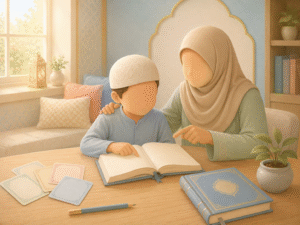
Confidence is a major part of quran reading classes for kids. A child may understand the task, but still feel nervous when reading aloud. This is common, especially when the child has been corrected harshly before or feels compared to siblings or classmates.
When a child reads Quran aloud, they are doing several things at once. They are looking at the words, remembering sounds, trying to pronounce correctly, listening to their own voice, and waiting for correction. This can feel heavy for a child.
A good Quran teacher helps the child feel safe while reading. The teacher corrects mistakes, but not in a way that makes the child afraid. The child should feel, “I can try again,” not “I am bad at Quran.”
Good quran reading classes for kids build confidence through:
- Short reading portions.
- Clear teacher modelling.
- Gentle correction.
- Repeated practice.
- Encouragement after effort.
- Not comparing the child to others.
- Showing parents what improved.
Confidence does not mean the child never makes mistakes. It means the child can keep reading even after a correction. It means the child feels supported enough to try again.
This is one reason one-to-one Quran reading can be helpful. A shy child may read more freely when they are not surrounded by other children. The teacher can create a calmer space for practice.
Why One-to-One Quran Reading Classes Help
One-to-one quran reading classes for kids can be very effective because Quran reading needs careful listening. The teacher needs to hear the child’s voice clearly, notice pronunciation, correct mistakes, and decide what the child should practise next.
In a group class, the teacher may not always have enough time to listen to every child closely. Some children may hide behind the group. Others may recite less. A child who is shy, slow, or easily embarrassed may not receive enough personal correction.
In one-to-one lessons, the child gets more direct attention.
| One-to-One Benefit | How It Helps Quran Reading |
|---|---|
| More recitation time | The child reads more during the lesson instead of waiting for others. |
| Clearer correction | The teacher can hear mistakes and correct them immediately. |
| Personal pace | The lesson can slow down when the child needs more practice. |
| Gentle Tajweed support | The teacher can introduce recitation rules gradually. |
| Confidence building | The child practises without comparison to other children. |
| Parent feedback | Parents know what to listen for and practise at home. |
For many families, one-to-one quran reading classes for kids are more suitable than group lessons because the child receives personal correction and enough time to read. This is especially helpful for children who struggle with pronunciation, hesitate when reading, or feel nervous during recitation.
Parents can explore Sibghah’s Quran Memorization Program for Kids to understand the wider one-to-one Quran learning path, including reading, recitation, memorization, revision, and Tajweed support.
Common Quran Reading Difficulties Parents Notice
Parents often search for quran reading classes for kids after noticing repeated difficulties at home. These difficulties do not mean the child cannot improve. They usually mean the child needs more guided support.
The child reads too quickly
Some children rush because they want to finish. Others rush because they are nervous. The teacher can help the child slow down, listen, and read with more care.
The child hesitates too much
Some children stop after every word or wait for the parent to help. This may happen when confidence is weak. Short reading portions and gentle encouragement can help.
The child mispronounces letters
Pronunciation mistakes need patient correction. The teacher should model the correct sound and ask the child to repeat without embarrassment.
The child struggles with long sounds
Some children shorten what should be lengthened or stretch what should be short. Gentle Tajweed support can help the child hear the difference.
The child forgets corrections quickly
This is normal. Children often need repeated correction before a new habit becomes stable. A one-to-one teacher can notice repeated mistakes and return to them patiently.
The child feels embarrassed when corrected
This is why the tone of correction matters. Good quran reading classes for kids correct mistakes while protecting the child’s confidence.
How to Use a Quran Reading Trial Class Properly
A trial class can help parents understand whether quran reading classes for kids are suitable for their child. The goal is not only to see whether the child can read. The goal is to understand what kind of Quran reading support the child needs.
Before the trial, prepare:
- Your child’s age.
- Whether your child can read from the mushaf.
- Whether your child recites from memory more easily than reading.
- Common mistakes you notice at home.
- Whether your child feels shy when reading aloud.
- Whether your child needs Tajweed support.
- Your main goal: reading, recitation, Tajweed, confidence, or review.
During or after the trial, ask:
- What is my child’s current Quran reading level?
- What mistakes appear most often?
- Does my child need pronunciation support?
- Does my child need gentle Tajweed support?
- How much should my child read each lesson?
- What should we practise at home?
- How can we build confidence without pressure?
A useful trial should give parents a clear recommendation. The teacher should be able to say whether the child needs reading fluency, pronunciation correction, Tajweed basics, confidence-building, or a wider Quran learning path.
Not sure what your child needs in Quran reading?
Sibghah Academy offers one-to-one Quran lessons that help children improve reading, recitation, gentle Tajweed, confidence, and parent-supported practice.
How Sibghah Academy Supports Quran Reading
Sibghah Academy offers live one-to-one Quran lessons for children aged 5–15. For parents looking for quran reading classes for kids, Sibghah can help your child improve reading, recitation, pronunciation, gentle Tajweed, and confidence.
Sibghah’s one-to-one Quran reading lessons can support your child with:
- Listening to correct recitation.
- Reading aloud with teacher support.
- Gentle pronunciation correction.
- Basic Tajweed awareness.
- Slow and calm recitation.
- Confidence while reading aloud.
- Revision where needed.
- Parent feedback after lessons.
Because lessons are one-to-one, the teacher can adapt to your child. If your child reads slowly, the teacher can slow down. If your child rushes, the teacher can help them recite more calmly. If your child struggles with specific sounds, the teacher can repeat and correct gently. If your child is ready for Tajweed awareness, the teacher can introduce it gradually.
This makes Sibghah’s quran reading classes for kids suitable for families who want Quran reading support with personal attention, not a rushed group pace.
Parents comparing wider online Quran options can also read: Online Quran Classes for Kids.
Quick Parent Checklist
Use this checklist before choosing quran reading classes for kids:
- Does the teacher listen carefully to my child’s recitation?
- Does the class give my child enough reading time?
- Does the teacher correct mistakes gently?
- Does the class include pronunciation support?
- Does the teacher introduce Tajweed gradually?
- Does my child feel safe reading aloud?
- Does the lesson move at my child’s pace?
- Does the teacher explain what to practise at home?
- Does the class build confidence, not fear?
- Is the lesson one-to-one?
FAQ: Quran Reading Classes for Kids
What are quran reading classes for kids?
quran reading classes for kids are lessons that help children improve Quran recitation, pronunciation, reading fluency, confidence, and gentle Tajweed awareness with teacher support.
Does Quran reading mean the same thing as Hifz?
No. Quran reading focuses on reading and recitation, while Hifz focuses on memorization. A child may need one, the other, or both, depending on their level.
Should Quran reading classes include Tajweed?
Yes, but gently. quran reading classes for kids should include age-appropriate Tajweed support without overwhelming children with advanced rules too early.
What if my child reads Quran slowly?
Slow reading is common for children. A good teacher can help your child read short portions calmly and build fluency step by step.
What if my child feels shy when reading aloud?
One-to-one Quran reading lessons can help shy children because they practise in a calmer setting with personal attention and no comparison to other children.
Can Quran reading classes help with pronunciation?
Yes. Good quran reading classes for kids should include pronunciation correction, listening, repetition, and careful teacher feedback.
Does my child need advanced Tajweed rules?
Not at the beginning. Children usually need correct recitation, listening, pronunciation support, and simple Tajweed awareness before advanced rules.
Are one-to-one Quran reading classes better than group classes?
One-to-one classes can be better for many children because the teacher can listen carefully, correct mistakes directly, and adjust the pace to the child’s level.
Does Sibghah Academy offer quran reading classes for kids?
Yes. Sibghah Academy offers one-to-one quran reading classes for kids with recitation support, pronunciation correction, gentle Tajweed, confidence-building, and parent feedback.
What is the best next step?
The best next step is to book a trial lesson so the teacher can listen to your child’s recitation and recommend the right Quran reading path.
Book your child’s free Quran reading trial
If you are looking for quran reading classes for kids, Sibghah Academy can help your child improve recitation, pronunciation, gentle Tajweed, and confidence through one-to-one lessons.
Send us your child’s age, current Quran level, and main difficulty, and we will recommend the right starting point.