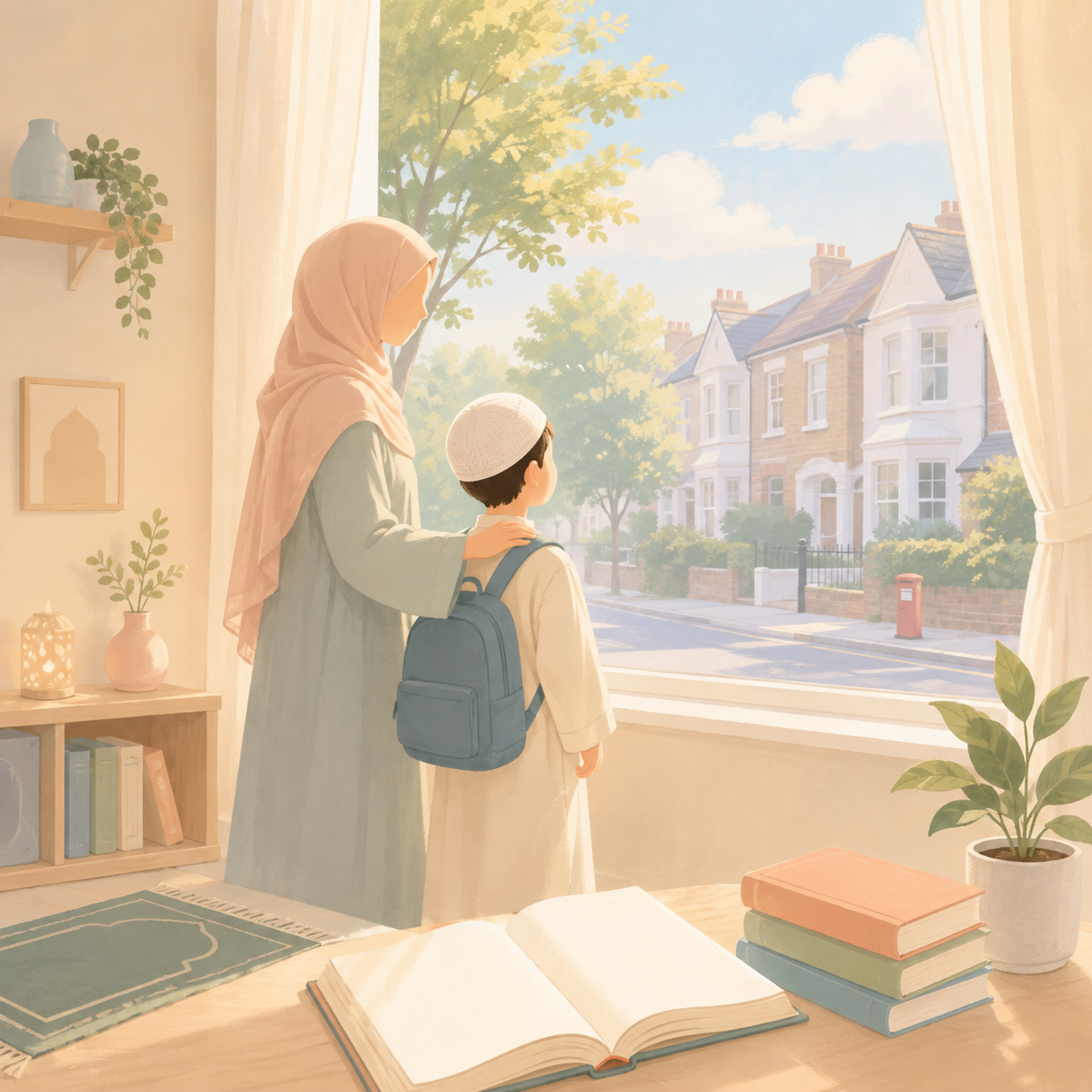
Islamic Identity for Muslim Children in the UK is one of the biggest concerns for many Muslim parents. Children may grow up speaking English, attending British schools, making friends from different backgrounds, and seeing many lifestyles around them. Parents naturally ask: how can my child stay confident as a Muslim without feeling isolated, pressured, or confused?
Islamic Identity for Muslim Children in the UK should not be built through fear alone. It should be built through love of Allah, understanding, gentle teaching, Quran connection, Islamic manners, role models, family routines, and honest conversations about life at school and outside the home.
Children need more than information. They need belonging. They need to know that Islam is not only something they learn in a lesson; it is a way of seeing life, making choices, treating people, worshipping Allah, and feeling connected to the Muslim Ummah.
This guide gives parents 8 helpful steps to build Islamic Identity for Muslim Children in the UK in a practical, gentle, and age-appropriate way.
Quick answer: Islamic Identity for Muslim Children in the UK grows when children know Allah, love Quran, practise Islamic manners, understand their beliefs, see Muslim role models, feel safe asking questions, and learn how to live confidently as Muslims at home, school, and in society.
| Parent Concern | Helpful Direction |
|---|---|
| My child knows they are Muslim but does not understand what it means. | Start with Allah, faith, gratitude, worship, and simple daily Islamic choices. |
| My child feels shy about being Muslim at school. | Build confidence through knowledge, calm conversations, and practical school support. |
| My child sees different values outside the home. | Teach Islamic values with wisdom, examples, and open discussion, not only warnings. |
| My child finds Islamic lessons boring. | Use stories, real-life examples, Quran meanings, role models, and child-friendly discussion. |
Table of Contents
- Why Islamic Identity Matters for Muslim Children in the UK
- Islamic Identity for Muslim Children in the UK: 8 Helpful Steps
- Supporting Muslim Identity at School
- How to Build Islamic Identity by Age
- Simple Home Routine for Islamic Identity
- Common Mistakes Parents Should Avoid
- How Sibghah Academy Supports Islamic Identity
- FAQ
Why Islamic Identity Matters for Muslim Children in the UK
Islamic Identity for Muslim Children in the UK matters because children are not growing up in a neutral environment. They are learning from home, school, friends, media, online content, and the wider culture around them.
If children do not receive a clear, loving, and practical Islamic foundation, they may begin to see Islam as something separate from real life. They may think Islam is only for weekends, mosque, Ramadan, or rules from parents.
A strong Islamic identity helps children understand who they are, what they believe, why they worship Allah, how they should treat others, and how to make choices when they face confusion or pressure.
Building Islamic Identity for Muslim Children in the UK is not about making children afraid of the world. It is about helping them carry Islam with clarity and confidence wherever they go.
Children with a stronger Islamic identity can begin to understand that they can be kind classmates, respectful citizens, confident Muslims, loving family members, and servants of Allah at the same time.
This is why Islamic identity should include belief, worship, manners, Quran, Arabic, family culture, school confidence, and emotional belonging.
Want your child to feel more confident as a Muslim?
Sibghah Academy can help your child learn Islamic beliefs, manners, Quran connection, stories, and Muslim identity through gentle live online lessons.
Islamic Identity for Muslim Children in the UK: 8 Helpful Steps
The following steps are practical ways to build Islamic Identity for Muslim Children in the UK without turning Islam into pressure or constant lectures.
1. Start with Knowing Allah in a Loving Way
The foundation of Islamic identity is knowing Allah. Before children can feel proud to be Muslim, they need to understand who Allah is, why we worship Him, and how Allah’s Names connect to daily life.
Children should hear about Allah’s mercy, care, knowledge, generosity, power, wisdom, and nearness. They should learn that Allah created them, provides for them, hears their dua, sees their good actions, and loves what is good.
One powerful Quranic example of faith-based parenting is the advice of Luqman to his son:
Arabic: يَا بُنَيَّ لَا تُشْرِكْ بِاللَّهِ ۖ إِنَّ الشِّرْكَ لَظُلْمٌ عَظِيمٌ
English: “O my dear son! Never associate anything with Allah in worship, for associating others with Him is truly the worst of all wrongs.”
Source: Quran.com — Surah Luqman 31:13
This teaches parents an important lesson: Islamic identity begins with Tawheed. But for children, Tawheed should be explained with love, clarity, and age-appropriate examples.
If you want to build Islamic Identity for Muslim Children in the UK, begin with simple questions: Who created us? Who gives us food? Who hears our dua? Who do we worship? Why do we say Alhamdulillah?
You may also find this guide useful: Teach Children About Allah.
2. Make Islam Visible in Daily Life
Children need to see Islam lived, not only explained. If Islam appears only as a lesson, a correction, or a warning, the child may not feel emotionally connected to it.
To build Islamic Identity for Muslim Children in the UK, make Islam part of normal home life:
- Say Bismillah before eating.
- Say Alhamdulillah for blessings.
- Make short duas together.
- Let your child see you praying.
- Speak about Allah’s creation during walks.
- Connect good manners to Islam.
- Keep Quran recitation present in the home.
- Celebrate Ramadan and Eid with meaning, not only decoration.
Small repeated moments shape identity. A child who hears “Alhamdulillah” every day may slowly understand that gratitude is part of being Muslim.
Islamic Identity for Muslim Children in the UK grows when Islam feels natural, warm, and connected to family life.
3. Build a Gentle Quran Connection
The Quran is central to Muslim identity. Children should not see Quran only as something they must memorize or be tested on. They should also feel that Quran is guidance, comfort, and connection with Allah.
To build Quran connection, parents can:
- Play short recitation at home.
- Read short surahs with meaning.
- Help children memorize at a calm pace.
- Praise effort, not only speed.
- Explain one simple lesson from a surah.
- Connect Quran to real life.
A child’s Quran journey can include reading, recitation, memorization, revision, Tajweed, and understanding. But the emotional connection matters too.
If Islamic Identity for Muslim Children in the UK is built without Quran connection, it may become cultural only. Quran helps children connect their identity to Allah’s words.
If your child struggles with Quran motivation, read: Help Your Child Love Quran.
4. Teach Islamic Manners as Identity in Action
Islamic identity is not only what a child says they believe. It is also how they behave. Children need to learn that honesty, kindness, respect, patience, gratitude, cleanliness, and good speech are part of being Muslim.
The Prophet ﷺ taught mercy and good conduct with the young and the old:
Arabic: لَيْسَ مِنَّا مَنْ لَمْ يَرْحَمْ صَغِيرَنَا، وَيُوَقِّرْ كَبِيرَنَا، وَيَأْمُرْ بِالْمَعْرُوفِ، وَيَنْهَ عَنِ الْمُنْكَرِ
English: “He is not one of us who does not have mercy upon our young, respect our elders, and command good and forbid evil.”
This meaning is very important for Islamic Identity for Muslim Children in the UK. Children need to see that Islam teaches mercy, respect, courage, responsibility, and good character.
Parents can teach Islamic manners through real daily moments:
- Tell the truth after a mistake.
- Say sorry and fix what happened.
- Use kind words with siblings.
- Respect parents and elders.
- Thank Allah and thank people.
- Show patience when waiting.
- Help someone without being asked.
You can also read: Islamic Manners for Kids.
5. Use Stories and Muslim Role Models
Stories are one of the strongest ways to build Islamic Identity for Muslim Children in the UK. Children remember people, choices, emotions, and consequences more easily than abstract instructions.
Stories of the Prophets help children understand patience, trust in Allah, courage, dua, and obedience. Stories of the companions help children see real Muslim role models who loved Allah, followed the Prophet ﷺ, served Islam, and showed strong character.
After a story, ask simple questions:
- What did this person believe?
- How did they trust Allah?
- What good manner did they show?
- What can we learn from this story?
- How can we practise this today?
Islamic Identity for Muslim Children in the UK becomes stronger when children have Islamic heroes, not only entertainment heroes.
Useful next reads include Stories of the Prophets for Kids and Lives of the Companions for Kids.
6. Help Children Handle School with Confidence
For many parents, school is one of the biggest concerns when thinking about Islamic Identity for Muslim Children in the UK. Children may face questions about fasting, prayer, halal food, Eid, hijab, Quran, or why they do not do certain activities.
Children need calm language to explain themselves. They do not need to argue with everyone, but they should feel confident enough to say simple things such as:
- “I am Muslim.”
- “I fast in Ramadan.”
- “I pray because I worship Allah.”
- “I eat halal food.”
- “Eid is a special celebration for Muslims.”
Parents can also speak with schools when needed. MEND’s “Nurturing Muslim Identities” resources discuss helping young Muslims feel comfortable and confident in their faith, especially in school settings. The UK government also has guidance for schools on tackling race and faith targeted bullying online and face to face. The Muslim Council of Britain has guidance for schools on reflection spaces and prayer rooms.
Helpful external resources:
- MEND — Nurturing Muslim Identities
- GOV.UK — Tackling Race and Faith Targeted Bullying
- Muslim Council of Britain — Reflection Spaces Guidelines
Supporting school confidence is a practical part of building Islamic Identity for Muslim Children in the UK. Children should not feel that their Muslim identity disappears when they leave the home.
7. Connect Arabic to Muslim Identity
Arabic is not the only part of Islamic identity, but it can be a powerful connection. Arabic helps children read Quran, understand Islamic words, recognize duas, and feel closer to Muslim heritage.
For children in the UK, Arabic may not be used in school or with friends. This means parents need to make Arabic meaningful and manageable at home.
Start with simple Arabic words connected to faith and daily life:
- Allah
- Quran
- Salah
- Dua
- Rahmah
- Shukr
- Sabr
- Salam
Islamic Identity for Muslim Children in the UK can become stronger when children understand the words they hear in worship, Quran lessons, Islamic Studies, and family life.
You can use this guide to begin: Arabic Words for Kids.
8. Build Belonging Through Family, Community, and Teachers
Children need to feel that being Muslim is not strange or lonely. They need family routines, positive Muslim friendships where possible, Islamic learning spaces, and teachers who make Islam feel clear and meaningful.
Belonging helps children feel that Islam is part of who they are. It also gives them support when they face questions, confusion, or pressure.
To support belonging, parents can:
- Pray together when possible.
- Attend family-friendly Islamic events.
- Connect with other Muslim families.
- Celebrate Eid with meaning.
- Choose Islamic lessons that allow questions.
- Let children see Muslims who are kind, educated, confident, and principled.
Strong Islamic Identity for Muslim Children in the UK is not built in one conversation. It is built through repeated experiences of faith, love, learning, and belonging.
Sibghah Teacher Note: Islamic identity should not make a child feel trapped between two worlds. It should help the child understand how to be a confident Muslim with good manners, clear beliefs, and a strong connection to Allah.
Supporting Muslim Identity at School
School life is a major part of Islamic Identity for Muslim Children in the UK. Children spend many hours at school, and they may face situations where their faith feels visible or different.
Parents can support children by preparing simple responses before difficult moments happen. For example, before Ramadan, talk about what fasting means. Before Eid, explain how your child can speak about Eid. If your child wears Islamic clothing, help them answer basic questions calmly.
Children should also know when to ask an adult for help. If a child is mocked, excluded, or bullied because of being Muslim, parents should take it seriously and communicate with the school through the proper channels.
Practical school support may include:
- Explaining Ramadan needs to the teacher.
- Discussing halal food requirements if relevant.
- Asking about prayer or reflection space where appropriate.
- Helping the child speak about Eid confidently.
- Keeping communication respectful and clear with school staff.
- Reporting faith-based bullying if it occurs.
Islamic Identity for Muslim Children in the UK becomes stronger when children feel supported at home and know that parents can help them navigate school life with confidence.
Does your child need confidence in Islamic identity?
Sibghah Academy can support your child with Islamic Studies lessons that connect faith, manners, Quran, stories, and real life as a Muslim child in the UK.
How to Build Islamic Identity by Age
Islamic Identity for Muslim Children in the UK should be taught differently depending on the child’s age. Young children need simple routines. Older children need meaning, discussion, and space for questions.
Ages 5–6
At this age, focus on love, routine, and simple words. Teach children that Allah created them, Allah loves what is good, and Muslims pray, make dua, say Bismillah, and thank Allah.
Use stories, pictures, family routines, and short reminders. Avoid long lectures.
Ages 7–9
Children at this age can begin to understand reasons. Explain why Muslims pray, why Quran matters, why we fast, and why manners are part of Islam.
This is a good age for Islamic Studies, stories of the Prophets, basic Aqeedah, and simple fiqh of daily worship.
Ages 10–12
Children may begin comparing values at home and school. They need calm conversations about identity, friendship, online content, modesty, prayer, and confidence.
At this age, Islamic Identity for Muslim Children in the UK should include discussion, not only instruction.
Ages 13–15
Teenagers need respect, trust, and meaningful answers. They may have deeper questions about faith, society, peer pressure, purpose, and belonging.
Parents should listen carefully, avoid panic, and help teenagers connect Islamic knowledge to real choices and personal responsibility.
Simple Home Routine for Islamic Identity
A simple routine can make Islamic Identity for Muslim Children in the UK feel natural at home.
| Daily Moment | Islamic Identity Practice | Parent Phrase |
|---|---|---|
| Morning | Dua and intention | “Let’s ask Allah to help us today.” |
| Meal time | Gratitude | “Bismillah. Alhamdulillah for this food.” |
| After school | Identity conversation | “Did anything today make you think about being Muslim?” |
| Quran time | Connection with Quran | “Let’s read slowly and understand one small meaning.” |
| Sibling conflict | Islamic manners | “How can we fix this with kindness?” |
| Bedtime | Reflection and dua | “What blessing can we thank Allah for today?” |
Small routines build identity slowly. Parents do not need to make every moment a formal lesson. A short sincere reminder can be enough.
Important Quran Lesson for Daily Identity
Luqman’s advice to his son gives parents a beautiful model for building faith, worship, values, and patience:
Arabic: يَا بُنَيَّ أَقِمِ الصَّلَاةَ وَأْمُرْ بِالْمَعْرُوفِ وَانْهَ عَنِ الْمُنكَرِ وَاصْبِرْ عَلَىٰ مَا أَصَابَكَ ۖ إِنَّ ذَٰلِكَ مِنْ عَزْمِ الْأُمُورِ
English: “O my dear son! Establish prayer, encourage what is good and forbid what is evil, and endure patiently whatever befalls you. Surely this is a resolve to aspire to.”
Source: Quran.com — Surah Luqman 31:17
This verse shows that Islamic parenting is not only about information. It includes worship, moral courage, patience, and real-life action.
For Islamic Identity for Muslim Children in the UK, this is especially important because children need to learn how to pray, do good, avoid wrong, and remain patient when they feel different or challenged.
Common Mistakes Parents Should Avoid
Parents usually want to protect their children, but some methods can make Islamic identity feel heavy or negative.
Only using fear
Children need to know accountability, but if Islam is always taught through fear, they may struggle to love it. Balance reminders with mercy, hope, gratitude, and love of Allah.
Turning every issue into a lecture
Long lectures often make children stop listening. Short, repeated, sincere reminders are usually more effective.
Ignoring the child’s real questions
If a child asks a question about Islam, do not panic. Questions can be a door to stronger faith when answered calmly and honestly.
Comparing the child to others
Comparison can create shame. Every child has a different pace in Quran, Arabic, worship, and Islamic understanding.
Making Islam feel separate from daily life
If Islam appears only during lessons, children may not connect it to real life. Connect Islam to food, school, friendships, feelings, choices, and family routines.
Ignoring school challenges
Children may not always tell parents when they feel different or uncomfortable at school. Ask gentle questions and keep communication open.
Teaching identity without belonging
Children need to feel part of something. Family routines, Muslim friends, Islamic teachers, community moments, and positive role models all help.
How Sibghah Academy Supports Islamic Identity
Sibghah Academy offers live online Quran, Arabic, and Islamic Studies lessons for Muslim children aged 5–15.
For families who want to build Islamic Identity for Muslim Children in the UK, Sibghah Academy supports children through structured Islamic learning that connects faith to daily life.
Children can learn about Allah through the Names of Allah Course for Kids. They can learn Islamic beliefs, worship, manners, and daily values through the Minhaj Al-Muslim Course for Kids. They can build love for Islamic role models through Stories of the Prophets for Kids and Lives of the Companions for Kids.
Sibghah Academy also supports Quran and Arabic learning, because Quran and Arabic can strengthen Islamic belonging and help children feel more connected to their faith.
One-to-one online lessons can be especially helpful because children can ask questions, speak openly, learn at their level, and receive teacher attention. This matters when building Islamic Identity for Muslim Children in the UK, because each child’s confidence, questions, and challenges may be different.
The goal is not only to teach Islamic information. The goal is to help children understand Islam, love it, practise it, and feel confident as Muslims in their daily lives.
Quick Parent Checklist
Use this checklist when building Islamic Identity for Muslim Children in the UK:
- Does my child know who Allah is in a loving and clear way?
- Does my child hear Quran regularly?
- Does my child understand basic Islamic beliefs?
- Do we connect Islamic manners to daily life?
- Does my child have Muslim role models?
- Can my child explain simple Muslim practices at school?
- Does my child feel safe asking questions about Islam?
- Do we use Arabic words connected to Islamic life?
- Does my child have a structured Islamic Studies path?
FAQ: Islamic Identity for Muslim Children in the UK
1. What does Islamic Identity for Muslim Children in the UK mean?
Islamic Identity for Muslim Children in the UK means helping children understand, love, and practise Islam confidently while living in a British environment.
2. Why is Islamic identity important for Muslim children?
Islamic identity helps children know who they are, what they believe, why they worship Allah, and how to make choices based on Islamic values.
3. How can parents build Islamic Identity for Muslim Children in the UK?
Parents can build Islamic Identity for Muslim Children in the UK through love of Allah, Quran connection, Islamic manners, stories, family routines, Arabic, and school confidence.
4. Should Islamic identity be taught through rules only?
No. Rules matter, but children also need love, meaning, examples, stories, belonging, and gentle explanation.
5. How can I help my child feel proud to be Muslim at school?
Teach simple answers about Islam, discuss school situations calmly, celebrate Muslim identity at home, and communicate with the school when needed.
6. What if my child feels embarrassed about being Muslim?
Listen without judgment, ask what happened, give them simple language, connect them to positive Muslim role models, and build confidence slowly.
7. How does Quran help Islamic identity?
Quran connects children to Allah’s words and helps them understand guidance, worship, values, and spiritual belonging.
8. Does Arabic help Islamic Identity for Muslim Children in the UK?
Yes. Arabic helps children recognize Islamic words, Quran language, duas, and Muslim heritage, even if they are still beginners.
9. What Islamic topics should children learn first?
Children should begin with knowing Allah, the Pillars of Islam and Iman, Quran, basic worship, Islamic manners, dua, and stories of the Prophets.
10. How can stories build Islamic identity?
Stories show children examples of faith, patience, courage, honesty, kindness, and trust in Allah through real Islamic role models.
11. How can I teach Islamic identity without pressure?
Use short reminders, warm routines, stories, open questions, and practical examples. Avoid making Islam feel like constant criticism.
12. What should I do if my child asks difficult questions about Islam?
Stay calm, thank your child for asking, answer honestly at their level, and seek qualified support if the question needs deeper knowledge.
13. Can online Islamic Studies help build identity?
Yes. Live online Islamic Studies can help children learn beliefs, manners, worship, stories, and Islamic values with teacher guidance.
14. How does Sibghah Academy support Islamic Identity for Muslim Children in the UK?
Sibghah Academy supports Islamic Identity for Muslim Children in the UK through Quran, Arabic, and Islamic Studies lessons that connect faith to daily life.
15. What if my child knows Islamic facts but does not practise them?
This is common. Children need repetition, role models, encouragement, routines, and emotional connection, not information alone.
16. What is the best first step for parents?
The best first step is to make Islam warm and visible at home: talk about Allah, pray, make dua, read Quran, practise manners, and answer questions gently.
Book your child’s free Islamic Studies trial on WhatsApp
Islamic Identity for Muslim Children in the UK grows through faith, Quran connection, Islamic manners, stories, Arabic, and real-life guidance.
Send Sibghah Academy a WhatsApp message with your child’s age and learning goal, and we will help you choose the right Islamic Studies path.