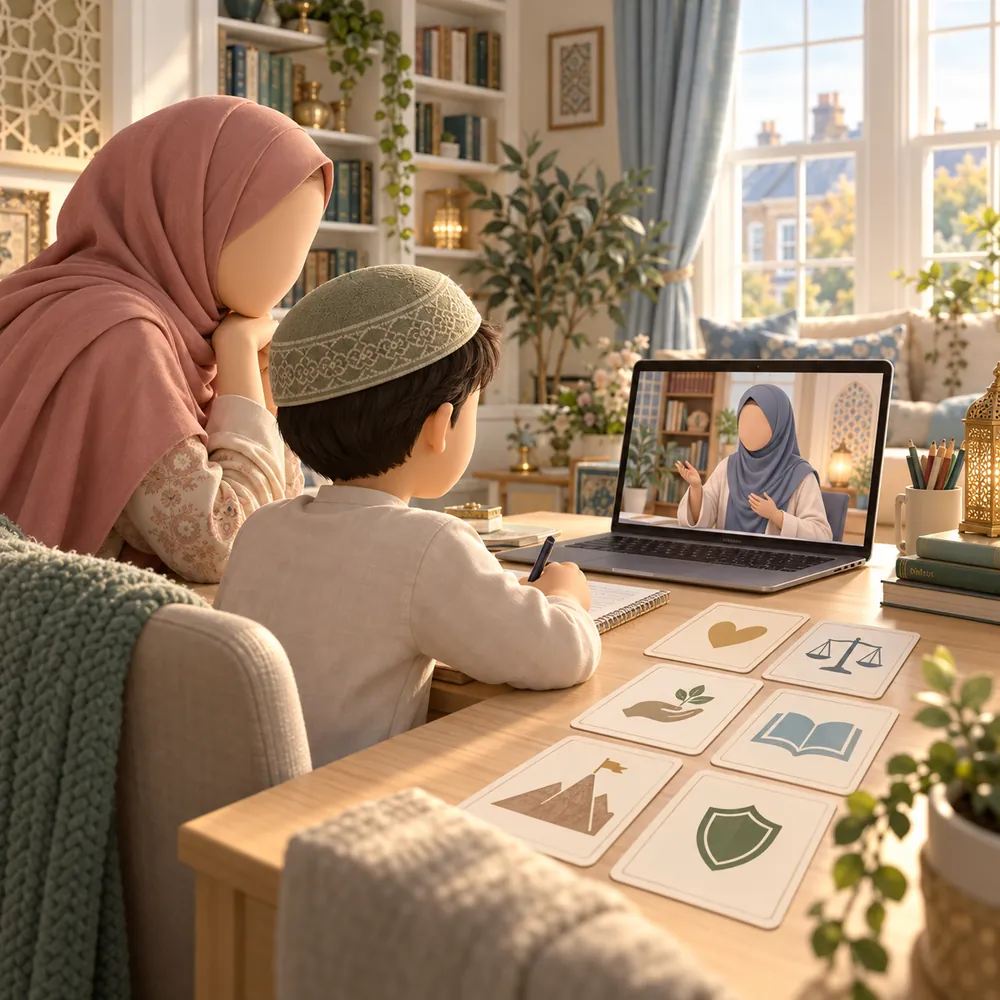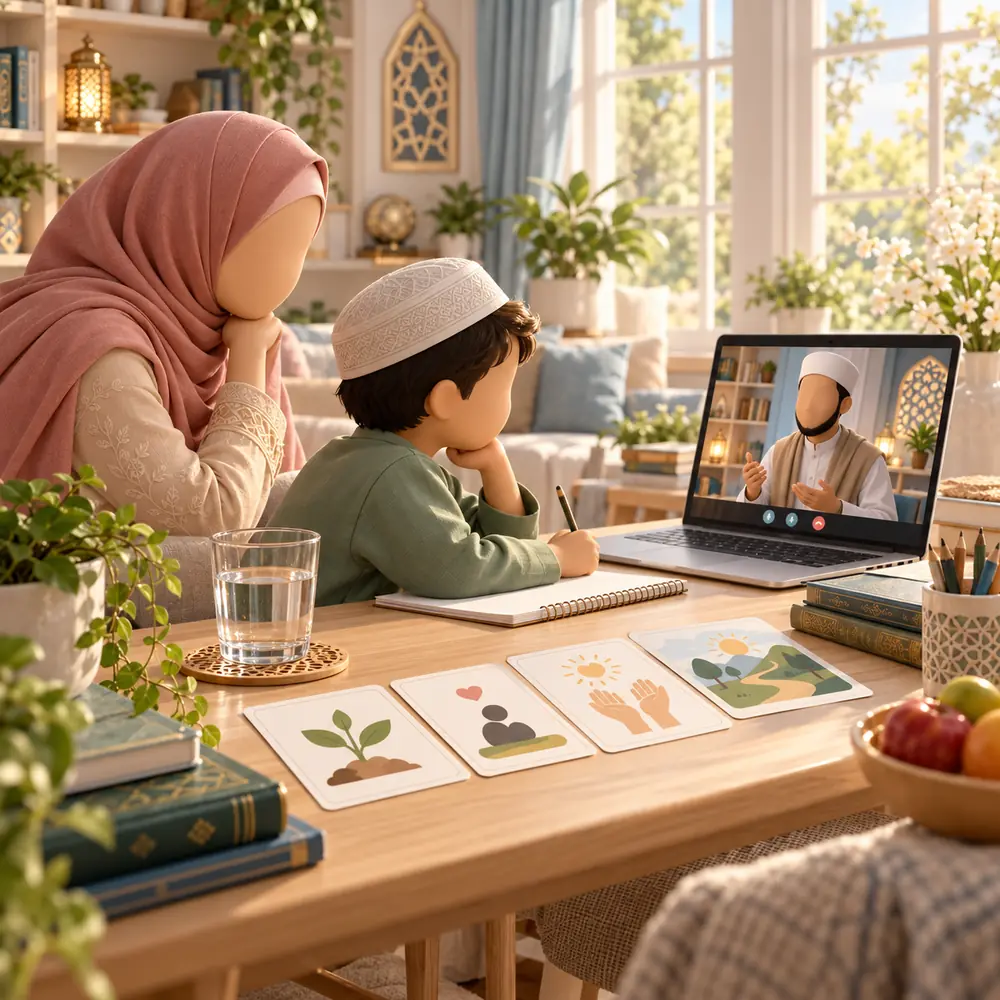

Learning Quranic Arabic can help Muslim children build a stronger connection with the Quran, understand familiar Quranic words, and feel more confident when reading, memorizing, or listening to the words of Allah.
The answer depends on the child’s current level. Some children cannot read Arabic letters yet. Some can read, but slowly. Some can recite Quran, but do not understand the words. Others know basic Arabic, but need help connecting it to Quranic meanings.
This guide explains Learning Quranic Arabic for kids in a simple parent-friendly way, so you can understand the right path for your child without feeling overwhelmed.
The goal is not to make children study Arabic grammar in a heavy academic way. The goal is to help them read better, understand more, and feel that the Quran is close to their heart and daily life.

Table of Contents
What Is Quranic Arabic?
Quranic Arabic is the Arabic of the Quran. It includes the words, expressions, structures, and meanings that appear in the Quran.
For children, Quranic Arabic does not mean studying every advanced grammar rule at the beginning. It starts with simpler goals:
- Recognizing Arabic letters and sounds.
- Reading Quranic words correctly.
- Understanding common Quranic vocabulary.
- Connecting repeated words to simple meanings.
- Listening to Quran with more awareness.
- Building love and respect for the words of Allah.
For younger children, Learning Quranic Arabic should feel gradual. They first need reading foundations, then Quran reading confidence, then simple meanings, and later deeper understanding.
Child-friendly explanation: Quranic Arabic helps your child understand some of the words Allah uses in the Quran, step by step.
Parents can use trusted tools such as Quran.com to read Quran verses with translation, but children still need age-appropriate guidance so meanings are explained gently and correctly.
Does Your Child Need Arabic Before Quran?
Your child does not need to speak fluent Arabic before starting Quran reading or memorization. Many children begin Quran while they are still learning Arabic reading basics.
But if the child cannot recognize Arabic letters, short vowels, long vowels, or basic word patterns, Quran reading may become stressful. In that case, building Arabic reading foundations first can make Quran learning much smoother.
A simple way to think about it is:
| Child’s Current Level | Best Starting Point | Why It Helps |
|---|---|---|
| Cannot recognize Arabic letters | Noor Al-Bayan | Builds letter and sound foundations. |
| Knows letters but struggles with vowels | Arabic reading foundations | Helps the child read words more accurately. |
| Can read Arabic slowly | Quran reading practice | Builds fluency and confidence. |
| Can recite but needs correction | Quran and Tajweed support | Improves pronunciation and recitation. |
| Reads Quran but wants meaning | Quranic Arabic vocabulary | Connects words to simple understanding. |
This is why Learning Quranic Arabic should not be one fixed path for every child. The right path depends on the child’s reading level and learning goal.
Not sure where your child should start?
If your child needs Arabic reading, Quran recitation, or Quranic Arabic support, Sibghah Academy can help you understand the right starting point.
Learning Quranic Arabic: 7 Easy Steps for Kids
Learning Quranic Arabic becomes easier when parents see it as a step-by-step journey, not a single course or one big goal.
1. Start with Arabic Letter Sounds
The first step is helping your child recognize Arabic letters and pronounce their sounds correctly.
Children should not only memorize letter names. They need to know how letters sound when they are read. This is especially important for non-native Arabic-speaking children who use English most of the day.
If your child is still at this stage, the Noor Al-Bayan Course for Kids can help them build the reading foundation they need before moving deeper into Quran reading.
2. Teach Short Vowels Clearly
Short vowels are Fatha, Kasra, and Damma. These small signs change how Arabic letters are read.
A child who does not understand short vowels will struggle to read Quranic words correctly. This is why vowel practice is a key part of Learning Quranic Arabic for children.
Parents can practise very short examples at home, but the child may still need a teacher to correct pronunciation and keep the pace suitable.
3. Build Long Vowel Awareness
Long vowels help children understand the difference between short and stretched sounds. This later supports better Quran recitation and basic Tajweed.
For example, a child needs to hear the difference between a short “a” and a long “ā” sound. This is not only a reading skill; it also affects Quran recitation.
If your child is already reading Quran and struggles with stretched sounds, this guide may help: Simple Explanation of Madds in Tajweed.
4. Move from Words to Quranic Phrases
Once your child can read individual words, the next step is reading short Quranic phrases slowly and clearly.
This helps the child move from “I know the letters” to “I can read connected Quranic text.”
At this stage, reading should be calm and guided. Children should not be pushed to read long passages too quickly.
5. Learn Common Quranic Words
Many Quranic words appear again and again. When children learn simple repeated words, the Quran begins to feel more familiar.
Examples of common meanings children may gradually learn include:
- Allah
- Rabb
- Rahmah
- Jannah
- Iman
- Salah
- Sabr
- Taqwa
For older children or parents who want to explore Quranic words more deeply, the Quranic Arabic Corpus can be a helpful reference. Younger children, however, need a simpler teacher-led approach.
6. Connect Meaning with Recitation
Children should not feel that Quran is only sounds without meaning. Even simple meanings can make a big difference.
For example, when a child learns that “Rabb” refers to Allah as Lord, Creator, and Sustainer, the word becomes more meaningful when they hear it in Quran.
This is one of the most beautiful parts of Learning Quranic Arabic: children begin to recognize familiar meanings during recitation.
7. Choose the Right Next Path
After the reading foundation, your child may need one of three paths:
- Quran Memorization: if the main goal is memorizing Quran with correct recitation.
- Quranic Arabic Understanding: if the goal is recognizing Quranic words and meanings.
- Arabic Language Development: if the goal is broader Arabic reading, writing, listening, and speaking.
Sibghah Academy helps parents choose the right path based on the child’s level, not guesswork.
Want a free Arabic reading recommendation?
A short level check can help you know whether your child needs Noor Al-Bayan, Quran memorization, Tajweed support, or a wider Arabic language path.
How Parents Can Support Quranic Arabic at Home
Parents do not need to be Arabic experts to support their children. Small, consistent habits can make Learning Quranic Arabic easier and warmer at home.
Keep Practice Short
Five to ten minutes of focused practice is often better than a long session that makes the child tired. Choose one small reading goal each time.
Listen to Quran Together
Listening helps children absorb sounds, rhythm, and pronunciation. Choose short surahs or short passages and listen calmly.
Repeat Familiar Words
When your child hears a word repeatedly, pause and remind them of its meaning. Keep it simple. The goal is connection, not a vocabulary test.
Ask Simple Meaning Questions
Instead of asking difficult grammar questions, ask:
- What word did you recognize?
- What does this word remind us of?
- What does this ayah teach us?
- How can we act on this meaning today?
Do Not Rush Fluency
Children need time. A child may first recognize letters, then vowels, then words, then short phrases, then meanings. Each stage matters.
Common Mistakes Parents Should Avoid
When parents care deeply about Quran learning, they sometimes rush without meaning to. Here are common mistakes to avoid.
| Mistake | Why It Hurts Progress | Better Approach |
|---|---|---|
| Starting with advanced grammar | The child may feel Quranic Arabic is too hard. | Start with reading, sounds, and simple meanings. |
| Skipping Arabic reading basics | The child struggles with Quran words. | Build a foundation through Noor Al-Bayan. |
| Expecting fast understanding | The child feels pressured. | Teach one word or meaning at a time. |
| Using translation only | The child may not connect with Arabic words. | Use translation as support, not a replacement. |
| No teacher correction | Pronunciation mistakes may become habits. | Use live teacher support for reading and recitation. |
The best path for Learning Quranic Arabic is balanced: Arabic reading foundation, simple meanings, Quran recitation, and steady revision.
How Sibghah Academy Supports Quranic Arabic Learning
Sibghah Academy offers live online Quran, Arabic, and Islamic Studies lessons for Muslim children aged 5–15.
For children who are complete beginners, the Noor Al-Bayan Course for Kids helps build Arabic reading foundations, including letters, sounds, short vowels, long vowels, Sukoon, Shaddah, and early reading fluency.
For children who can read and are ready for Quran learning, the Online Quran Memorization Program for Kids supports memorization, recitation, pronunciation, Tajweed, and revision.
For children who have completed reading foundations and need broader Arabic language development, the Arabic After Noor Al-Bayan – Takallam Series helps develop reading, writing, listening, and speaking skills.
This makes Learning Quranic Arabic more structured because each child can start from the right level instead of being placed in a course that is too easy or too difficult.
For parents comparing reading methods, this guide may also help: Difference Between Nour Al-Bayan and Al-Qaida Al-Noorania.
Book a free Quranic Arabic trial for your child
Sibghah Academy can help your child build Arabic reading foundations, Quran recitation confidence, and a stronger connection with Quranic meanings.
Parent Checklist Before Starting Quranic Arabic
Before choosing a course for your child, ask:
- Can my child recognize Arabic letters?
- Can my child read short vowels correctly?
- Does my child understand long vowels?
- Can my child read simple Arabic words?
- Does my child need Quran pronunciation correction?
- Is my goal Quran reading, memorization, or understanding?
- Does my child know any common Quranic words?
- Does my child need a gentle beginner path?
- Would live teacher support help my child stay consistent?
- Do I know what the next step should be after reading foundations?
If you answered “not sure” to several of these questions, your child may benefit from a short level check before starting.
Need help choosing the right Quranic Arabic path?
Send Sibghah Academy a WhatsApp message with your child’s age, Arabic reading level, and Quran goal. We will help you choose the most suitable starting point.
FAQ: Learning Quranic Arabic for Kids
1. What does Learning Quranic Arabic mean for kids?
Learning Quranic Arabic for kids means helping children read Quranic words, recognize common meanings, and connect more deeply with the Quran in an age-appropriate way.
2. Does my child need to speak Arabic before learning Quranic Arabic?
No. Your child does not need to speak fluent Arabic first. Many children start with Arabic reading foundations, then move gradually into Quran reading and simple meanings.
3. Should my child start with Noor Al-Bayan?
If your child cannot read Arabic letters, vowels, or words confidently, Noor Al-Bayan is often a strong starting point before Quran reading and memorization.
4. Is Quranic Arabic the same as modern spoken Arabic?
No. Quranic Arabic focuses on the language of the Quran, while modern spoken Arabic is used in daily conversation. Children may benefit from both, but they serve different goals.
5. Can children understand Quran without learning all Arabic grammar?
Children can begin understanding simple Quranic words and meanings without studying advanced grammar. Deeper understanding can grow gradually over time.
6. How can parents help with Learning Quranic Arabic at home?
Parents can support Learning Quranic Arabic by listening to Quran, reviewing familiar words, keeping practice short, and asking simple meaning-based questions.
7. What age should children start Quranic Arabic?
Many children can start Arabic reading foundations from around age 5, depending on attention span and readiness. Quranic vocabulary and meanings can be introduced gradually.
8. Is translation enough for understanding the Quran?
Translation helps, but it does not replace Quranic Arabic. Even learning simple repeated Arabic words can help children feel more connected to the Quran.
9. What comes after Arabic reading foundations?
After reading foundations, a child may move into Quran memorization, Tajweed support, Quranic Arabic vocabulary, or a broader Arabic language course such as Takallam.
10. Does Sibghah Academy teach Quranic Arabic?
Sibghah Academy supports Quranic Arabic learning through Arabic reading foundations, Quran memorization, Tajweed support, and Arabic language development according to the child’s level.
11. Can my child try a lesson before enrolling?
Yes. A free trial session can help parents understand the child’s current level and the most suitable learning path.
12. What is the best path for Learning Quranic Arabic?
The best path for Learning Quranic Arabic depends on your child’s level. Some children need Noor Al-Bayan first, others need Quran memorization, and others are ready for Arabic language development.
Book your child’s free Quranic Arabic trial on WhatsApp
Learning Quranic Arabic can help your child read Quran with more confidence, recognize familiar Quranic words, and build a stronger connection with the words of Allah.
If you are not sure where your child should start, send Sibghah Academy a WhatsApp message with your child’s age, Arabic reading level, and Quran goal. We will help you choose the right path.