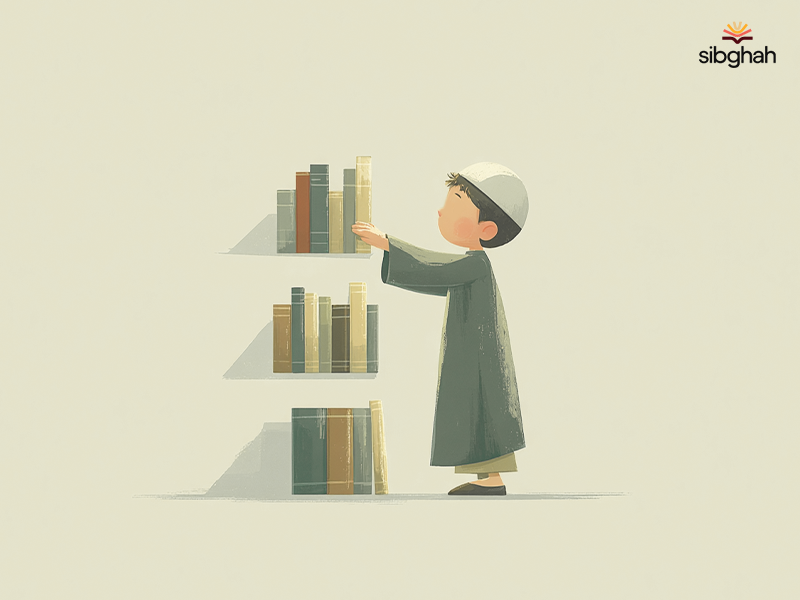
Many children know the names of some Prophets. They may have heard about Adam, Noah, Abraham, Joseph, Moses, Jonah, and Prophet Muhammad ﷺ. But knowing the story is not the same as understanding what the story teaches.
A child may know that Prophet Nuh عليه السلام built the ark, but not understand patience. A child may know that Prophet Yusuf عليه السلام was thrown into a well, but not understand forgiveness. A child may know that Prophet Musa عليه السلام faced Pharaoh, but not understand courage and trust in Allah.
This is why stories need to be taught in a way that connects the events to the child’s own life, choices, emotions, and Islamic identity.
For Muslim parents in the UK, teaching the Prophets’ stories can also help children feel more connected to Islam while growing up in a society where Islamic values may not always be part of daily school life.
This guide explains why Stories of the Prophets for Kids matter, what lessons children can learn, and how parents can use these stories to build faith and character at home.
Table of Contents
- Why Stories of the Prophets for Kids Matter Today
- What Children Learn from the Stories of the Prophets
- 7 Powerful Lessons from Stories of the Prophets for Kids
- How Parents Can Teach Prophet Stories at Home
- Storytelling vs Structured Islamic Learning
- How Sibghah Academy Teaches Stories of the Prophets
- FAQ
Why Stories of the Prophets for Kids Matter Today
Children learn deeply through stories.
A direct instruction like “be patient” may be forgotten quickly. But when a child hears about Prophet Ayyub عليه السلام and how he remained patient during hardship, patience becomes easier to understand.
A reminder like “trust Allah” may feel abstract. But when a child learns about Prophet Ibrahim عليه السلام and how he followed the truth with courage, trust in Allah becomes a living example.
Stories of the Prophets help children understand Islam through people, choices, tests, mistakes, repentance, courage, mercy, and hope.
They also give children role models who are different from the role models they may see online or at school. Instead of only admiring fame, appearance, or popularity, children learn to admire faith, honesty, patience, courage, and obedience to Allah.
The goal is not only for children to remember what happened. The deeper goal is for children to understand what Allah teaches us through these stories.
The Quran contains many stories of the Prophets and Messengers. Parents can also use trusted Quran reading tools such as Quran.com to read relevant verses with translations when appropriate for their child’s age.
Not sure how to start teaching your child Islamic stories?
If your child knows some Prophets’ names but does not yet understand the lessons behind the stories, Sibghah Academy can help you choose the right Islamic learning path.
What Children Learn from the Stories of the Prophets
A good lesson from the Prophets’ stories should help the child learn more than names and events.
Children should gradually learn:
- Who the Prophets were.
- Why Allah sent Messengers.
- How the Prophets called people to worship Allah.
- What tests the Prophets faced.
- How they showed patience, courage, honesty, and mercy.
- How children can apply these values in daily life.
- How Quranic stories strengthen faith and Islamic identity.
For children, the most powerful question after a story is not only “What happened?”
The better questions are:
- What did this Prophet teach us?
- What value can I practise today?
- How does this story help me trust Allah?
- What should I do when I make a mistake?
- How can I show courage, patience, or honesty?
This is how Stories of the Prophets for Kids become a tool for character building, not just storytelling.
7 Powerful Lessons from Stories of the Prophets for Kids
The Prophets’ stories are full of lessons. Here are seven powerful lessons Muslim parents can teach children in a simple and age-appropriate way.
| Prophet | Main Lesson | How Children Can Apply It |
|---|---|---|
| Adam عليه السلام | Repentance | Admit mistakes and return to Allah. |
| Noah عليه السلام | Patience | Keep doing what is right even when it is hard. |
| Abraham عليه السلام | Courage | Follow the truth with confidence. |
| Joseph عليه السلام | Forgiveness | Avoid revenge and choose good character. |
| Moses عليه السلام | Trust in Allah | Be brave when facing fear or difficulty. |
| Jonah عليه السلام | Returning to Allah | Remember Allah during sadness and hardship. |
| Muhammad ﷺ | Mercy and honesty | Treat people with kindness and truthfulness. |
1. Adam عليه السلام: Repentance and Returning to Allah
The story of Prophet Adam عليه السلام teaches children that making a mistake is not the end. What matters is returning to Allah, admitting the mistake, and asking for forgiveness.
This lesson is very important for children because many children hide mistakes out of fear. Through the story of Adam عليه السلام, they learn that Allah loves sincere repentance.
Parent message:
“When you make a mistake, do not hide from Allah. Return to Him, say sorry, and try again.”
2. Noah عليه السلام: Patience When Others Do Not Listen
Prophet Nuh عليه السلام called his people for a very long time. Many rejected him, but he remained patient and continued obeying Allah.
Children can learn that doing the right thing is still valuable even when other people do not understand or support it.
This lesson helps Muslim children in the UK when they feel different at school because of salah, halal food, Ramadan, modesty, or Islamic manners.
3. Abraham عليه السلام: Courage to Follow the Truth
Prophet Ibrahim عليه السلام teaches children courage, certainty, and trust in Allah. He stood for the truth even when the people around him were following falsehood.
Children need this lesson because they often face pressure to copy others. Ibrahim عليه السلام teaches them that truth is not measured by how many people follow it.
Parent message:
“You can be kind to people and still be strong in what you believe.”
4. Joseph عليه السلام: Patience, Modesty, and Forgiveness
The story of Prophet Yusuf عليه السلام is one of the most powerful stories for children and teenagers. It teaches patience during hardship, modesty, trust in Allah, and forgiveness after being wronged.
Children may not understand every detail at a young age, but they can understand the main values:
- Do not let jealousy control you.
- Be patient when life feels unfair.
- Keep your character even when others behave badly.
- Forgiveness is a sign of strength.
Older children can also benefit from reading selected Quranic passages with a parent or teacher. Tools like Surah Yusuf on Quran.com can support family reading when used with guidance.
5. Moses عليه السلام: Courage Against Fear and Oppression
Prophet Musa عليه السلام faced Pharaoh, one of the most powerful tyrants in history. His story teaches children that courage does not mean never feeling afraid. Courage means trusting Allah and doing what is right despite fear.
This lesson helps children understand that Allah supports those who rely on Him and stand for truth.
For children, the story of Musa عليه السلام can also teach:
- Do not let fear stop you from obeying Allah.
- Ask Allah for help when something feels difficult.
- Good can overcome oppression by Allah’s permission.
6. Jonah عليه السلام: Remembering Allah in Hard Times
Prophet Yunus عليه السلام teaches children that even when someone feels trapped, sad, or overwhelmed, the door back to Allah is always open.
His story helps children understand the power of dhikr, dua, and returning to Allah during hardship.
Parent message:
“When you feel worried or stuck, remember Allah. He hears you wherever you are.”
7. Muhammad ﷺ: Mercy, Honesty, and Leadership
The life of Prophet Muhammad ﷺ gives children the greatest example of mercy, honesty, patience, courage, leadership, and care for others.
Children should not only know that he was the final Messenger. They should also learn how his character guides everyday choices:
- Speak the truth.
- Be gentle with others.
- Show mercy to younger children.
- Respect parents and elders.
- Keep promises.
- Forgive when possible.
- Care about people’s feelings.
Parents can also use trusted hadith references such as Sunnah.com when checking narrations or exploring authentic hadith with older children.
Would you like your child to learn these stories with meaning?
Sibghah Academy helps children move beyond memorising events. We help them understand the values, faith, and Islamic lessons behind the Prophets’ stories.
How Parents Can Teach Prophet Stories at Home
Parents do not need to turn every story into a long lecture. Children often learn better from short, warm, repeated conversations.
Here are simple ways to teach Stories of the Prophets for Kids at home.
Start with One Story at a Time
Do not rush through many stories in one sitting. Choose one Prophet, one event, and one main value.
For example:
- Adam عليه السلام: repentance.
- Nuh عليه السلام: patience.
- Ibrahim عليه السلام: courage.
- Yusuf عليه السلام: forgiveness.
- Musa عليه السلام: trust in Allah.
Ask Reflection Questions
Instead of asking only factual questions, ask questions that help children think.
- What did this Prophet do when things were hard?
- What can we learn from this story?
- When can you practise this value at school?
- What would you do if you were in a difficult situation?
Connect the Story to Daily Life
The story becomes more meaningful when the child can apply it.
If you are teaching patience, connect it to waiting, sharing, learning, or dealing with disappointment. If you are teaching honesty, connect it to schoolwork, promises, or telling the truth after a mistake.
Keep the Language Age-Appropriate
Younger children need simple language and clear morals. Older children can handle more discussion, deeper questions, and more detailed explanations.
Repeat the Value During the Week
If your child learned patience from Nuh عليه السلام, mention patience again during the week. If your child learned courage from Ibrahim عليه السلام, remind them gently when they need to make a good choice.
Storytelling vs Structured Islamic Learning
Storytelling is beautiful, but children also benefit from structure.
Without structure, the child may hear many stories but forget the values. With structure, the child begins to connect each story to faith, worship, manners, and Muslim identity.
| Simple Storytelling | Structured Islamic Learning |
|---|---|
| The child hears what happened. | The child understands what the story teaches. |
| The story may be remembered briefly. | The value is reviewed and applied. |
| The parent may not know what to focus on. | The teacher guides the lesson clearly. |
| Questions may be answered randomly. | Questions are handled in an age-appropriate way. |
| The child may know names and events. | The child builds faith, character, and identity. |
This is why many parents choose a structured Islamic Studies path alongside home storytelling.
If you want a broader Islamic learning path, you may also explore Sibghah’s Islamic Studies Program for Kids, which supports children in Aqeedah, worship, manners, and Islamic values.
How Sibghah Academy Teaches Stories of the Prophets for Kids
Sibghah Academy offers live online Islamic learning for Muslim children aged 5–15, including Quran, Arabic, and Islamic Studies.
The Stories of the Prophets Course for Kids helps children learn about the Prophets and Messengers in a simple, meaningful, and age-appropriate way.
The course introduces children to selected stories from the lives of the Prophets, while helping them understand the values shown in their lives: faith, patience, courage, trust in Allah, mercy, forgiveness, and good character.
At Sibghah Academy, these stories are not taught as information only. Children are encouraged to think, ask questions, reflect on the values, and connect what they learn to daily life.
This makes the course especially helpful for Muslim children growing up in the UK or other Western countries, where parents often want stronger support in building Islamic identity at home.
Children who need a wider Islamic Studies foundation may also benefit from the Minhaj Al-Muslim Course. Children who need to know Allah through His beautiful Names may benefit from the Names of Allah Program. Children who need Islamic role models after the Prophets can explore the Lives of the Companions Course.
Start your child’s Prophets stories journey
If you want your child to learn Stories of the Prophets for Kids with meaning, reflection, and practical Islamic values, Sibghah Academy can help you choose the right starting point.
Parent Checklist Before Choosing a Prophets Stories Course
Before choosing a course for your child, ask:
- Is the course designed for children?
- Does it teach the stories in a simple and age-appropriate way?
- Does it explain values, not only events?
- Does it connect the stories to daily life?
- Can the child ask questions safely?
- Does the teacher help children reflect?
- Does the course support Muslim identity?
- Is it suitable for Muslim children in the UK?
- Does it avoid making the stories feel too heavy or frightening?
- Is there a trial session before joining?
If you answered “not sure” to several of these questions, a free trial session can help you understand whether the course fits your child’s age, level, and personality.
Not sure if this course is right for your child?
Send Sibghah Academy a WhatsApp message with your child’s age, current Islamic Studies level, and learning goal. We will help you choose the most suitable Islamic learning path.
FAQ: Stories of the Prophets for Kids
1. What are Stories of the Prophets for Kids?
Stories of the Prophets for Kids are age-appropriate lessons from the lives of the Prophets and Messengers, taught in a way that helps children understand faith, patience, courage, trust in Allah, and good character.
2. Why are Prophets’ stories important for children?
They give children Islamic role models and help them understand values through real examples, not only instructions.
3. What age should children start learning Stories of the Prophets?
Many children can start from around age 5 with simple stories and clear values. Older children can explore deeper meanings and more detailed discussions.
4. Which Prophets should children learn about first?
Children can begin with well-known stories such as Adam, Nuh, Ibrahim, Yusuf, Musa, Yunus, and Prophet Muhammad ﷺ, depending on their age and understanding.
5. Should children learn the full story or the main lesson first?
Younger children usually benefit from learning the main story and one clear value first. Details can be added gradually as they grow older.
6. Are Stories of the Prophets suitable for children in the UK?
Yes. Stories of the Prophets are especially helpful for Muslim children in the UK because they build Islamic identity, confidence, and connection to faith.
7. How can parents teach Prophets’ stories at home?
Parents can choose one story at a time, focus on one value, ask reflection questions, and connect the lesson to daily life.
8. What is the difference between storytelling and an Islamic Studies course?
Storytelling shares events, while a structured Islamic Studies course helps children understand meanings, values, and how to apply lessons in life.
9. Does Sibghah Academy teach Stories of the Prophets for Kids?
Yes. Sibghah Academy offers a Stories of the Prophets Course for Kids that teaches the stories in a meaningful, age-appropriate, and values-based way.
10. Can my child join if they already know some Prophets’ stories?
Yes. The course can still help children understand the deeper lessons, reflect on values, and connect the stories to their daily life.
11. Are Prophets’ stories part of Islamic Studies?
Yes. Prophets’ stories are an important part of Islamic Studies because they teach Aqeedah, trust in Allah, patience, manners, and Islamic identity.
12. Can my child try the course before enrolling?
Yes. A free trial session can help parents see whether the course, teacher, and teaching style suit their child.
Book your child’s free Stories of the Prophets trial on WhatsApp
Stories of the Prophets for Kids can help your child learn faith, patience, courage, forgiveness, mercy, and trust in Allah through meaningful Islamic stories.
If you want your child to understand the lessons behind the Prophets’ stories, send Sibghah Academy a WhatsApp message with your child’s age and current Islamic Studies level. We will help you choose the right starting point.