Why Muslim Children in the UK Need a Structured Islamic Studies Program
Muslim children in the UK grow up between different worlds.
At home, parents may teach them about Allah, Quran, salah, Ramadan, halal and haram, and Islamic manners. At school, they may learn in an environment where most children do not share the same faith, habits, or worldview.
This does not mean children will lose their identity. But it does mean they need calm, consistent, and age-appropriate Islamic learning.
A structured Islamic Studies Program helps the child:
- Understand the basics of belief.
- Learn how to worship Allah correctly.
- Build love for Islam, not just rules.
- Ask questions safely.
- Learn Islamic manners in practical situations.
- Feel proud of being Muslim.
- Connect Islamic knowledge with daily life.
Without structure, children may only learn random information. With structure, they begin to see Islam as a complete way of life.
Children do not need Islamic Studies to feel heavy or complicated. They need it to feel clear, warm, and connected to their real world.
Not sure what your child should learn first in Islamic Studies?
Every child starts from a different point. Some children need basic Aqeedah, others need help with salah, manners, or understanding Islamic identity in the UK.
What Is an Islamic Studies Program for Kids?
An Islamic Studies Program for kids is a structured learning path that teaches children the foundations of Islam in a way they can understand and apply.
It is not only about memorising facts.
A strong program should help children understand:
- Who Allah is.
- What Muslims believe.
- How to worship Allah.
- Why salah, wudu, Ramadan, and good manners matter.
- How to behave with parents, teachers, friends, and others.
- How stories from the Quran and Sunnah guide daily life.
- How to stay connected to Islam while living in a non-Muslim-majority country.
For children, Islamic Studies should not feel like an academic subject only. It should help them build meaning.
A child should leave the lesson thinking: “I understand this. I can do this. This matters in my life.”
What Should an Islamic Studies Program Include?
A complete Islamic Studies Program for children should cover several foundations. Not all topics need to be taught at once, and not every child needs the same level of detail. The content should grow with the child.
| Area | What the Child Learns | Why It Matters |
|---|---|---|
| Aqeedah | Belief in Allah, angels, books, messengers, the Last Day, and Qadar | Builds the foundation of faith |
| Fiqh | Wudu, salah, fasting, cleanliness, and basic worship | Helps the child practise Islam correctly |
| Quran Connection | Respect for Quran, basic meanings, and Quran stories | Connects the child to revelation |
| Islamic Manners | Honesty, kindness, respect, patience, and mercy | Shapes daily behaviour |
| Prophets’ Stories | Lessons from the lives of the prophets | Builds faith and resilience |
| Companions’ Lives | Role models from the Sahabah | Gives children Islamic examples to admire |
| Names of Allah | Knowing Allah through His Names | Builds love, trust, and awareness of Allah |
Want help choosing the right Islamic Studies path for your child?
If your child needs Aqeedah, worship, manners, or stories of the prophets, Sibghah Academy can help you choose the most suitable starting point.
The 7 Essentials of a Strong Islamic Studies Program
When choosing an Islamic Studies course for your child, do not only ask, “What topics are included?”
Ask whether the program is suitable for children, structured properly, and connected to real life.
1. Age-Appropriate Lessons in an Islamic Studies Program
Children do not learn like adults.
A five-year-old does not need the same explanation as a twelve-year-old. A young child may need stories, examples, repetition, and simple language. An older child may need more discussion, reasoning, and space for questions.
A good Islamic Studies Program should adjust the depth of explanation according to the child’s age and understanding.
For example, when teaching salah:
- A younger child may learn that salah is a way to speak to Allah.
- An older child can learn more about conditions, steps, meanings, and consistency.
- A teenager may need discussion around discipline, motivation, and identity.
The topic may be the same, but the teaching style should change.
2. Clear Islamic Foundations
Children need a clear foundation before they move into detailed topics.
The first stage of Islamic learning should include the basics of faith, worship, manners, and love for Allah and His Messenger ﷺ.
A child should gradually understand:
- Allah created us and cares for us.
- We worship Allah alone.
- Islam teaches mercy, honesty, respect, and responsibility.
- Salah, Quran, and good manners are part of daily Muslim life.
- Being Muslim is something to understand and feel proud of.
If a program jumps too quickly into complex details, children may memorise words without understanding the meaning.
3. Qualified and Child-Friendly Teachers
A teacher in Islamic Studies needs more than information.
They need patience, warmth, clarity, and the ability to speak to children at their level. Children may ask simple questions, unexpected questions, or repeat the same idea many times. A good teacher welcomes this and answers calmly.
The best Islamic Studies teachers help children feel safe enough to ask:
- Why do we pray?
- Who is Allah?
- Why do Muslims fast?
- What does halal mean?
- Why do I need to be kind even when someone is unkind to me?
These questions are opportunities. A strong teacher uses them to build faith, not fear.
4. Live Interaction, Not Passive Watching
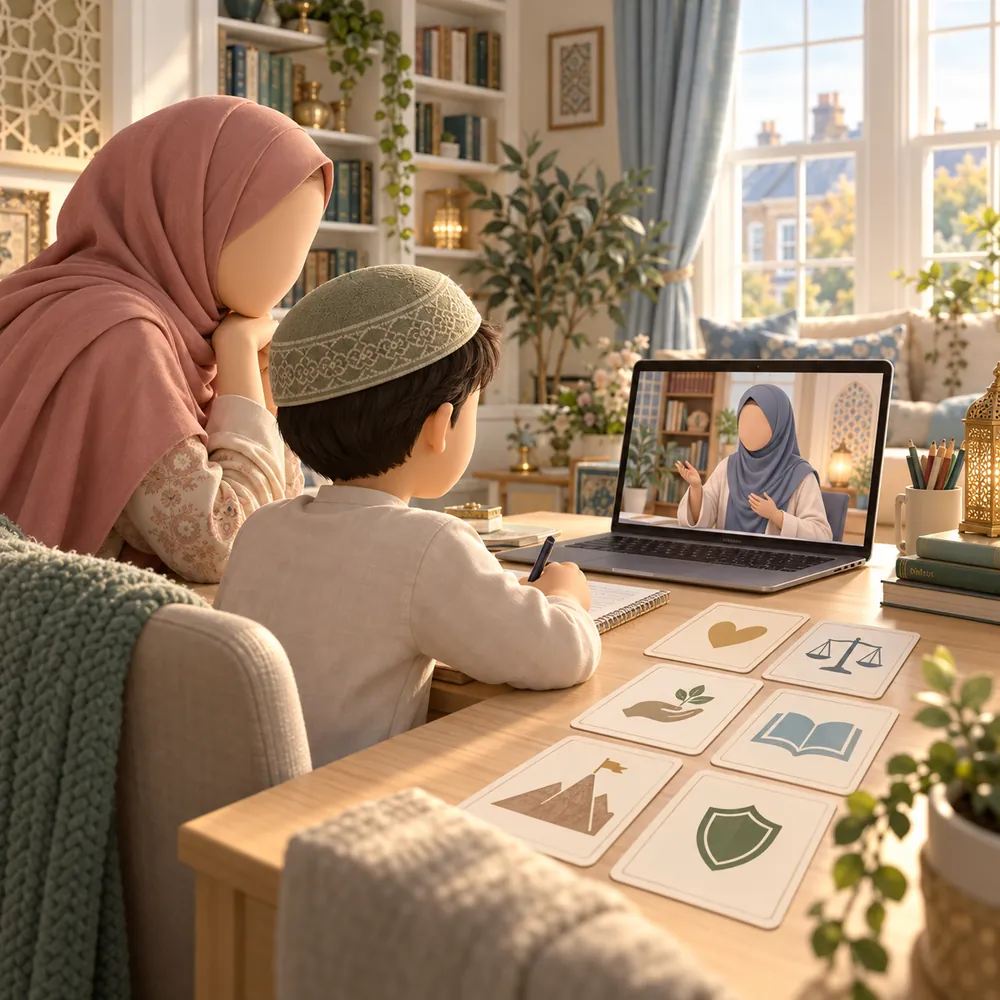
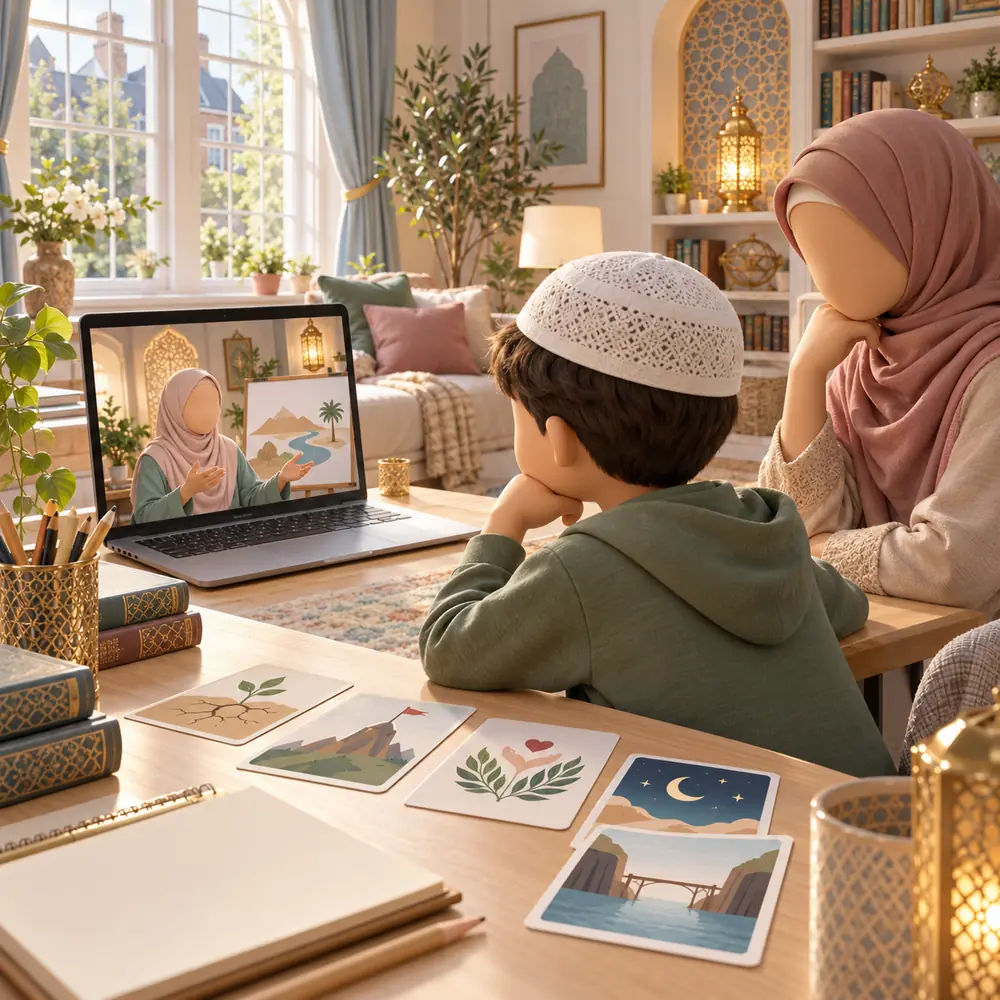
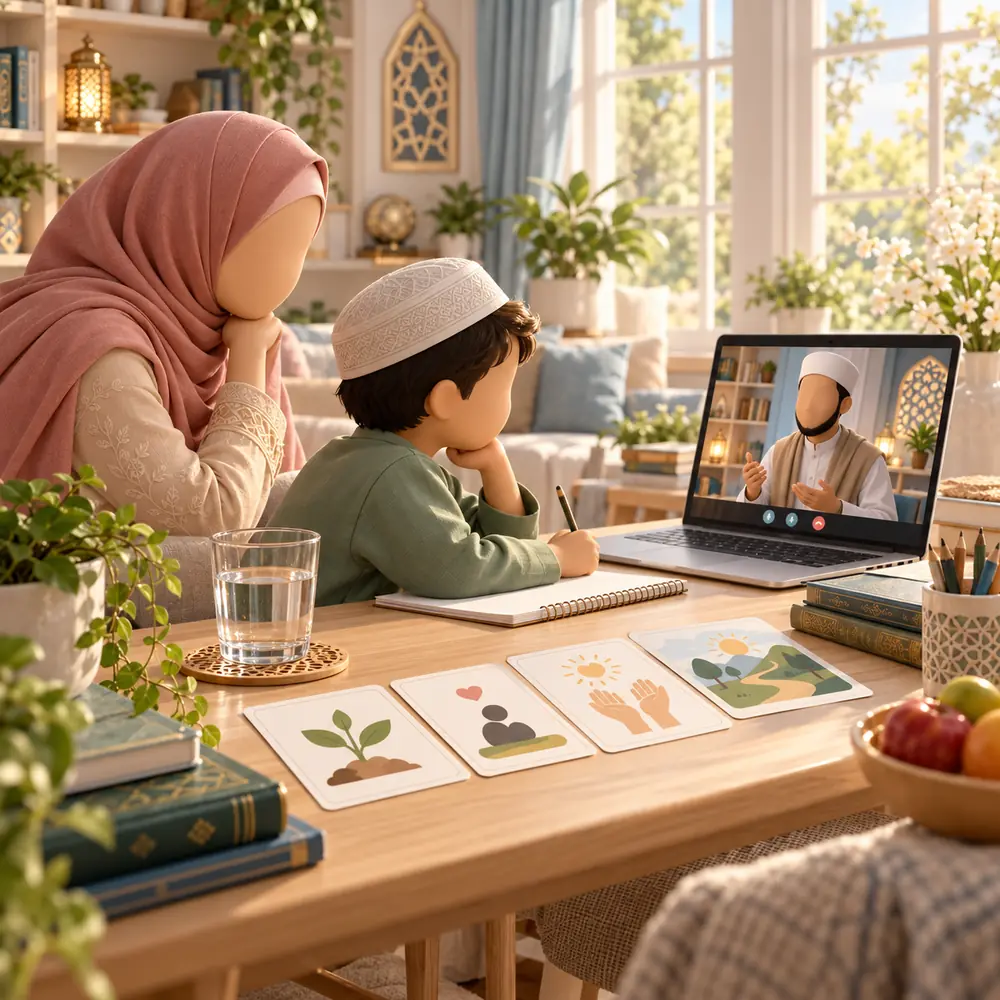
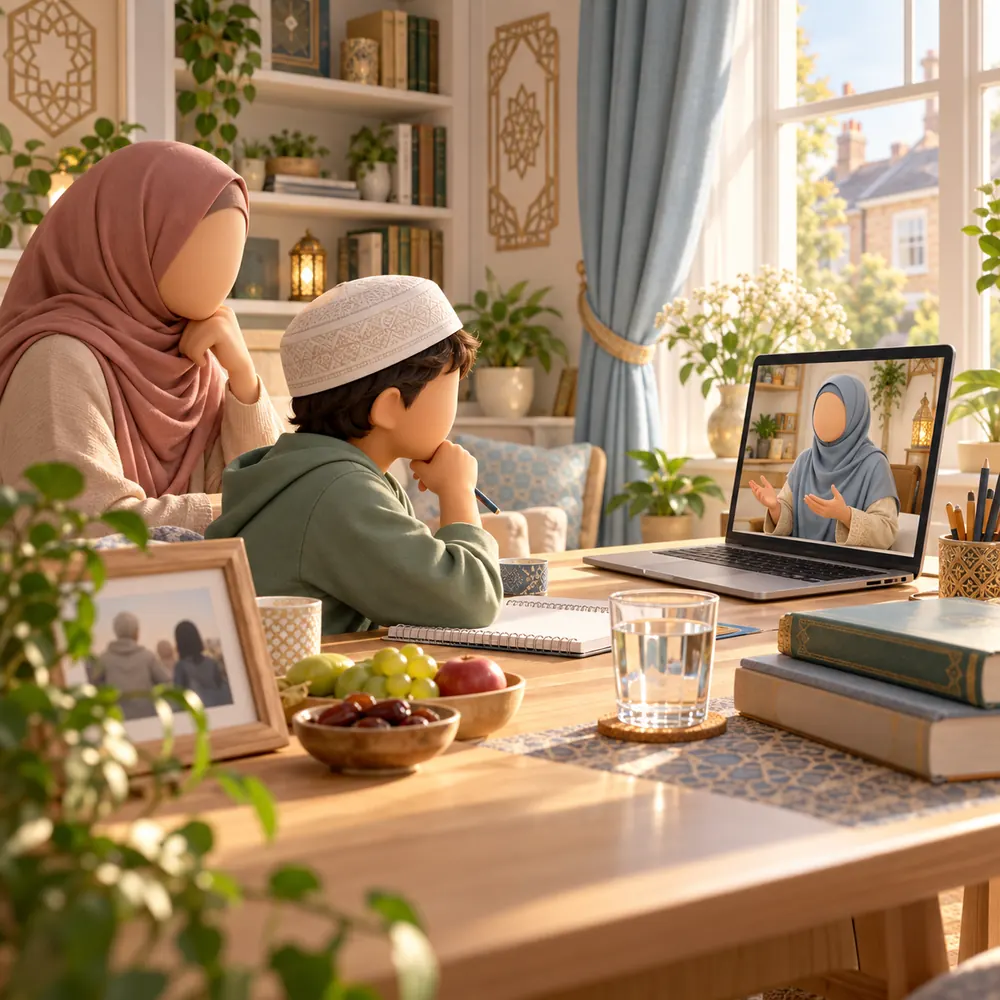
Recorded videos can be useful for revision, but they cannot replace live interaction for many children.
Live online Islamic Studies lessons allow the teacher to:
- Ask the child questions.
- Check understanding.
- Respond to confusion.
- Correct misunderstandings.
- Encourage participation.
- Adjust examples to the child’s age and environment.
For Muslim children in the UK, live discussion is especially useful because they may face real-life questions at school or in social settings. They need space to talk, not only listen.
5. Practical Islamic Manners
Islamic Studies should not stay in the notebook.
Children need to see how Islam affects daily behaviour:
- Speaking honestly.
- Respecting parents.
- Being kind to siblings.
- Showing good manners at school.
- Saying sorry.
- Keeping promises.
- Being patient.
- Choosing good words.
- Remembering Allah in daily moments.
When Islamic manners are taught through real examples, children begin to understand that Islam is not only something they learn once a week. It is something they live.
6. Parent Follow-Up
Parents do not need a long academic report after every lesson. But they do need to know what their child is learning.
Simple follow-up helps parents continue the lesson at home.
For example, after a lesson on wudu, parents can gently remind the child before prayer. After a lesson on honesty, they can praise honest behaviour. After a story about a prophet, they can mention the same value during the week.
The connection between class and home makes Islamic learning stronger.
7. A Curriculum That Builds Muslim Identity
For Muslim children in the UK, Islamic Studies should support identity.
This does not mean making the child feel separate from everyone else. It means helping the child understand who they are with confidence, kindness, and balance.
A strong program teaches children that being Muslim means:
- Knowing Allah.
- Loving the Prophet ﷺ.
- Following good manners.
- Being honest and respectful.
- Feeling proud of Islam.
- Treating others with mercy.
- Making good choices even when they are difficult.
This kind of learning helps children carry Islam into their daily life naturally.
Islamic Studies Program for Kids: What Parents Should Check Before Enrolling
Before choosing an Islamic Studies Program for your child, ask a few practical questions.
Does the program match my child’s age?
A course may be good, but not suitable for your child’s current age or maturity. Ask whether lessons are adapted for younger and older children.
Does it include Aqeedah and worship?
Islamic Studies should include belief and worship, not only stories or manners. Children need a balanced foundation.
Does the teacher explain, or only ask the child to memorise?
Memorisation can be useful, but understanding is essential. Children should know what they are learning and why it matters.
Is the program suitable for Muslim children in the UK?
Your child’s environment matters. A program that understands life in the UK can give examples that feel relevant.
Is there a trial or level check?
A trial session helps you see whether the teacher, pace, and content suit your child.
Online vs Local Islamic Studies Classes in the UK
Parents often ask whether online Islamic Studies classes are enough, or whether local in-person lessons are better.
Both can work. The quality depends on the teacher, structure, and consistency.
| Option | Benefits | Possible Challenges |
|---|---|---|
| Local classes | Community feeling, face-to-face learning | Travel time, limited availability, mixed ages |
| Online live classes | Flexible, accessible from home, one-to-one attention | Needs a quiet setup and routine |
| Recorded videos | Easy to replay | No live questions or correction |
| Parent-led learning | Warm and personal | Hard to maintain structure alone |
For many families, live online lessons are a practical option because children can learn from home while still interacting with a teacher.
The key is not whether the class is online or local. The key is whether the child is learning consistently, understanding the lessons, and receiving support.
How Sibghah Academy Supports Muslim Children in the UK
Sibghah Academy offers live online learning for Muslim children aged 5–15, including Quran, Arabic, and Islamic Studies.
For Islamic Studies, the academy provides a structured learning path through courses such as:
- Minhaj Al-Muslim Course for Kids
- Stories of the Prophets Course for Kids
- Names of Allah Course for Kids
- Lives of the Companions Course for Kids
Each course supports a different part of the child’s Islamic development.
The Minhaj Al-Muslim Course for Kids helps children learn foundations such as Aqeedah, worship, manners, and Islamic values.
The Stories of the Prophets Course helps children learn faith, patience, trust in Allah, and good character through Quranic stories.
The Names of Allah Course helps children know Allah through His beautiful Names in a simple and meaningful way.
The Lives of the Companions Course introduces children to Islamic role models, including the companions of the Prophet ﷺ and the values they lived by.
Sibghah’s live online format makes these lessons accessible for Muslim families in the UK, especially when local options are limited or difficult to maintain.
Looking for a structured Islamic Studies Program for your child?
Sibghah Academy can help your child learn Aqeedah, worship, manners, and Islamic values through live online lessons suitable for their age and level.
Related Islamic Learning Guides
You may also find these guides helpful as you plan your child’s Islamic learning path:
Parent Checklist Before Choosing an Islamic Studies Program
Use this checklist before choosing a course for your child:
- Is the program designed for children?
- Does it include Aqeedah, worship, manners, and values?
- Is the teacher child-friendly and qualified?
- Are lessons live and interactive?
- Does the program explain Islam in a way my child can understand?
- Does it connect Islamic learning to daily life?
- Is it suitable for Muslim children living in the UK?
- Will I know what my child is learning?
- Can my child ask questions safely?
- Is there a trial session before committing?
If you answered “not sure” to several of these, your child may benefit from a level check or trial session before choosing a full program.
Still unsure which Islamic Studies course fits your child?
Send us a WhatsApp message with your child’s age, current level, and main learning goal. We’ll help you choose the most suitable starting point.
FAQ: Islamic Studies Program for Kids
1. What is an Islamic Studies Program for kids?
An Islamic Studies Program for kids is a structured course that teaches children the foundations of Islam, including Aqeedah, worship, Quran connection, Islamic manners, and values in an age-appropriate way.
2. What should children learn first in Islamic Studies?
Children should usually start with knowing Allah, basic beliefs, love for the Prophet ﷺ, simple worship such as wudu and salah, and daily Islamic manners.
3. Are online Islamic Studies classes effective for children?
Yes, online Islamic Studies classes can be effective when they are live, interactive, structured, and taught by teachers who understand children.
4. Is Islamic Studies important for Muslim children in the UK?
Yes. Muslim children in the UK often need structured Islamic learning to help them understand their faith, practise worship, and build confidence in their Muslim identity.
5. What age should children start Islamic Studies?
Many children can start from around age 5, depending on their attention span and readiness. Older children can also start at a suitable level after assessment.
6. Does Islamic Studies include Quran?
Islamic Studies may include Quran connection, Quran stories, basic meanings, and respect for the Quran. Quran recitation and memorisation may be taught in a separate Quran Memorization Program.
7. What is the difference between Islamic Studies and Quran classes?
Quran classes usually focus on reading, recitation, memorisation, or Tajweed. Islamic Studies covers broader topics such as Aqeedah, Fiqh, worship, manners, stories, and Islamic identity.
8. How can parents support Islamic Studies at home?
Parents can support Islamic Studies by reviewing simple lesson points, encouraging good manners, practising worship gently, and connecting lessons to daily situations at home.
9. Is Islamic Studies suitable for non-Arabic-speaking children?
Yes. Islamic Studies can be taught in a way that suits non-Arabic-speaking or English-dominant children, especially when explanations are simple and age-appropriate.
10. What is Minhaj Al-Muslim for kids?
Minhaj Al-Muslim for kids is a structured course that helps children learn Islamic foundations such as belief, worship, manners, and values in a child-friendly way.
11. Should my child learn Islamic Studies one-to-one or in a group?
Both can work, but one-to-one lessons often allow more personal attention, easier questions, and a pace that matches the child’s level.
12. Can my child try Islamic Studies before enrolling?
Yes. A free trial session can help assess your child’s level, learning needs, and the most suitable starting point.
Book your child’s free Islamic Studies trial on WhatsApp
Choosing the right Islamic Studies Program can help your child build a stronger connection with Allah, understand worship, practise Islamic manners, and feel more confident as a Muslim child growing up in the UK.
If you are not sure where your child should start, send us a WhatsApp message with your child’s age, current level, and learning goal. Sibghah Academy will recommend the most suitable Islamic Studies path for your child.