Finding the right Arabic classes for non-native children in the UK can feel confusing for many Muslim parents.
You may want your child to read Arabic, understand Quran better, speak with family members, or simply feel connected to their Islamic identity. But when your child lives in an English-speaking environment, Arabic can easily feel distant, difficult, or “only for lessons.”
Some children know a few Arabic words but answer in English. Some can recognise letters but cannot read smoothly. Others can read short words but feel shy when speaking. None of this means your child is failing. It usually means they need the right starting point, the right pace, and a teacher who understands children.
This guide explains how Arabic learning works for non-native or English-dominant children, what parents should look for, and how to choose a course that helps your child build Arabic step by step.
Why Arabic Feels Difficult for Non-Native Children in the UK
Arabic is not difficult because children are lazy or uninterested. It often feels difficult because children in the UK do not use it enough in daily life.
A child may spend most of the day hearing English at school, with friends, in media, and in activities. Arabic may only appear at home, during Quran lessons, or in short family conversations. Over time, the child may understand some Arabic but feel more confident responding in English.
There are also real learning challenges.
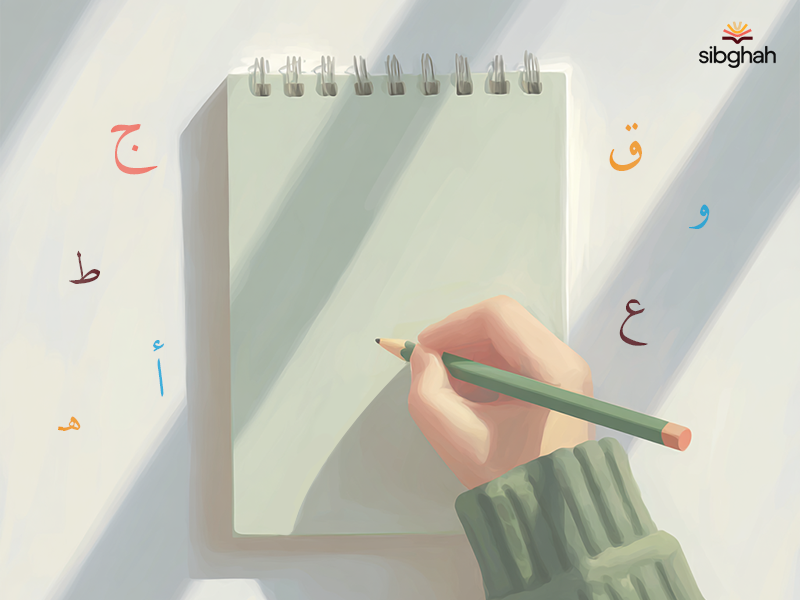
Arabic has sounds that do not exist in English, such as ع، ح، خ، ص، ض، ط، ظ، and ق. It also has short vowels that are usually not written in everyday Arabic texts, which can make reading harder for beginners. A child needs time to connect the shape of the letter, the sound, the vowel, and the meaning.
That is why effective Arabic learning for children should not start with pressure. It should start with structure.
What Are Arabic Classes for Non-Native Children?
Arabic classes for non-native children in the UK are lessons designed for children who do not use Arabic as their main everyday language.
These children may be:
- Muslim children growing up in English-speaking homes or schools.
- Children who understand some Arabic but do not speak confidently.
- Children who can read letters but struggle with words and sentences.
- Children who need Arabic to support Quran reading and Islamic Studies.
- Children from Arab or non-Arab Muslim families who want a structured path.
Good Arabic classes for children are different from adult Arabic lessons. Children need more repetition, shorter explanations, visual examples, encouragement, and practical use. They also need a teacher who can notice when the child is confused, tired, shy, or simply needs more practice.
The goal is not to make the child memorise lists of words. The goal is to help them use Arabic with understanding and confidence.
Should Your Child Start with Arabic Reading or Speaking?
Many parents ask: “Should my child start with reading Arabic or speaking Arabic?”
The answer depends on the child’s current level.
If your child does not recognise Arabic letters or cannot read simple words, they usually need to start with reading foundations. This helps them understand letters, sounds, short vowels, long vowels, and word formation.
If your child can already read simple Arabic but struggles to understand or express themselves, they may need a language development course that builds vocabulary, listening, speaking, and writing.
Here is a simple way to think about it:
| Child’s Current Level | Best Starting Point |
|---|---|
| Does not know Arabic letters | Arabic reading foundation |
| Knows letters but cannot read words | Letter sounds, vowels, and simple reading |
| Reads words but slowly | Reading fluency and short sentences |
| Reads Arabic but does not understand much | Vocabulary and comprehension |
| Understands Arabic but replies in English | Speaking practice and sentence building |
| Can speak a little but cannot write | Gradual writing practice |
A child should not be pushed into conversation if they cannot recognise words yet. At the same time, a child who already reads should not stay forever at the letter stage. The best course meets the child where they are.
Not sure where your child should start?
Every child’s Arabic level is different. Some children need reading foundations first, while others are ready to build speaking and writing confidence.
Sibghah Academy can help you understand your child’s current Arabic level and recommend the right starting point.
Click here to Ask About your Child’s Arabic Level on WhatsApp
A Simple Learning Path for Arabic Children’s Classes
Arabic learning becomes easier when parents see it as a path, not a random collection of lessons.
Step 1: Build Arabic Reading Foundations
The first stage is helping the child recognise Arabic letters, sounds, and vowels.
This is where a foundation course such as Noor Al-Bayan can be useful. It helps children understand how letters change with fatha, kasra, damma, sukoon, shaddah, tanween, and long vowels.
This stage is especially important for children who will later read Quran. If the child does not understand Arabic sounds and vowel patterns, Quran reading may feel stressful.
A strong reading foundation helps the child:
- Recognise letters in different positions.
- Read short vowelled words.
- Understand the difference between short and long sounds.
- Avoid guessing when reading.
- Prepare for Quran reading with more confidence.
Step 2: Develop Listening and Speaking Confidence
After reading foundations, the child needs to hear and use Arabic in simple contexts.
Speaking confidence does not come from memorising long vocabulary lists. It grows when the child practises small, useful sentences.
For example:
- “My name is…”
- “I like…”
- “I went to…”
- “This is my book.”
- “I want to read.”
- “Today I learned…”
A good teacher helps the child repeat, respond, and build short sentences without embarrassment. Mistakes should be corrected gently, not turned into a reason for the child to stop trying.
Step 3: Add Writing Gradually
Writing should come step by step.
Some children can speak simple Arabic but find writing difficult. Others can copy Arabic letters but cannot write a full sentence by themselves. This is normal.
A good Arabic course introduces writing gradually:
- Copying letters and words.
- Writing familiar vocabulary.
- Completing short sentences.
- Writing simple answers.
- Creating short paragraphs when ready.
The goal is not perfect writing from the beginning. The goal is steady progress.
Step 4: Connect Arabic with Quran and Islamic Identity
For Muslim children in the UK, Arabic is not just another language. It is connected to Quran, salah, du‘a, Islamic manners, family identity, and belonging.
When children understand this connection gently, Arabic becomes more meaningful.
A child may begin to see that Arabic helps them:
- Read Quran more confidently.
- Understand basic Islamic words.
- Connect with Muslim family and community.
- Feel closer to Islamic learning.
- Build a stronger sense of identity.
This should never be taught with guilt. Children respond better when Arabic feels like a doorway, not a burden.
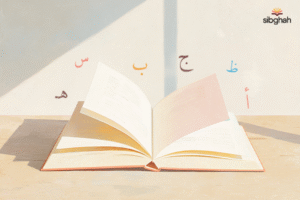
If your child still struggles with Arabic letters, sounds, or short vowels, starting with the right foundation matters.
A short trial session can help identify whether your child should begin with Noor Al-Bayan or move into a more advanced Arabic language path.
Click here to Book a Free Arabic Trial Session
What Parents Should Look for in Arabic Classes for Non-Native Children in the UK
Not every Arabic course is suitable for children. Some courses are too grammar-heavy. Some are too fast. Some focus only on memorisation. Others are designed for adults and then used with children without enough adjustment.
Before choosing a course, look for these signs.
1. A Clear Starting Assessment
Your child should not be placed randomly.
A teacher should understand whether your child needs letter recognition, reading fluency, vocabulary, speaking, writing, or a mix of these. Even a short trial session can reveal a lot.
2. A Child-Friendly Teacher
Teaching children is not only about knowing Arabic. The teacher must know how to explain patiently, keep the child engaged, and build confidence.
A child who feels safe is more likely to speak, read, and ask questions.
3. A Structured Curriculum
A strong Arabic course should have a clear progression.
Parents should know what comes first, what comes next, and how the child will move from one level to another.
4. Live Interaction
Recorded videos may help with revision, but children usually need live correction.
Live online Arabic classes allow the teacher to listen, correct pronunciation, ask questions, and respond to the child’s level in real time.
5. Parent Follow-Up
Parents do not need long reports after every lesson, but they do need to know what their child is learning and what to practise.
Simple follow-up helps parents support progress at home.
Online Arabic Classes vs Local Arabic Lessons
Some parents prefer local Arabic lessons because they feel familiar. Others choose online lessons because they are more flexible.
Both can work, but the quality depends on the teacher, structure, and consistency.
| Option | Pros | Possible Challenges |
|---|---|---|
| Local Arabic lessons | Face-to-face environment, community feeling | Limited availability, travel time, mixed levels |
| Online Arabic classes | Flexible, accessible from home, easier scheduling | Needs a focused setup at home |
| Recorded Arabic videos | Easy to replay | No live correction or personal feedback |
| Parent-led learning | Warm and personal | Hard to maintain structure consistently |
For many Muslim families in the UK, online live Arabic classes offer a practical balance: the child learns from home, receives direct attention, and follows a structured path without needing to travel.
How Parents Can Support Arabic Learning at Home
Parents do not need to become Arabic teachers. Small habits can make a real difference.
Try this:
- Use a few Arabic words daily at home.
- Praise effort, not only correct answers.
- Ask your child to read one short word or sentence after class.
- Keep Arabic practice short and regular.
- Do not compare siblings.
- Let the child make mistakes without feeling embarrassed.
- Connect Arabic to something meaningful, such as Quran, du‘a, family, or stories.
Even five minutes a day can help if it is consistent and calm.
The most important thing is to protect the child’s confidence. Once a child decides “I am bad at Arabic,” learning becomes much harder. A gentle environment keeps the door open.
How Sibghah Academy Supports Non-Native Children
Sibghah Academy provides live online Arabic lessons for Muslim children aged 5–15, including children in the UK who are non-native Arabic speakers or who use English more often in daily life.
The learning path is designed to meet children at different stages.
For children who need reading foundations, the Noor Al-Bayan Course for Kids helps them build Arabic letters, sounds, vowels, and early reading skills.
For children who already have a foundation and need to develop reading, writing, listening, and speaking, the Takallam Series Course helps them use Arabic more actively and confidently.
The aim is not to rush children or overwhelm them. The aim is to help each child move step by step, with a teacher who understands their level and a structure that parents can follow.
Sibghah’s online format also makes it easier for Muslim families in the UK to access Arabic learning from home, especially when local options are limited or difficult to maintain.
Parent Checklist Before Choosing Arabic Classes
Before you choose an Arabic course for your child, ask these questions:
- Is the course designed for children, not adults?
- Does it support non-native or English-dominant children?
- Will my child’s level be assessed first?
- Does the teacher correct pronunciation live?
- Is there a clear learning path?
- Does the course include reading, speaking, listening, and writing when appropriate?
- Will I know what my child should practise after class?
- Does the course connect Arabic with Quran and Islamic identity?
- Is the schedule realistic for our family?
- Can we try a session before committing?
If the answer to most of these questions is yes, the course is more likely to support real progress.
If you answered “not sure” to some of these questions, that is completely normal.
Many parents are unsure whether their child needs reading foundations, speaking practice, or a full Arabic learning path. A free trial session can make the next step clearer.
Cllick here to Message Sibghah on WhatsApp
When Is the Right Time to Start?
The right time to start Arabic is when your child can begin consistently, even if progress is slow at first.
You do not need to wait until your child is “ready” in a perfect way. Many children become ready through gentle exposure, not before it.
Start small. Choose the right level. Keep the experience calm. Let your child feel that Arabic is possible.
For non-native children in the UK, Arabic learning is not only about language. It is also about confidence, Quran connection, family identity, and belonging.
If you are looking for Arabic classes for non-native children in the UK, Sibghah Academy can help you understand your child’s level and choose a suitable starting point through a free trial session.
FAQ: Arabic Classes for Non-Native Children in the UK
1. What are the best Arabic classes for non-native children in the UK?
The best Arabic classes for non-native children in the UK are live, structured, child-friendly lessons that match the child’s current level. They should include reading foundations, pronunciation correction, vocabulary building, and gradual speaking practice.
2. Can my child learn Arabic if we mostly speak English at home?
Yes. Many children learn Arabic even if English is their main daily language. They need regular exposure, a patient teacher, and a clear learning path that starts from their current level.
3. Should my child learn Arabic before Quran?
If your child cannot read Arabic letters and vowelled words, Arabic reading foundations can make Quran reading easier. A course like Noor Al-Bayan helps prepare children for Quran reading by building sound and reading awareness.
4. What age should children start Arabic classes?
Many children can begin from around age 5, depending on attention span and readiness. Older children can also start successfully if the course is matched to their level.
5. Is online Arabic learning effective for children?
Online Arabic learning can be effective when lessons are live, interactive, and age-appropriate. Children benefit from direct correction, teacher interaction, and a structured plan.
6. What if my child understands Arabic but refuses to speak?
This is common for children growing up in English-speaking environments. The child may need low-pressure speaking practice, useful sentences, and encouragement rather than correction after every word.
7. How long does it take for a child to read Arabic?
It depends on the child’s age, consistency, lesson frequency, and starting level. Some children progress quickly with letters and vowels, while others need more repetition. The important thing is steady progress, not rushing.
8. Are Arabic classes suitable for non-Arab Muslim children?
Yes. Arabic classes can be suitable for non-Arab Muslim children, especially when the course is designed for non-native learners and connects Arabic with Quran, Islamic words, and daily use.
9. What is the difference between Noor Al-Bayan and Takallam Series?
Noor Al-Bayan focuses on Arabic reading foundations: letters, sounds, vowels, and early reading. Takallam Series helps children develop wider Arabic skills such as reading comprehension, vocabulary, speaking, listening, and writing.
10. How can I help my child practise Arabic at home?
Use short daily practice. Ask your child to read a simple word, repeat a useful phrase, or use one Arabic word in daily conversation. Keep it calm and encouraging.
11. Do children need to know Arabic before joining Sibghah Academy?
No. Children can start from different levels. A beginner may start with reading foundations, while a child with previous knowledge may begin at a higher level after assessment.
12. Are Sibghah’s Arabic classes suitable for Muslim children in the UK?
Yes. Sibghah’s Arabic classes are designed for Muslim children, including families in the UK who want structured online learning that supports Arabic, Quran readiness, and Islamic identity.
Not sure whether your child needs Noor Al-Bayan, Takallam Series, or another starting point?
Send us a message on WhatsApp and tell us your child’s age, Arabic level, and where you live in the UK. Sibghah Academy will help you choose the most suitable Arabic learning path for your child.