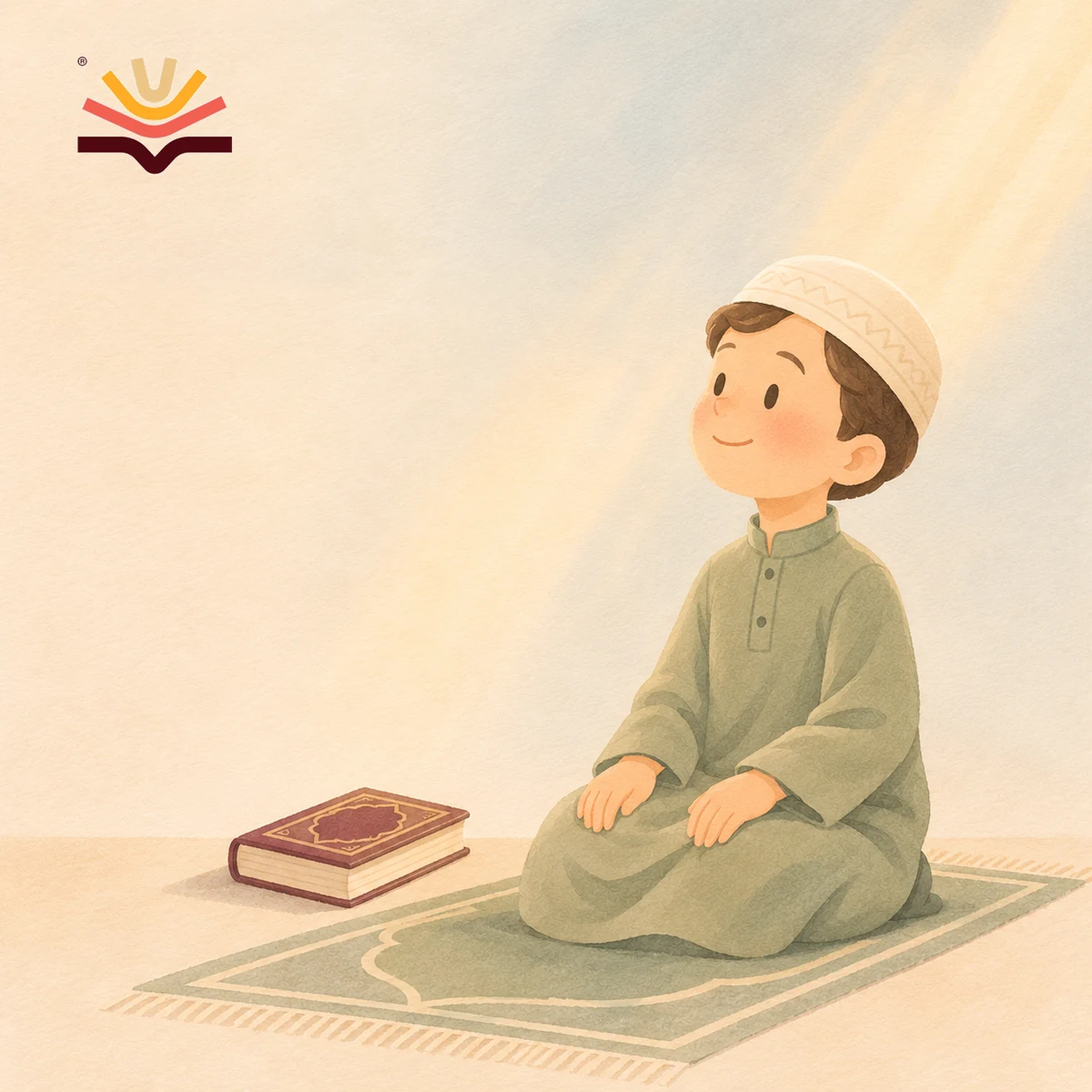
Perhaps your child knows that Muslims pray five times a day but does not understand why Salah matters. They may know that honesty is important but struggle to tell the truth when they have made a mistake. Or they might have heard about kindness and respect without knowing how to show these values at school, at home or with their friends.
These are important parts of a child’s Islamic education.
For Muslim families living in the UK, children may spend much of their day in an English-speaking environment. Parents naturally want them to understand Islamic beliefs and practices while developing the confidence to live according to their faith.
Islamic education should therefore connect knowledge, understanding, worship and character.
The Minhaj Al-Muslim for kids programme at Sibghah Academy provides a structured Islamic Studies pathway covering Aqeedah, Fiqh, worship, good character, acts of the heart and Islamic etiquette.
In this guide, we explore seven practical lessons from these areas and show how parents can connect them to their children’s everyday experiences. We also explain the programme’s three learning stages, how live lessons can support understanding, and what progress may look like for children of different ages.
The aim is not to expect children to become perfect Muslims after a few lessons. It is to help them build knowledge, love for Allah, sound habits and a willingness to keep learning and improving.
Quick answer: Minhaj Al-Muslim for kids is a structured Islamic Studies course that helps children understand Aqeedah, Salah, Fiqh, good manners, acts of the heart and Islamic etiquette. At Sibghah Academy, the curriculum is organised into three progressive stages. Its purpose is to connect Islamic knowledge with daily worship and behaviour, helping children understand not only what Muslims do, but why those actions matter.
Table of Contents
- What Is Minhaj Al-Muslim for Kids?
- What Does the Minhaj Al-Muslim Curriculum Cover?
- The Three Stages of Minhaj Al-Muslim
- Minhaj Al-Muslim for Kids: 7 Amazing Daily Lessons
- 1. Knowing Allah: Building Faith with Understanding
- 2. Salah: Understanding Why We Pray
- 3. Wudu: Learning How to Prepare for Prayer
- 4. Trust in Allah: Developing the Heart
- 5. Honesty and Good Character at School
- 6. Islamic Manners with Parents and Others
- 7. Kindness, Patience and Responsibility
- What Could a Practical Islamic Studies Lesson Look Like?
- How to Adapt Minhaj Al-Muslim to Different Ages
- A Simple Weekly Islamic Learning Routine
- How Can Parents Measure Islamic Studies Progress?
- Minhaj Al-Muslim vs Other Islamic Studies Programmes
- Common Mistakes Parents Should Avoid
- How Sibghah Academy Teaches Minhaj Al-Muslim
- Parent Checklist
- Frequently Asked Questions
What Is Minhaj Al-Muslim for Kids?
Minhaj Al-Muslim for kids is an Islamic Studies programme designed to introduce children to essential Islamic beliefs, acts of worship, values and manners through an organised learning pathway.
Instead of teaching a collection of unrelated religious facts, the programme connects different parts of Islamic life.
For example, children may learn that Allah is their Creator, understand why Muslims worship Him, practise the steps needed to prepare for Salah and discuss how faith should influence their behaviour.
These topics are connected.
Belief in Allah gives meaning to worship. Worship helps children develop their relationship with Allah. Good character and Islamic manners help them put religious values into practice.
A child may be able to describe the importance of honesty during a lesson, but the deeper learning begins when they understand why honesty matters and try to practise it when telling the truth is difficult.
Similarly, learning about Salah involves more than remembering movements. Children should gradually understand its importance, learn how to perform it correctly and approach prayer with respect and love.
This balance between knowledge and practice is central to the purpose of the Minhaj Al-Muslim curriculum.
Who Is the Programme For?
The programme can support Muslim children who need structured Islamic education, including children growing up in English-speaking homes in the UK.
It may be useful for a child who:
- Needs an organised introduction to Aqeedah and Islamic beliefs.
- Knows some Islamic facts but struggles to connect them.
- Needs help understanding Wudu, Salah and other acts of worship.
- Would benefit from practical examples of Islamic manners.
- Asks questions about Allah, worship and Muslim identity.
- Needs age-appropriate explanations in English.
- Has learned religious information but needs support applying it to daily behaviour.
Children do not all need to start with the same topics or progress at the same pace.
A younger beginner may need simple explanations and short activities. An older child who already has Islamic knowledge may benefit from deeper discussion, more detailed worship topics and reflection on everyday decisions.
What Does the Minhaj Al-Muslim Curriculum Cover?
The curriculum combines several connected areas of Islamic education.
These include belief, worship, character, acts of the heart and Islamic etiquette.
| Learning Area | Main Focus | Everyday Connection |
|---|---|---|
| Aqeedah | Knowing Allah, His oneness, faith and essential beliefs. | Helping the child understand whom they worship and why. |
| Fiqh and Worship | Purification, prayer, fasting and other acts of worship. | Learning how to practise worship correctly. |
| Good Character | Honesty, mercy, patience, generosity and humility. | Making good choices at home and school. |
| Acts of the Heart | Trust in Allah, sincerity and other inward qualities. | Connecting beliefs and intentions with actions. |
| Islamic Etiquette | Manners with parents, the Quran, relatives, neighbours and others. | Showing respect, kindness and responsibility. |
These areas are closely related, but each has a different educational purpose.
For example, an Aqeedah lesson might help a child understand Allah’s mercy. An acts-of-the-heart discussion might explore trust in Allah. A lesson about manners could show the child how to speak kindly to others.
In each case, the teacher can move from explaining the idea to helping the child understand how it relates to life.
For parents searching for Aqeedah for kids, this broader approach is useful because belief is taught alongside worship and character rather than being disconnected from them.
The Three Stages of Minhaj Al-Muslim
Sibghah Academy’s Minhaj Al-Muslim curriculum is organised into three progressive stages.
Each stage includes topics from different areas of Islamic Studies, allowing children to build their understanding gradually.
The stages are not simply divided into belief first, worship second and manners third. Instead, each stage includes a balanced selection of these themes.
Stage One: Building Essential Islamic Foundations
The first stage introduces foundational beliefs, worship practices and everyday values.
Children may study topics such as:
- Allah as Creator and Sustainer.
- Allah’s mercy and the importance of worshipping Him alone.
- Wudu, Tayammum and the meaning of Salah.
- Learning how to perform prayer.
- Honesty, trust in Allah and caring about others.
- Respect for parents, the Quran and the Messenger of Allah ﷺ.
At this stage, a child may be learning what an act of worship is, why it matters and how to begin practising it correctly.
For younger learners, the teacher can use short explanations, questions and practical demonstrations.
Stage Two: Developing Worship, Faith and Character
The second stage introduces further Islamic beliefs and worship topics while building on previously learned foundations.
Its planned subjects include:
- Belief in the Messengers and in the Last Day.
- Learning about Prophet Muhammad ﷺ and following his example.
- Friday prayer and Eid prayer.
- Additional prayers and fasting during Ramadan.
- Justice, mercy, modesty and Ihsan.
- Good manners when eating, speaking and interacting with relatives.
The teacher can help children connect each topic with their age and current experience.
For example, a lesson about mercy might include a discussion about helping someone who is upset. A lesson about Ramadan might explore the purpose of fasting and the values associated with it.
Stage Three: Expanding Islamic Knowledge and Responsibility
The third stage covers more detailed topics in worship, belief and character.
These include:
- Belief in the revealed Books and the angels.
- Understanding the importance and miraculous nature of the Quran.
- Voluntary fasting and the topic of Hajj.
- Charity and suitable guidance about food and drink.
- Patience, generosity, humility and avoiding gossip.
- Manners with neighbours, guests and animals.
Some of these topics require greater understanding, so explanations should remain appropriate to the learner’s age and level.
For example, a younger child may learn that Hajj is an important act of worship, while an older child may be ready to discuss its obligations and wisdom in more detail.
| Stage | Main Educational Direction | Example Topics |
|---|---|---|
| Stage 1 | Foundational belief, essential worship and basic manners. | Knowing Allah, Wudu, Salah, honesty and respect. |
| Stage 2 | Broader Islamic understanding and more developed character. | Messengers, Ramadan, mercy, justice and family etiquette. |
| Stage 3 | Further knowledge, responsibility and social conduct. | Angels, Hajj, charity, patience, humility and neighbourly manners. |
These descriptions reflect the academy’s curriculum plan. They do not mean that every child must complete each stage within an identical timeframe.
A teacher should review what the learner already knows and choose suitable material rather than rushing through a list of topics.
Minhaj Al-Muslim for Kids: 7 Amazing Daily Lessons
How can the subjects in Minhaj Al-Muslim for kids become meaningful in everyday life?
The following seven lessons provide practical examples based on the curriculum’s themes.
They are not seven official course levels or fixed textbook lessons. They illustrate how knowledge from Aqeedah, worship, character and etiquette can be explained and applied with children.
1. Knowing Allah: Building Faith with Understanding

One of the most important foundations of Islamic education is helping children know Allah.
A young child may already know that Muslims worship Allah, but they may still have questions about what that means.
Children can gradually learn that Allah is One, that He created the world, that He provides for His creation and that He is worthy of worship.
These are important foundations of Aqeedah.
The first stage of Minhaj Al-Muslim includes learning about Allah as Creator and Sustainer, His mercy and the importance of worshipping Him alone.
When teaching Aqeedah for kids, explanations should be clear, respectful and suitable for the child’s level of understanding.
Connecting Belief with Daily Life
A teacher might ask a simple question:
What are some things in the world around us that remind us of Allah’s creation?
Children may mention trees, rain, the sky, animals or their own families.
The teacher can use the discussion to explain that these are among Allah’s creations and encourage gratitude for His blessings.
This is an opportunity to connect belief with thankfulness rather than expecting the child to memorise a lengthy explanation.
In the Quran, Luqman advises his son to worship Allah alone. Parents can read this passage and its meaning in Surah Luqman, 31:13.
Simple Parent Activity
During a walk or a quiet moment at home, ask your child to name three blessings for which they are grateful to Allah.
Encourage them to think about why gratitude matters.
The aim is to develop awareness and love for Allah, not to turn every conversation into a test.
Parent reflection: Can my child explain one simple reason why Muslims worship and thank Allah?
2. Salah: Understanding Why We Pray
Learning Salah is an important part of Islamic Studies for Muslim children.
Parents naturally want their children to perform the five daily prayers correctly, but understanding should develop alongside practical learning.
A child may memorise prayer movements without understanding why Muslims pray.
Another child may know that prayer is important but feel unsure about what to say or how to prepare.
Both children need patient, structured teaching.
The Minhaj Al-Muslim curriculum introduces the meaning of prayer and how it is performed as part of its foundational worship topics.
From Knowing the Rule to Understanding the Meaning
When teaching Salah, a teacher can explore several connected questions:
- What is Salah?
- Why do Muslims pray to Allah?
- Why is prayer important in a Muslim’s life?
- How do we prepare for prayer?
- Which movements and recitations do we need to learn?
- How can prayer become part of our daily routine?
The Quran emphasises the importance of establishing prayer. Parents can explore Surah Taha, 20:132 with suitable explanation.
For younger children, the teacher may focus on short explanations and guided practice.
For older children, discussions may include the importance of Salah, its conditions, obligations and the meanings of selected recitations.
A Practical Learning Example
Imagine an eight-year-old who knows some prayer movements but becomes confused about the order.
The teacher can demonstrate the prayer in manageable sections, listen to what the child already knows and help them practise the parts needing correction.
Parents can then support the routine at home using the teacher’s instructions.
Prayer practice should be accurate, encouraging and suited to the child’s age.
Specific religious rulings should be explained by a qualified teacher, particularly when families have questions about details of worship.
Parent reflection: Does my child understand why Salah matters, and can they demonstrate the parts they have learned with increasing confidence?
3. Wudu: Learning How to Prepare for Prayer
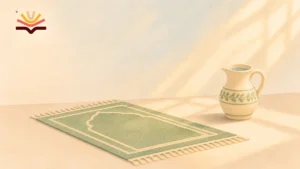
Wudu is another important topic in the first stage of Minhaj Al-Muslim.
It introduces children to purification and preparation for worship.
Some children enjoy learning the practical steps of Wudu, but they may need help remembering the correct sequence or understanding its connection with Salah.
Others may be able to describe Wudu without performing it accurately.
This is why practical demonstration and gentle correction are helpful.
Learning Through Explanation and Practice
A teacher may begin by explaining:
- What Wudu is.
- Why purification matters before prayer.
- How the required steps are performed.
- How to recognise and correct common mistakes.
- When a child should ask about a purification ruling.
The child can then practise what has been demonstrated.
As they become more familiar with Wudu, they may need fewer reminders.
The curriculum also introduces Tayammum, which should be explained at an appropriate level and according to the relevant Islamic rulings.
A Gentle Home Practice Idea
Ask the teacher which part of Wudu your child is currently practising.
At home, help your child review that skill under suitable supervision, using the method taught by the teacher.
Rather than correcting unfamiliar details by guesswork, parents can write down questions for the next lesson.
The goal is to develop reliable understanding and practice.
Parent reflection: Can my child explain what Wudu is for and perform the steps already taught with less assistance?
4. Trust in Allah: Developing the Heart
Islamic education is not only about visible actions.
The Minhaj Al-Muslim curriculum also includes qualities connected with the heart, such as trust in Allah, sincerity and other important aspects of character.
A child may know that Muslims should trust Allah but be unsure what that means during a difficult experience.
For example, imagine a child who feels nervous before a school test.
They may worry that they will forget what they have studied.
A teacher can help them understand that trusting Allah does not mean avoiding preparation.
The child can study, ask Allah for help and remember that they should do their best while relying upon Him.
Helping Children Understand Tawakkul
Tawakkul means relying upon Allah.
For children, this can be introduced through simple, suitable examples.
The teacher might ask:
- What can you do before a difficult school activity?
- Why is making dua important?
- Does trusting Allah mean we stop trying?
- How can we respond patiently when things do not go as expected?
These questions can connect belief with action.
It is also important to avoid suggesting that every difficult situation will immediately end in the way a child hopes.
Children can learn to trust Allah while recognising that life includes challenges, effort and patience.
A Simple Home Activity
Ask your child to choose a small goal, such as completing their homework or learning a short Quranic passage.
Encourage them to prepare, ask Allah for help and reflect on their effort afterwards.
This can help them understand that reliance upon Allah and responsible action belong together.
Parent reflection: Can my child give an everyday example of trusting Allah while still doing what is right?
5. Honesty and Good Character at School
Good character is one of the central aims of Minhaj Al-Muslim for kids.
The programme introduces qualities such as honesty, mercy, justice, patience, modesty, generosity and humility.
For Muslim children in the UK, these lessons can be connected to familiar situations at school and at home.
For example, a child might find a pencil case that belongs to another student.
They know that honesty is important, but what should they do next?
A practical lesson can explore the correct response: return the item to its owner or give it to a responsible adult who can help.
The child can then explain why this is the honest choice.
Learning Honesty Through Everyday Decisions
Other familiar situations may include:
- Admitting a mistake instead of blaming someone else.
- Telling the truth even when it feels uncomfortable.
- Completing schoolwork without cheating.
- Returning something that does not belong to us.
- Keeping a promise when it is reasonable and right to do so.
A teacher can discuss these examples using age-appropriate questions.
Children can explain what they would do, why the decision matters and how it reflects Islamic character.
The Quran teaches justice and good conduct. A relevant passage is Surah An-Nahl, 16:90.
What If My Child Makes a Mistake?
Children will not practise every value perfectly all the time.
When a child makes a mistake, parents can encourage honesty, responsibility, repentance and making things right.
Responding with guidance rather than humiliation can help the child become more willing to admit mistakes.
Parent reflection: Can my child recognise an honest response in a familiar situation and explain why it matters?
6. Islamic Manners with Parents and Others
Learning Islamic manners for kids includes understanding how Muslims should treat other people.
The Minhaj Al-Muslim curriculum covers etiquette with parents, the Quran, the Messenger of Allah ﷺ, relatives, neighbours, guests and others.
Children can learn that good manners involve more than repeating polite words.
They include respect, consideration, responsibility, kindness and appropriate behaviour.
What Might Islamic Manners Look Like at Home?
For a younger child, the teacher may introduce simple practices such as:
- Speaking respectfully to parents and family members.
- Listening when another person is speaking.
- Helping with an age-appropriate household task.
- Thanking someone for their help.
- Taking care of books and belongings.
For an older child, the discussion may involve understanding responsibilities, choosing appropriate words during disagreement and showing consideration for different family members.
Good manners should be taught with warmth and clear guidance, not simply as a list of punishments for mistakes.
Islamic Manners Beyond the Home
The curriculum also includes etiquette with relatives, neighbours and other members of society.
Children may discuss situations such as:
- Greeting someone respectfully.
- Being considerate when visiting another home.
- Speaking kindly to younger children.
- Showing respect to older people.
- Avoiding hurtful comments about others.
- Respecting shared spaces and other people’s property.
These activities can help children understand how Islamic manners influence everyday relationships.
Respectful behaviour should never mean that a child must stay silent about bullying, mistreatment or unsafe situations. Children should be encouraged to speak to a trusted adult when they need help.
Parent Activity
Choose one family habit to practise during the week.
For example, the child may focus on listening without interrupting or helping with a small household responsibility.
At the end of the week, ask what they found easy and what they would like to improve.
Parent reflection: Can my child describe one Islamic manner and show how it applies to everyday family life?
7. Kindness, Patience and Responsibility in Daily Life
As children’s Islamic understanding develops, they can begin exploring how good character affects the wider community.
The later stages of Minhaj Al-Muslim introduce qualities such as patience, generosity and humility, together with topics including charity and manners with neighbours and animals.
These lessons can help children understand that caring for others is part of Islamic character.
A younger child may begin with simple acts of kindness.
For example, they might help a sibling, share a suitable resource or show gentleness towards an animal.
An older child may be ready to discuss more complex situations involving fairness, helping people in need or avoiding gossip.
From Knowledge to Responsibility
Imagine a child learns that generosity is an important Islamic value.
The teacher can ask the child to explain what generosity means and think of a suitable way to practise it.
The child might choose to share something appropriate, help someone with permission or participate in a family charity activity.
Afterwards, the teacher or parent can ask what the child learned.
In this way, an Islamic value becomes something the child can recognise and practise.
A Simple Reflection Exercise
At the end of the week, ask your child:
- What good deed did you try this week?
- What made it difficult or easy?
- How did you feel when you helped someone?
- What would you like to practise next week?
These questions are intended to encourage reflection, not to measure the child’s worth through the number of good deeds completed.
Parent reflection: Can my child identify a suitable act of kindness and explain its connection to Islamic character?
What Could a Practical Islamic Studies Lesson Look Like?
A useful Islamic Studies lesson should help the child understand a topic rather than only repeat information.
For example, consider a lesson about honesty from the Minhaj Al-Muslim curriculum.
A teacher could organise a child-friendly lesson using the following sequence.
Step 1: Introduce the Main Idea
The teacher explains what honesty means and why Islam encourages truthful behaviour.
The explanation can be supported by suitable Islamic evidence and presented in language the child understands.
Step 2: Ask a Simple Question
The teacher asks the child what they think honesty looks like in everyday life.
This helps the teacher discover what the learner already understands.
Step 3: Explore a Familiar Situation
The teacher presents a school-related example.
For instance, imagine a child accidentally damages something and feels afraid to admit it.
The learner is asked what an honest response would be and why telling the truth matters.
Step 4: Allow the Child to Explain
The child explains their answer in their own words.
The teacher may ask a follow-up question or help the child think more carefully.
This encourages understanding rather than memorising a prepared answer.
Step 5: Choose One Practical Action
The child is encouraged to apply the lesson through an appropriate everyday choice.
Parents can later ask whether the child remembered the lesson and what they found challenging.
Important: This is an illustrative teaching example based on the curriculum’s objectives. It is not a claim that every Sibghah lesson follows an identical five-step script.
The academy’s curriculum plan includes interactive discussion, practical activities, educational games and ongoing assessment as teaching strategies.
How to Adapt Minhaj Al-Muslim to Different Ages
Children aged five and fifteen have different levels of understanding, attention and experience.
The topics in Minhaj Al-Muslim for kids should therefore be explained at a suitable level rather than delivered in exactly the same way to every student.
| Age Range | Useful Teaching Approach | Example Activity |
|---|---|---|
| 5–7 years | Short explanations, simple questions and practical demonstrations. | Identify one good manner or practise an appropriate part of Wudu. |
| 8–10 years | Clear explanations, familiar scenarios and supported reflection. | Discuss why Muslims pray or how to respond honestly to a mistake. |
| 11–12 years | More detailed discussion and connections between beliefs and behaviour. | Explain the difference between knowing a value and practising it. |
| 13–15 years | Deeper questions, more detailed religious topics and responsible discussion. | Explore how faith informs decisions, worship and social responsibilities. |
These are suggested approaches rather than fixed age-based course placements.
A younger child with previous learning may understand some topics well. An older beginner may still need foundational explanations.
The teacher should consider what the child already knows, the questions they ask and how confidently they can explain an idea.
A Simple Weekly Islamic Learning Routine for Parents
Parents sometimes worry that Islamic learning will require a long daily lesson at home.
In practice, short and manageable conversations can help reinforce what a child learns with their teacher.
Families do not need to introduce a new religious topic every day.
It is often more useful to revisit one lesson and connect it to ordinary activities.
A Seven-Day Family Reflection Plan
| Day | Focus | Simple Parent Question |
|---|---|---|
| Monday | Knowing Allah | What blessing are you grateful to Allah for today? |
| Tuesday | Salah | Why is prayer important to Muslims? |
| Wednesday | Wudu | Which part of preparing for prayer did you practise? |
| Thursday | Trust in Allah | How can we ask Allah for help while doing our best? |
| Friday | Honesty | What does telling the truth look like when we make a mistake? |
| Saturday | Good manners | How can we show kindness to someone at home? |
| Sunday | Reflection | Which Islamic value would you like to practise next week? |
The activities can be rearranged to suit family schedules and the child’s current lesson.
Parents do not need to ask all these questions in one week. The table is a selection of ideas, not a compulsory homework programme.
For more suggestions about family-based Islamic education, see our How to Teach Islamic Studies at Home: 7 Helpful Steps guide.
How Can Parents Measure Islamic Studies Progress?
When children attend Islamic Studies lessons, parents may want to know whether they are making real progress.
However, Islamic education is not measured only through the number of facts a child remembers.
A child may memorise an explanation of honesty but still need help making an honest decision.
Another child may understand why Wudu matters but need practical correction before performing it independently.
Progress can involve several areas.
| Learning Area | Possible Evidence of Progress |
|---|---|
| Islamic Knowledge | The child explains a familiar topic more accurately. |
| Understanding | The child can explain why an act of worship or value matters. |
| Practical Worship | The child demonstrates a taught skill with fewer prompts. |
| Good Character | The child recognises suitable behaviour in everyday situations. |
| Reflection | The child asks meaningful questions and considers what they have learned. |
| Confidence | The child becomes more comfortable discussing Islamic beliefs and practices. |
Three Questions Parents Can Ask the Teacher
- What has my child understood? This identifies the knowledge and meaning developed during lessons.
- What can my child now explain or demonstrate independently? This identifies practical progress.
- What is the next suitable learning goal? This helps parents understand the direction of future lessons.
It is important not to make claims about a child’s inner faith based only on a checklist or a short assessment.
A teacher can observe knowledge, participation and practical skills, but a child’s spiritual development should be supported with patience, understanding and care.
Minhaj Al-Muslim vs Other Islamic Studies Programmes
Sibghah Academy offers several Islamic Studies programmes, each with a different educational focus.
Minhaj Al-Muslim for kids provides a broad structured foundation across belief, worship and character.
Other programmes explore particular themes in greater depth.
| Programme | Main Focus | May Suit Children Who… |
|---|---|---|
| Minhaj Al-Muslim | Aqeedah, Fiqh, worship, manners and daily Islamic life. | Need a broad, organised Islamic foundation. |
| Names of Allah | Understanding Allah’s Beautiful Names and their meanings. | Would benefit from focused lessons about knowing Allah. |
| Stories of the Prophets | Quranic stories, faith and character lessons. | Learn well through the lives of the Prophets and reflection. |
| Lives of the Companions | Islamic role models and lessons from the Sahabah. | Need examples of courage, honesty, generosity and faith. |
These are separate programme options within Sibghah Academy’s Islamic Studies branch.
Choosing Minhaj Al-Muslim does not automatically mean that the child is enrolled in all the other programmes.
For a family unsure which path is most appropriate, the best starting point is to consider the child’s current knowledge, interests and learning goals.
You can explore the options on the Islamic Studies for Kids UK page.
Common Mistakes Parents Should Avoid
1. Focusing Only on Memorisation
Memorising Islamic information is useful, but children also need suitable explanations and opportunities to understand what they learn.
Ask your child to explain a familiar concept in their own words.
2. Teaching Rules Without Explaining Their Meaning
Children may learn that prayer is important without understanding why Muslims worship Allah.
Age-appropriate explanations can help connect religious knowledge with faith and practice.
3. Expecting Perfect Behaviour After One Lesson
Good character develops through learning, reminders, practice and guidance.
A single lesson about patience does not mean a child will never become frustrated again.
4. Using Fear as the Main Teaching Method
Islamic education should include accurate teaching about religious responsibilities while also helping children know Allah’s mercy and develop love for worship.
Explanations should remain suitable for the child’s age and emotional understanding.
5. Treating Islamic Manners as Only Saying Polite Words
Islamic manners also include fairness, care, responsibility and respect for others.
Children benefit from discussing what these values look like in real situations.
6. Comparing Children with One Another
Children have different learning histories, interests and abilities.
Progress should be assessed against the individual child’s starting point rather than another student’s achievements.
7. Making Home Practice Too Complicated
Parents do not need to reproduce an entire lesson at home.
Short reflections and teacher-recommended practice can be more manageable.
8. Assuming All Islamic Studies Programmes Are the Same
Different programmes may focus on broad foundations, the Names of Allah, Quranic stories or Islamic role models.
Families should understand the purpose of each course before choosing one.
How Sibghah Academy Teaches Minhaj Al-Muslim for Kids
Sibghah Academy offers live online one-to-one Quran, Arabic and Islamic Studies lessons for Muslim children aged 5–15, including families living in the UK.
The Minhaj Al-Muslim Course for Kids provides a structured Islamic Studies path designed to develop faith, understanding, worship and good character.
The curriculum is organised into three stages and includes Aqeedah, Fiqh, ethics, acts of the heart and Islamic etiquette.
Because lessons are individual, teachers can adjust explanations, questions and practice according to the learner’s age and current understanding.
English-supported Islamic Studies lessons can also help children who are more comfortable learning in English understand the meanings behind religious concepts.
The academy’s curriculum plan includes interactive teaching strategies such as questions, practical activities, educational games and assessment.
For a child who already has basic Islamic knowledge, the teacher can help identify which topics need deeper understanding or revision.
For a complete beginner, the emphasis may be on clear explanations and foundational skills.
Parents can discuss the child’s current level and learning goals before choosing a starting point.
Sibghah Teacher Note: When teaching children Islamic Studies, we should distinguish between remembering a rule, understanding its meaning and knowing how to apply it. A child may understand the importance of honesty but still need guidance when a difficult situation arises. Structured lessons and gentle practical examples can help connect Islamic knowledge with everyday decisions.

Help Your Child Understand and Practise Islam
If you want your child to build Islamic knowledge, understand Salah and worship, and develop stronger Islamic manners, Minhaj Al-Muslim may be a suitable learning path.
Tell Sibghah Academy about your child’s age, current Islamic knowledge and main learning goals, and we can help you explore the appropriate starting point.
Quick Parent Checklist: Is Minhaj Al-Muslim Suitable for Your Child?
Use this checklist when considering Minhaj Al-Muslim for kids:
- I understand my child’s current Islamic knowledge.
- I know whether my child needs foundational Aqeedah lessons.
- I understand whether my child needs help learning Salah or Wudu.
- I want my child to understand why Muslims worship Allah.
- I value teaching honesty, mercy, patience and kindness.
- I want Islamic manners to connect with everyday behaviour.
- I understand the difference between knowledge and practical application.
- I know that the programme includes three progressive stages.
- I want lessons to be age-appropriate and interactive.
- I understand that Islamic Studies is broader than memorising facts.
- I want clear communication about my child’s progress.
- I can support simple learning activities at home.
- I know that Minhaj Al-Muslim is separate from Sibghah’s other Islamic Studies programmes.
- I can arrange a trial to discuss the most suitable starting point.
Frequently Asked Questions About Minhaj Al-Muslim for Kids
1. What is Minhaj Al-Muslim for kids?
Minhaj Al-Muslim for kids is a structured Islamic Studies programme covering Aqeedah, Fiqh, worship, good character, acts of the heart and Islamic etiquette. It helps children build Islamic knowledge and connect what they learn with everyday life.
2. How many stages are in the Minhaj Al-Muslim course?
Sibghah Academy’s curriculum is organised into three progressive stages. These move from essential Islamic foundations towards broader topics in worship, belief, character and social responsibility.
3. Are the seven lessons in this article official course stages?
No. The seven lessons are practical examples based on the curriculum’s main themes. The official course plan is structured into three stages, not seven.
4. What does Minhaj Al-Muslim teach about Aqeedah?
The course introduces foundational beliefs such as knowing Allah, understanding His oneness, learning about His mercy and developing love and respect for Him. Later stages include further Islamic beliefs.
5. Does the programme teach children how to pray?
Yes. Salah is included in the foundational worship topics, together with its meaning, importance and practical performance. The teacher can explain and demonstrate suitable material according to the child’s level.
6. Does the course include Wudu and purification?
Yes. The curriculum includes Wudu and Tayammum among its foundational Fiqh topics. Children can learn their meaning and practical rulings through teacher-guided instruction.
7. Does Minhaj Al-Muslim teach Islamic manners for kids?
Yes. The programme covers good character and etiquette, including honesty, mercy, patience, respect for parents, good speech, kindness and appropriate conduct with other people.
8. Is Minhaj Al-Muslim suitable for beginners?
Yes. The programme includes foundational material suitable for children beginning Islamic Studies. The teacher should consider what the child already knows before recommending a starting point.
9. Is the course suitable for Muslim children living in the UK?
Yes. Sibghah Academy offers live online Islamic Studies lessons for Muslim children in the UK. English-supported teaching can help children understand religious concepts when English is their strongest language.
10. Does my child need to speak Arabic to study Minhaj Al-Muslim?
No. Children can study Islamic concepts through explanations in English. Learning Arabic can be valuable, but Arabic fluency is not a requirement for beginning English-supported Islamic Studies lessons.
11. What is the difference between Minhaj Al-Muslim and Quran classes?
Minhaj Al-Muslim focuses on Islamic beliefs, worship, manners and values. Quran classes focus more directly on Quran reading, recitation, Tajweed, memorisation or revision. The programmes have different learning goals.
12. Does Minhaj Al-Muslim include Stories of the Prophets and Names of Allah courses?
Minhaj Al-Muslim includes relevant beliefs and Islamic knowledge, but Sibghah Academy also offers separate programmes specifically dedicated to the Names of Allah, Stories of the Prophets and Lives of the Companions. These should not be confused with automatic enrolment in one combined programme.
13. How can parents measure progress in Islamic Studies?
Parents can look for improvements in understanding, the ability to explain religious topics, practical worship skills, thoughtful answers and greater confidence discussing Islamic values. Spiritual growth should not be reduced to a numerical score.
14. How can parents support Minhaj Al-Muslim lessons at home?
Ask short reflection questions, follow the teacher’s recommended practice, discuss suitable everyday examples and encourage consistent learning without turning every activity into a formal test.
15. Can my child try Minhaj Al-Muslim before enrolling?
Yes. Sibghah Academy offers a free trial opportunity so families can discuss the child’s age, current understanding and learning goals before choosing the appropriate Islamic Studies path.
Final Thoughts: Helping Islamic Knowledge Become Daily Practice
The purpose of Minhaj Al-Muslim for kids is not simply to help children remember religious information.
It is to build a structured understanding of Islam that connects belief, worship, character and everyday responsibilities.
Children can learn about Allah, understand the importance of Salah, practise purification, develop good manners and reflect on how their decisions affect other people.
The course’s three-stage structure allows these topics to develop gradually, while suitable explanations help children of different ages understand what they are learning.
Parents can support this process through short conversations, practical guidance and encouragement.
With patient teaching and consistent practice, Islamic learning can become more meaningful and connected to daily life.
If you would like your child to build these foundations through live one-to-one lessons, explore Sibghah Academy’s Minhaj Al-Muslim Course for Kids and arrange a free trial to discuss a suitable starting point.