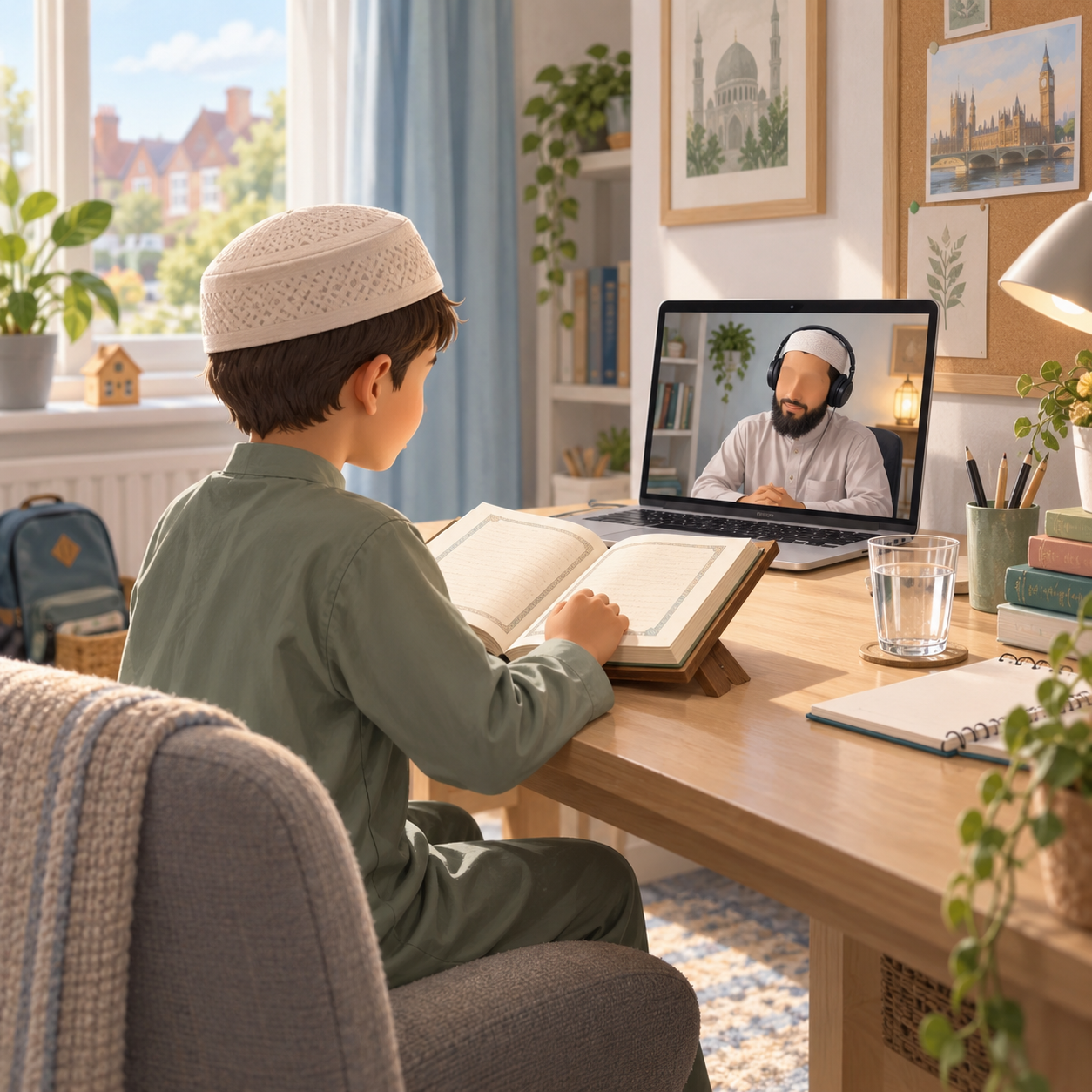
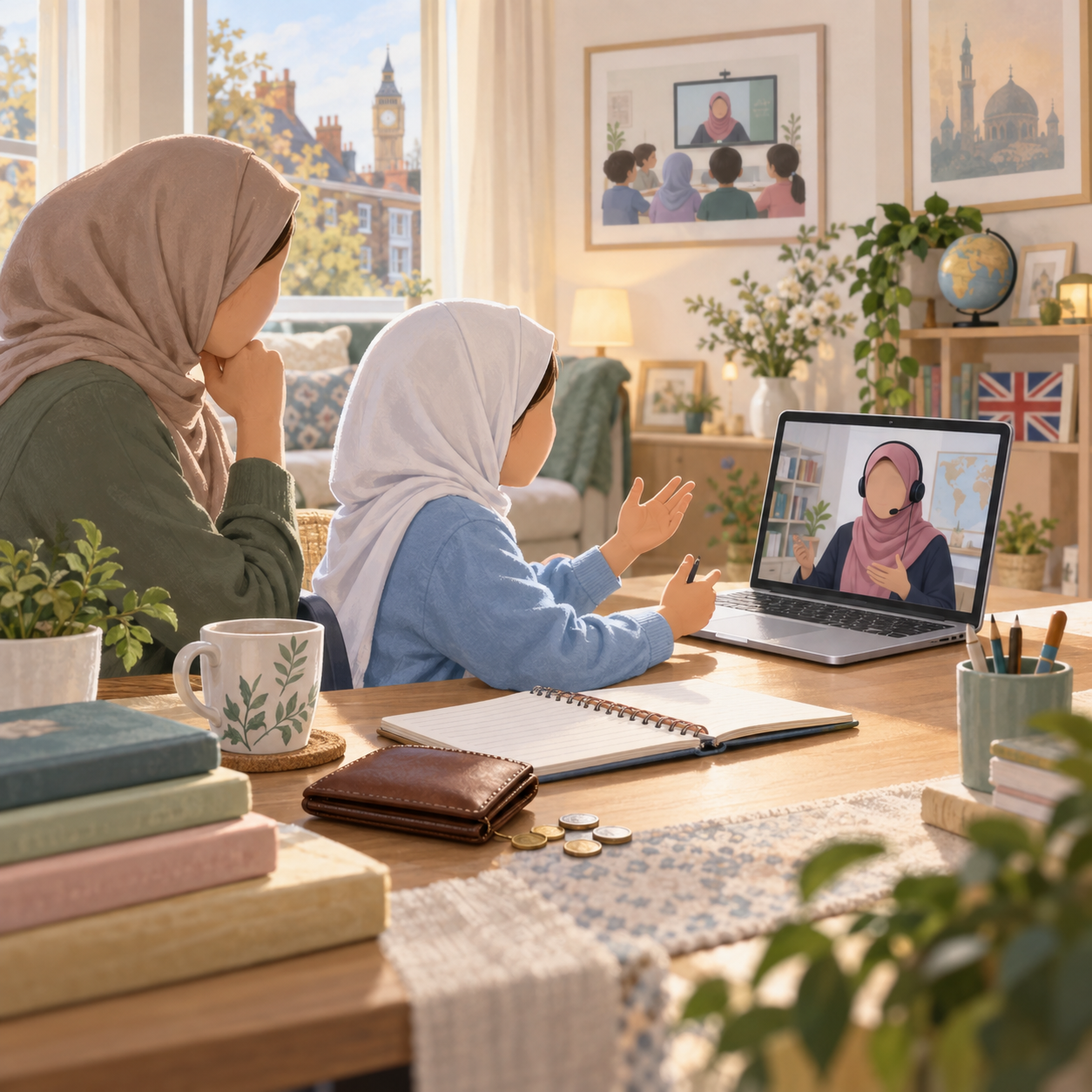

How to Find a Qualified Private Quran Teacher for Your Child in the UK is a serious question for many Muslim parents who want their child to learn the Quran safely, gently, and with the right level of support. Parents are not only looking for someone who can recite well. They are looking for a teacher who can understand children, correct mistakes carefully, support Tajweed or Hifz when needed, and keep parents informed.
Choosing a private Quran teacher can feel confusing. Some parents compare online lessons with local options. Some look for one-to-one support because their child is shy, struggling, or not progressing in a group class. Others want a teacher who can help with Quran reading, memorization, revision, or pronunciation.
This guide explains How to Find a Qualified Private Quran Teacher for Your Child in the UK through practical checks. You will learn what “qualified” should mean, what to ask before starting, what to notice during a trial lesson, and how to think about safety, teaching style, parent feedback, Tajweed, Hifz, and revision.
Quick answer: The safest way to find a suitable private Quran teacher is to check the teacher’s child-teaching experience, Quran level assessment method, correction style, Tajweed and Hifz support, parent communication, lesson structure, and online safety approach. A trial lesson is one of the most useful steps because it shows how the teacher speaks to your child, corrects mistakes, and explains the next learning path.
For many parents, How to Find a Qualified Private Quran Teacher for Your Child in the UK becomes urgent when their child is not receiving enough attention, correction, or confidence-building in a general class.
Book a free Quran trial session for your child on WhatsApp
Table of Contents
- Why Finding the Right Quran Teacher Matters
- What Does Qualified Mean for a Private Quran Teacher?
- How to Find a Qualified Private Quran Teacher for Your Child in the UK: 11 Smart Checks
- Safety Checks for UK Parents
- What Should Happen in a Trial Lesson?
- Questions Parents Should Ask
- Red Flags to Notice
- How Sibghah Supports Quran Learning
- Parent Checklist
- FAQ

This guide is designed to make How to Find a Qualified Private Quran Teacher for Your Child in the UK easier, clearer, and less stressful for parents who want a safe and structured Quran learning path.
Why Finding the Right Quran Teacher Matters
The Quran has a special place in a Muslim child’s life. Parents want their children to read it correctly, love it, memorize from it, and feel connected to it. But the teacher’s approach can shape how a child feels about Quran learning.
A child who is corrected harshly may begin to fear recitation. A child who is ignored in a busy class may stop progressing. A child who memorizes without revision may forget quickly. A child who is rushed through pages may miss important reading foundations.
This is why How to Find a Qualified Private Quran Teacher for Your Child in the UK is not only a search question. It is a parenting decision. The right teacher can help your child feel safe, supported, and motivated. The wrong fit can make Quran learning feel stressful or unclear.
The Prophet Muhammad ﷺ said:
Arabic: خَيْرُكُمْ مَنْ تَعَلَّمَ الْقُرْآنَ وَعَلَّمَهُ
English: “The best among you are those who learn the Qur’an and teach it.”
This hadith reminds us that teaching Quran is an honour. For children, this honour should come with patience, mercy, responsibility, and care.
Before choosing any tutor, parents should understand that How to Find a Qualified Private Quran Teacher for Your Child in the UK begins with knowing what “qualified” really means for children, not only adults.
What Does Qualified Mean for a Private Quran Teacher?
When parents hear “qualified Quran teacher,” they may think mainly about Quran knowledge. Quran knowledge is essential, but for children, qualification should include more than strong recitation.
A teacher may recite beautifully but struggle to teach a young child. Children need simple explanations, gentle repetition, encouragement, and a teacher who knows how to correct without making them feel embarrassed.
A qualified private Quran teacher for children should ideally have:
- Strong Quran reading and recitation ability
- Good Tajweed awareness
- Experience teaching children
- A patient and gentle correction style
- Ability to assess the child’s current level
- Clear communication with parents
- A structured method for reading, Tajweed, Hifz, and revision
- A safe and professional teaching environment
This is why How to Find a Qualified Private Quran Teacher for Your Child in the UK should always include both Quran knowledge and child-friendly teaching skills.
So when you think about How to Find a Qualified Private Quran Teacher for Your Child in the UK, do not only ask, “Can this teacher recite well?” Also ask, “Can this teacher guide my child well?”
How to Find a Qualified Private Quran Teacher for Your Child in the UK: 11 Smart Checks

These checks will help you choose with more clarity. They are especially useful for parents who want one-to-one Quran support but are not sure how to compare teachers or academies.
If you are asking How to Find a Qualified Private Quran Teacher for Your Child in the UK, use the following checks as a practical parent guide before booking regular lessons.
1. Check whether the teacher understands children
Teaching children is different from teaching adults. Children may get tired, lose focus, feel shy, ask simple questions, or need the same correction many times.
A good private Quran teacher should know how to keep the child engaged without pressure. They should use short steps, gentle repetition, and encouragement. The child should not feel embarrassed for making mistakes.
During the first lesson, notice how the teacher speaks to your child. Do they sound patient? Do they listen? Do they give the child time? Do they correct without making the child feel small?
2. Check how the teacher assesses your child’s Quran level
A teacher should not begin with a fixed plan before understanding the child’s level. A proper first step is assessment.
The teacher may ask your child to read a short passage, recite a memorized surah, repeat after the teacher, or identify letters and sounds. This helps the teacher know whether the child needs Quran reading foundations, Tajweed correction, Hifz support, or revision.
If you are learning How to Find a Qualified Private Quran Teacher for Your Child in the UK, this is one of the most important checks. A good teacher starts with the child’s current level, not with assumptions.
3. Check the teacher’s correction style
Correction is central to Quran learning. But the way correction happens matters. A child may need to repeat a sound many times before it improves. A teacher should correct clearly, but not harshly.
A good teacher explains the mistake simply, models the correct recitation, asks the child to repeat, and encourages improvement. The goal is not to make the child feel wrong. The goal is to help the child improve.
This is especially important for children who already feel nervous about Quran reading.
A gentle correction style is one of the clearest signs when deciding How to Find a Qualified Private Quran Teacher for Your Child in the UK, especially for children who feel nervous or shy.
4. Check whether the teacher can support Quran reading foundations
Some children need to go back to the basics. They may confuse Arabic letters, struggle with vowels, read slowly, or find it hard to join letters into words.
A teacher who only listens to recitation may not be enough for this child. The child needs someone who can rebuild the foundation step by step.
A strong private Quran teacher should be able to help with letters, sounds, short vowels, long vowels, joining, fluency, and simple Quranic words when needed.
Read more about Quran reading classes for kids
5. Check whether Tajweed is taught practically
Tajweed is important, but young children do not always benefit from heavy theory at the beginning. Many children improve through listening, repetition, correction, and simple explanations.
Allah says:
Arabic: وَرَتِّلِ الْقُرْآنَ تَرْتِيلًا
English: “And recite the Qur’an with measured recitation.”
A good Quran teacher should help the child improve recitation carefully and gradually. For children, Tajweed should be connected to actual recitation, not only memorizing rules.
Explore Tajweed classes for kids
6. Check whether Hifz includes revision
Some parents want their child to start Hifz. This is a beautiful goal, but Hifz without revision becomes weak. A child may memorize quickly, then forget quickly if there is no review plan.
A private Quran teacher should know how to balance new memorization with old revision. The child may need listening, repetition, short portions, regular review, and gentle correction.
It is also important to remember that young children can sometimes begin Hifz through listening and repetition before they read independently. The teacher should understand the child’s age, ability, and confidence before setting the plan.
For families interested in Hifz, How to Find a Qualified Private Quran Teacher for Your Child in the UK should include checking how the teacher balances memorization with revision.
7. Check how parents receive feedback
Parents should not feel lost after the lesson. A good teacher gives clear feedback. This may include what the child practised, what improved, what needs more work, and what should be reviewed before the next lesson.
This is especially helpful for parents in the UK who may not be able to assess Quran reading or Tajweed themselves. Parent feedback helps the family support the child at home.
When thinking about How to Find a Qualified Private Quran Teacher for Your Child in the UK, ask how feedback will be shared and how often.
8. Check whether the lesson is truly personal
Private teaching should not simply mean “one child on a screen.” It should mean the lesson is built around that child’s level and needs.
A personal lesson may focus on reading one week, Tajweed correction the next, revision support after that, and confidence-building throughout. The teacher should respond to the child’s progress rather than forcing the same plan every time.
This is one of the main benefits of private Quran learning. The child receives direct attention, not a general class pace.
Read our guide on one-to-one Quran tutoring
9. Check the teacher’s reliability and professionalism
A teacher may be kind and knowledgeable, but reliability also matters. Parents need lessons to start on time, communication to be clear, and expectations to be understood.
Before starting, ask about scheduling, cancellations, feedback, trial lessons, lesson length, and what happens if the child misses a session.
A private Quran teacher should make the learning process feel organized, not confusing.
10. Check whether the child feels safe and respected
Children may not always express discomfort clearly. Parents should observe the child’s behaviour before, during, and after lessons.
Does your child feel relaxed enough to try? Does the teacher speak respectfully? Does the child feel comfortable asking for repetition? Does the teacher avoid pressure, shame, or comparison?
A Quran lesson should be serious, but it should also feel safe.
11. Check whether the teacher can explain the learning path
After assessing the child, the teacher should be able to explain the next step simply. For example:
- Your child needs reading foundations first.
- Your child can read, but needs fluency and pronunciation support.
- Your child is ready for gentle Tajweed correction.
- Your child can begin Hifz with listening and repetition.
- Your child needs a stronger revision plan.
If the teacher cannot explain the child’s path, parents may struggle to understand progress. A strong teacher makes the journey clearer.
Safety is a major part of How to Find a Qualified Private Quran Teacher for Your Child in the UK, especially when lessons are private, online, or one-to-one.
Safety Checks for UK Parents

Safety is an important part of choosing any private teacher for a child. This section is not legal advice, but it gives parents practical points to consider.
Parents in the UK may want to understand what DBS checks are and when they may be relevant. GOV.UK explains that a Disclosure and Barring Service check can be used to check the criminal record of someone applying for a role.
Read GOV.UK guidance on DBS checks
It is also important to remember that one document is not the whole safety picture. Parents should also look at communication boundaries, lesson supervision, professionalism, and how the teacher or academy protects children during online lessons.
For online lessons, parents can also benefit from general online safety guidance. NSPCC provides parent-friendly guidance about keeping children safe online.
Read NSPCC online safety guidance for parents
These safety points make How to Find a Qualified Private Quran Teacher for Your Child in the UK more than a teaching decision. It is also about creating a secure learning environment for your child.
For online Quran lessons, sensible safety habits may include:
- Lessons taking place in a shared family space when possible
- Parents knowing the lesson schedule
- Clear communication through official parent channels
- No unnecessary private communication between teacher and child
- Parents being able to follow progress and raise concerns
- A professional system for scheduling, feedback, and support
When you are learning How to Find a Qualified Private Quran Teacher for Your Child in the UK, safety should be part of the decision from the beginning, not an afterthought.
A trial lesson is one of the most useful steps in How to Find a Qualified Private Quran Teacher for Your Child in the UK because it lets parents observe the teacher’s real method with their child.
What Should Happen in a Trial Lesson?
A trial lesson is one of the best ways to evaluate a private Quran teacher. It helps you see the teacher’s style before committing to regular lessons.
A good trial lesson should usually include:
- A gentle welcome for the child
- A short question about previous Quran learning
- A simple Quran level check
- Listening to the child read or recite
- Gentle correction of one or two mistakes
- A short explanation to the parent after the lesson
- A recommendation for the next learning step
The trial lesson should not feel rushed or random. It should help the parent understand what the child needs.
Book a free Quran trial session for your child
Questions Parents Should Ask Before Starting
Before choosing a teacher, parents can ask direct and simple questions. These questions protect the child’s time and help the parent make a clearer decision.
- How do you assess a child’s Quran level?
- Do you teach Quran reading, Tajweed, Hifz, and revision?
- How do you correct mistakes during recitation?
- How do you support shy or nervous children?
- Will my child receive a personal learning plan?
- How often will I receive feedback?
- What should my child practise between lessons?
- How do you balance memorization and revision?
- What safety and communication rules do you follow?
- How do you handle missed lessons or schedule changes?
A clear teacher will welcome sensible questions. A parent should not feel uncomfortable asking about their child’s learning and safety.
Red Flags to Notice
While searching for How to Find a Qualified Private Quran Teacher for Your Child in the UK, parents should also know what to avoid.
Here are some red flags:
- The teacher starts without checking the child’s level.
- The teacher promises very fast results.
- The teacher corrects harshly or embarrasses the child.
- The teacher cannot explain the learning plan.
- There is no clear feedback for parents.
- The teacher ignores revision during Hifz.
- The lesson feels unstructured every time.
- Communication boundaries are unclear.
- The child becomes unusually anxious before lessons.
One red flag does not always mean you must stop immediately, but it does mean you should ask questions and observe carefully.
How Sibghah Supports Quran Learning for Children
Sibghah Academy supports Muslim children aged 5–15 through live online one-to-one Quran lessons. The aim is to make Quran learning personal, structured, and child-friendly.
For parents learning How to Find a Qualified Private Quran Teacher for Your Child in the UK, Sibghah’s approach focuses on understanding the child first. The teacher looks at the child’s current level, confidence, reading ability, recitation needs, and family goals.
A child may join Sibghah for:
- Quran reading foundations
- Recitation correction
- Practical Tajweed support
- Hifz through listening, repetition, and revision
- Revision planning
- Confidence-building for shy children
Because lessons are one-to-one, the teacher can give the child more recitation time, more personal correction, and clearer feedback to parents.
Read our guide on choosing a Quran Teacher UK
Parent Checklist: How to Find a Qualified Private Quran Teacher for Your Child in the UK
Use this checklist before making your decision:
- The teacher checks my child’s level before starting.
- The teacher has a gentle correction style.
- The teacher understands children, not only adults.
- The teacher can support the exact area my child needs.
- The teacher explains the learning path clearly.
- The teacher gives parent feedback.
- The lesson has structure and purpose.
- The child feels safe and respected.
- Online safety and communication rules are clear.
- The teacher does not promise unrealistic results.
- The schedule is realistic for our family.
If most of these points are present, you are more likely to have found a teacher who can support your child well.
FAQ About How to Find a Qualified Private Quran Teacher for Your Child in the UK
How do I find a qualified private Quran teacher for my child in the UK?
You can find a suitable private Quran teacher by checking their child-teaching experience, Quran level assessment method, correction style, Tajweed and Hifz support, safety approach, parent feedback system, and trial lesson quality. A trial session is often the best way to see whether the teacher suits your child.
What should a qualified private Quran teacher know?
A qualified teacher should have strong Quran recitation ability, Tajweed awareness, experience with children, patience, and the ability to build a learning plan around the child’s level. For children, teaching style is just as important as knowledge.
Is a private Quran teacher better than a group class?
A private Quran teacher may be better for children who need personal correction, more recitation time, confidence-building, Tajweed support, Hifz revision, or a slower pace. Some children still do well in group classes, but one-to-one learning can be more suitable when the child needs focused attention.
Should my child start with Quran reading or Hifz?
It depends on the child’s age, level, and goal. Some children need Quran reading foundations first. Others can begin early Hifz through listening and repetition while also building reading skills. A good teacher should assess the child before recommending a path.
How can I check if an online Quran teacher is safe?
Parents should check the teacher or academy’s communication rules, lesson supervision, parent feedback process, professionalism, and online safety approach. UK parents may also read official DBS guidance and general online safety guidance to understand broader safety considerations.
What happens in a Quran trial lesson?
A Quran trial lesson should usually include a gentle welcome, a simple level check, listening to the child read or recite, light correction, and a recommendation for the next learning step. The parent should leave with a clearer idea of what the child needs.
Why Do Parents Search for How to Find a Qualified Private Quran Teacher for Your Child in the UK?
Parents often search for How to Find a Qualified Private Quran Teacher for Your Child in the UK when they want safer, more personal Quran support than a general group class. They may want help with reading, Tajweed, Hifz, revision, confidence, or a clearer learning plan.
Does Sibghah Academy offer private Quran lessons?
Yes. Sibghah Academy offers live online one-to-one Quran lessons for Muslim children aged 5–15. Lessons can support Quran reading, Tajweed, Hifz, revision, and confidence-building according to the child’s level.
By this point, How to Find a Qualified Private Quran Teacher for Your Child in the UK should feel clearer: check safety, teaching style, child experience, lesson structure, feedback, and the child’s comfort.
Final Thoughts
Learning How to Find a Qualified Private Quran Teacher for Your Child in the UK is not only about searching for a tutor. It is about choosing someone who can protect your child’s confidence, correct their recitation gently, build a realistic plan, and keep parents informed.
A suitable private Quran teacher should understand both Quran learning and children. The teacher should be able to assess your child’s level, explain the next step, support reading or Tajweed or Hifz, and make the lesson feel safe and structured.
Take your time. Ask questions. Observe the trial lesson. Watch how your child feels. The right teacher can help your child build a stronger, calmer, and more loving relationship with the Quran.
Sibghah Academy supports Muslim children aged 5–15 through live one-to-one online Quran lessons. If you are unsure where your child should begin, a trial session can help assess their level and recommend a suitable path.
Message Sibghah Academy on WhatsApp to book a free Quran trial session